


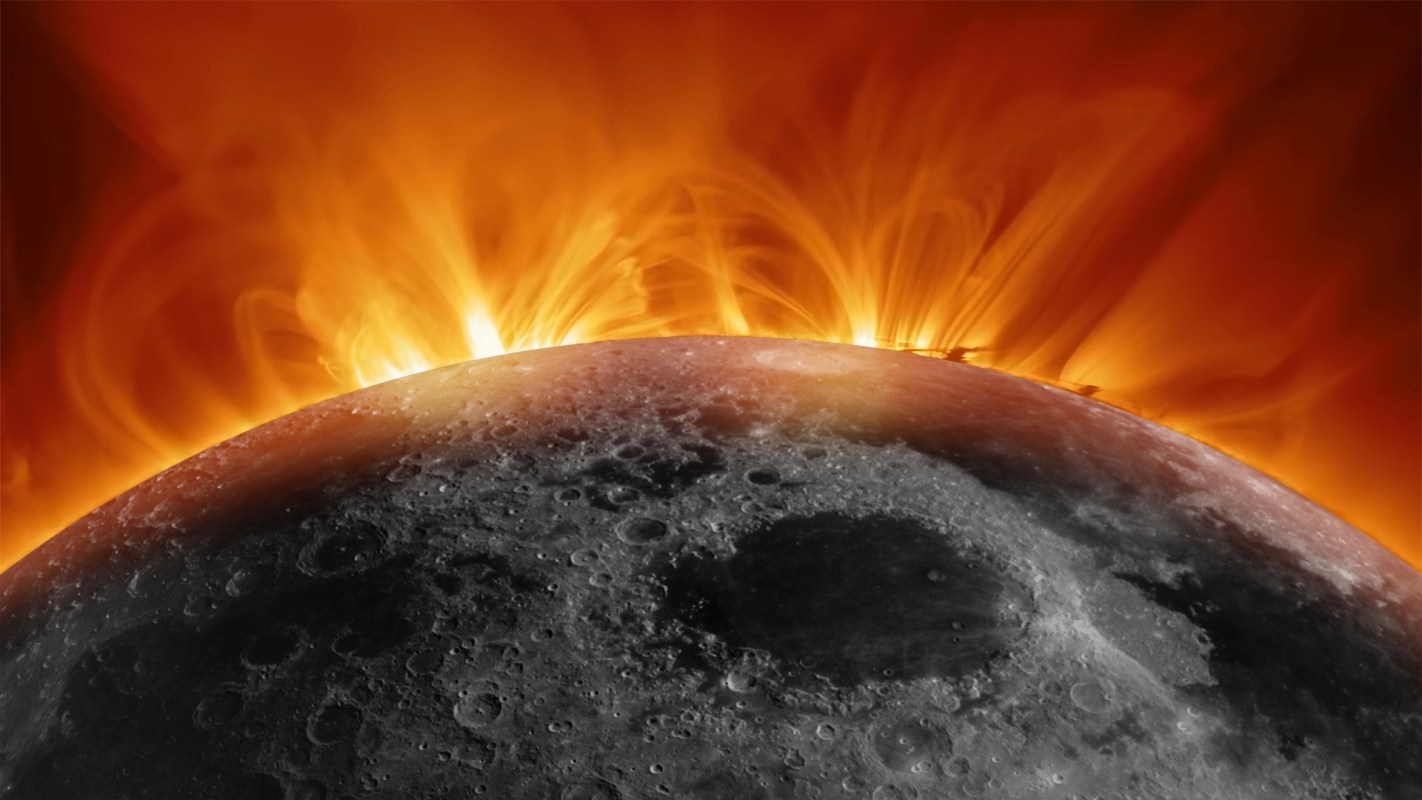
Scientists have long treated Earth's magnetic field as a sturdy defense against the Sun's most violent storms. New findings, however, suggest that during the biggest solar storms, that protection may not taper off as researchers once believed.
What's happening?
According to The Brighter Side of News, scientists are challenging the concept of "geomagnetic saturation," the idea that Earth's magnetic defense eventually reaches a ceiling even as a geomagnetic storm continues to intensify.
The outlet reported the paper was led by Dr. Nithin Sivadas of NASA's Goddard Space Flight Center, with Dr. Maria Walach of Lancaster University as co-author. Their argument is that the supposed limit of Earth's magnetic defenses may stem from how the solar wind is measured rather than from a true physical ceiling.
The Brighter Side reported that, for decades, scientists have relied heavily on solar wind measurements from spacecraft positioned at L1, or the first Lagrange point — a location roughly 1 million miles from Earth toward the Sun.
A key issue is that solar wind conditions can shift between L1 and Earth, and the travel-time estimates are not perfectly precise. The researchers say that the difference can make the solar wind appear more intense than the version that actually reaches Earth's magnetic environment.
If so, the apparent leveling-off in Earth's response would be a statistical mirage rather than evidence of a real cap, the outlet reported.
TCD Picks » Quince Spotlight
💡These best-sellers from Quince deliver affordable, sustainable luxury for all




To investigate, The Brighter Side reported the team used statistical modeling on a quarter-century of data, from 1995 to 2019, including more than 1 million near-Earth solar wind measurements. Their results showed that currents in the upper atmosphere continued to increase as the solar wind strengthened.
After correcting for uncertainty they estimated at at least 30%, the familiar curved "saturation" pattern became nearly linear.
Why does it matter?
The consequences extend well beyond theory: severe geomagnetic disturbances can affect satellites, GPS, radio communications, aviation, and power systems. They can also raise radiation exposure for astronauts and pilots.
Walach summed up the risks plainly: "Our planet's magnetic field does a really great job of protecting us against many space weather effects and so they often just show up as glitches or beautiful aurora."
But, she added, as reported by The Brighter Side, "There are however extreme cases, where satellites unexpectedly fall back to Earth, or we lose communication and GPS signals."
That means the most powerful solar storms could cause more damage than older models projected if Earth's response does not reach a meaningful upper bound.
The supplemental analysis points to impacts in some extreme solar wind conditions that could be about double earlier estimates, though the researchers cautioned that the rarest events remain poorly sampled.
What's being done?
The findings suggest extreme space weather models may need to be updated.
In particular, forecasters may need to move away from the assumption that Earth's magnetic response simply maxes out during the most intense storms.
"Fortunately, these very extreme cases are rare, but this also means we have limited data to work with and only time will tell what happens at the very extreme one-in-a-thousand-year kind of event," Walach said, as reported by The Brighter Side. "If there is no upper limit to our planet's response to the solar wind, modelling for extreme cases needs to take this into account and we should be vigilant of space weather effects."

Get TCD's free newsletters for easy tips, smart advice, and a chance to earn $5,000 toward home upgrades. To see more stories like this one, change your Google preferences here.






