


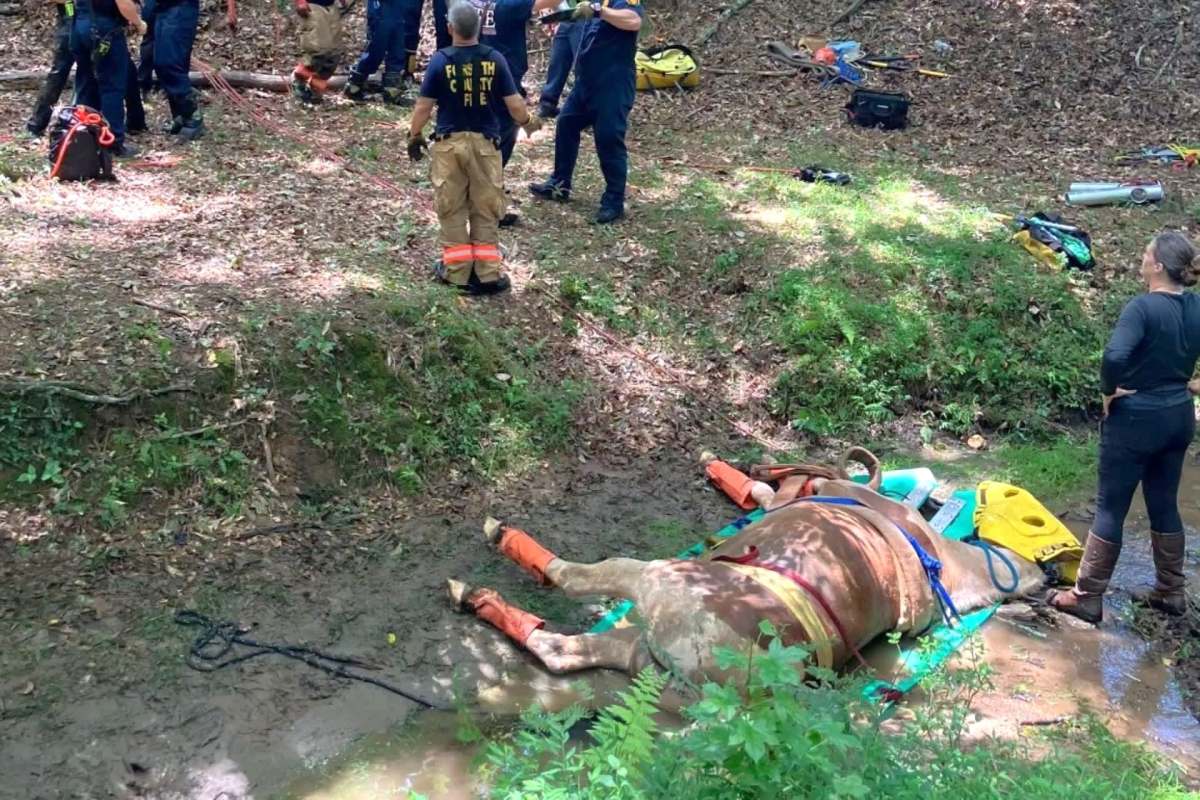
Rescuers in Forsyth County, Georgia, spent more than five hours freeing a 1,600-pound horse that had become trapped in a creek bed behind its owner's property.
What happened?
The horse's owner found the animal immobilized in a creek behind the property on August 4 and called for help, according to Fox 5 Atlanta.
At the scene, firefighters found that the horse's weight and the way it was lodged kept them from lifting it back onto its feet without additional assistance.
They then turned to Cherokee County Fire & Emergency Services, bringing in that department's Technical Large Animal Rescue Team for the more complex recovery.
For over five hours, personnel from both departments cycled through different rescue methods in an effort to get the horse out without worsening its condition.
The successful lift ultimately involved Cherokee County's large-animal tripod and harness system, with a veterinarian on scene assisting as crews brought the horse upright.
TCD Picks » Quince Spotlight
💡These best-sellers from Quince deliver affordable, sustainable luxury for all




Once the animal regained feeling in its legs, it was able to stand and walk away from the creek.
Officials have not released the address of the property, the cause of the incident, or the name of the horse or its owner, as of reporting.
Why does it matter?
Large-animal rescues are especially complicated because they can quickly become dangerous for both the animal and the people trying to help.
A frightened or injured horse can weigh well over half a ton, and terrain such as mud, water, or steep creek banks can make an already serious situation even harder to manage.
Specialized emergency response can be essential when animal welfare is at stake.
Without the right equipment and training, a horse that has been down for an extended period can face circulation issues, muscle damage, and other complications that can make recovery much more difficult.
Natural features on private property, including creeks, drainage areas, and soft ground, can become hazards for large animals, especially if they slip or get stuck in a place where they cannot regain their footing.
What's being done?
Specialized rescue gear such as tripods, harnesses, and animal-handling systems can be costly and are not always available in every department, so mutual-aid partnerships help communities respond more effectively to rare but serious incidents.
Fence lines and creek areas, access around muddy or steep parts of a property, and contact information for veterinarians and animal rescue resources can all affect risk and emergency response times.
Trying to free a panicked large animal without trained help can put both the owner and the animal in greater danger.
Thanks to a veterinarian on scene, specialized rescue equipment, and hours of coordinated work, the trapped horse was lifted to safety, regained the use of its legs, and walked home.

Get TCD's free newsletters for easy tips, smart advice, and a chance to earn $5,000 toward home upgrades. To see more stories like this one, change your Google preferences here.







