


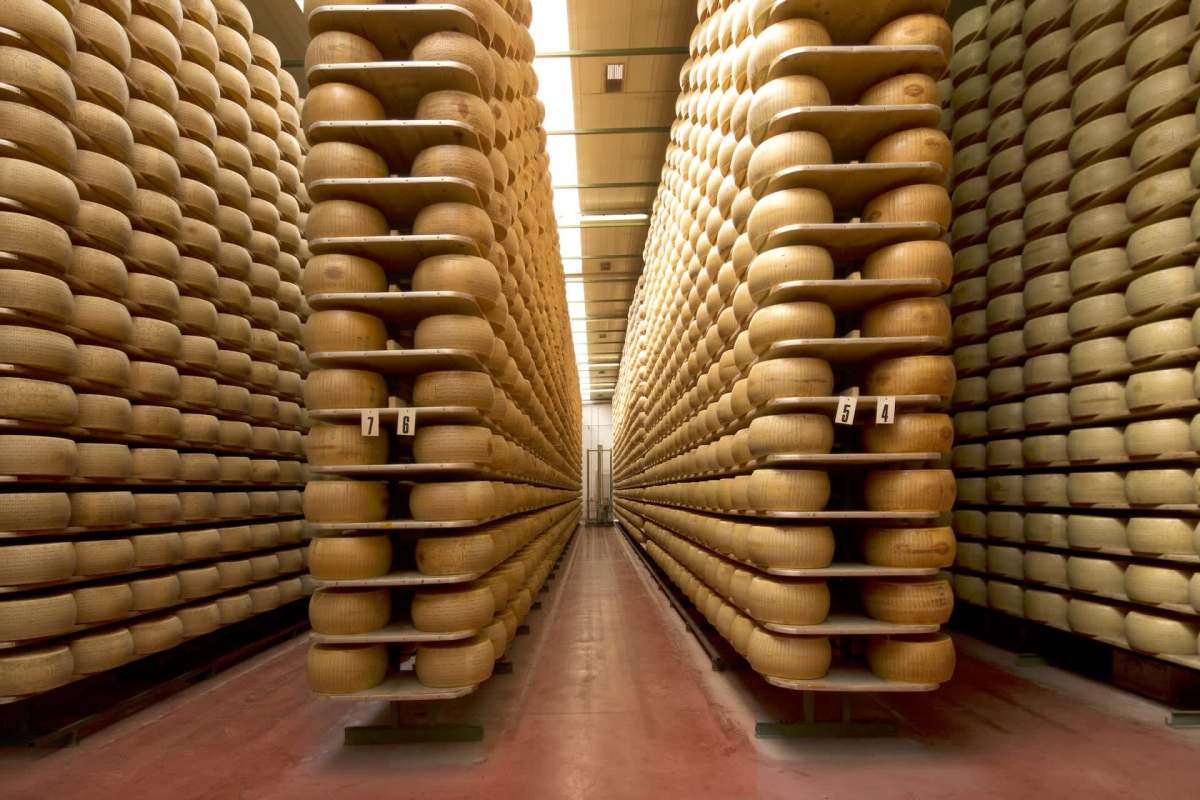
In Italy, some high-value assets take the form of aging cheese rather than cash or gold. Wheels of Parmigiano Reggiano are kept in climate-controlled warehouses and pledged as collateral for dairy farmers' loans.
That unusual financing system is coming under pressure as extreme heat intensifies across Europe, as Fortune reported.
What's happening?
Because Parmigiano Reggiano cannot be sold until it has aged for at least 12 months — and often 24 or 36 months — producers need funding long before their inventory is ready for market. Fortune reported that Credito Emiliano, better known as Credem, has addressed that gap since 1953 by accepting young wheels as collateral and typically advancing 60% to 80% of each wheel's value.
What started as a lending tool now operates on a huge scale. Credem's Emilia-Romagna vaults contain more than half a million wheels worth well around $350 million. Fortune, citing CNN, also reported that Giancarlo Ravanetti, who runs the bank's cheese warehouse business, said cheese banks hold about 500,000 of Italy's roughly 4 million Parmigiano Reggiano wheels produced each year, while his warehouses handle about 2.3 million wheels annually.
The financing model has also evolved with new technology. Fortune reported that blockchain tools now let farmers pledge wheels without moving the cheese out of their own facilities, doubling the bank's lending capacity.
Hotter weather is making the entire operation more expensive. Fortune reported that record heat waves across Europe pushed daily energy use up by around 30%, prompting the bank to upgrade cooling systems and boilers, add insulation, and expand renewable power generation.
TCD Picks » Quince Spotlight
💡These best-sellers from Quince deliver affordable, sustainable luxury for all




Why does it matter?
The strain begins well before the cheese reaches storage. Fortune reported that around 300 certified dairies support the $4.7 billion Parmigiano Reggiano industry, and climate stress is already affecting production.
Extreme heat directly cuts into farm output. Fortune reported that when temperatures soar, cows tend to lie down more and eat less, reducing milk production by as much as 10% a year. That can hurt both the volume and quality of milk, raising costs for farmers and eventually for the lenders and buyers that rely on that supply.
Italy's other signature foods are under similar pressure. Fortune reported that in Lombardy's Franciacorta sparkling-wine region, the 2026 harvest started on July 30, the earliest on record. Coldiretti, Italy's largest farmers' association, said 2026 is one of the earliest harvest years on record nationally, with heat and drought pushing sugar development in grapes ahead of flavor.
Olive oil has been hit even harder. Fortune reported that in the 2025/26 season, national production fell to around 270,000 to 300,000 tons, well below the historical average of more than 350,000 tons. Fortune also noted that in drought years, Puglia's output has dropped by more than half in a single season.
Those climate shocks can spread far beyond the farm, affecting storage, lending, exports, and what households pay at the grocery store. As University of Pennsylvania Wharton School labor economist R. Jisung Park put it, "Supply chain spillovers due to heat upstream actually lead to measurable downstream firm valuation impacts."
What's being done?
Banks and producers are adapting where they can. Credem is investing in cooling upgrades, insulation, and more renewable energy to protect the cheese already in storage. Its blockchain-based system also gives farmers more flexibility, since they do not always have to physically move wheels into a vault to use them for financing.
Wine producers are experimenting with new strategies as well. Fortune reported that some vineyards have begun trying shade netting first used against hail to reduce intense sun exposure and help grapes maintain their acidity.
Growers are also adjusting harvest timing across different microclimates in an effort to stay ahead of the heat.

Get TCD's free newsletters for easy tips, smart advice, and a chance to earn $5,000 toward home upgrades. To see more stories like this one, change your Google preferences here.






