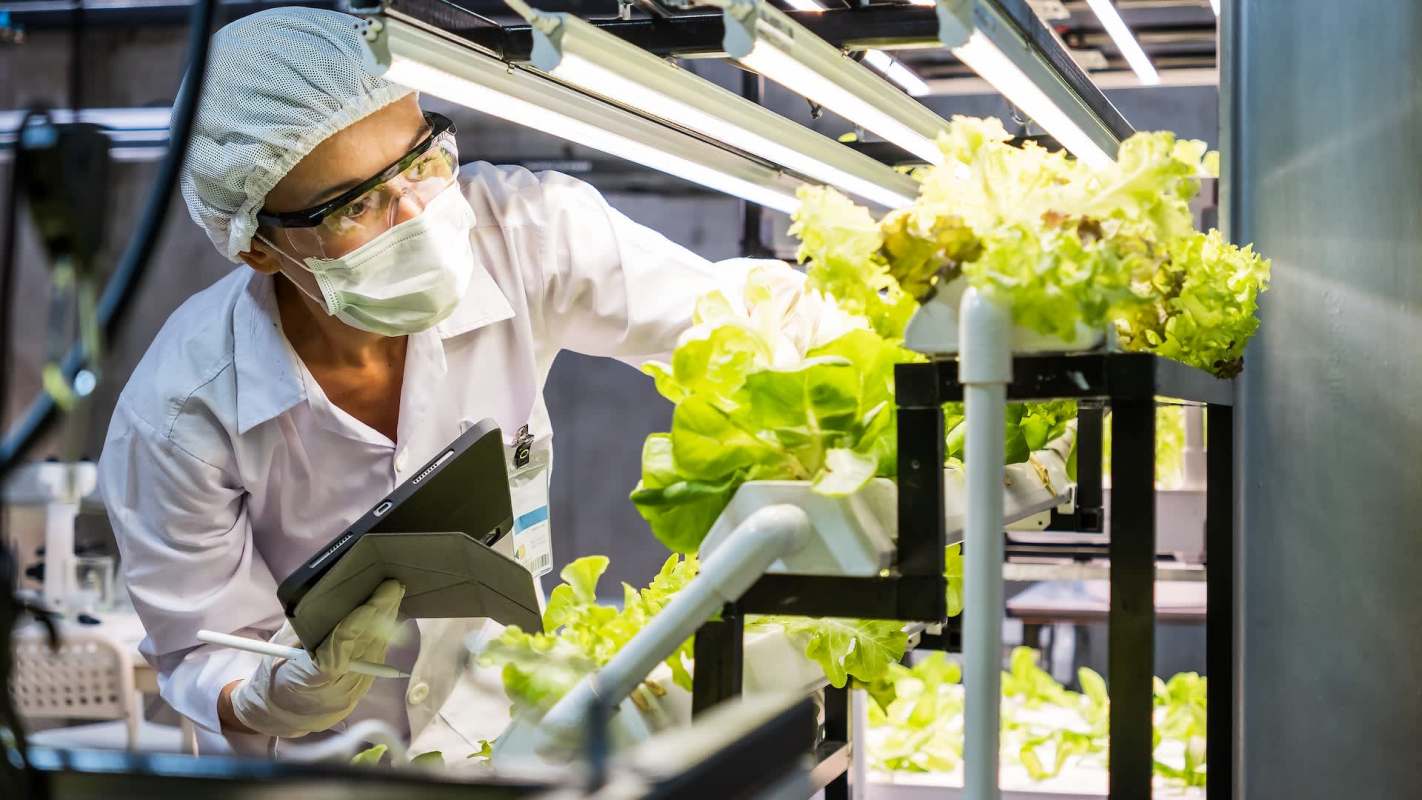
Future plant-based foods might capture more of meat's nutritional and flavor-building qualities while requiring fewer resources.
Scientists in the U.K. and other countries used a so-called "gene gun" to produce pig protein in lettuce. Though the research is still at an early stage, it could eventually lead to more satisfying options for shoppers who want convenient, protein-rich foods with a lighter environmental footprint, according to ScienceAlert.
What's happening?
A study published in the journal Frontiers in Plant Science detailed how researchers got lettuce and tobacco to make myoglobin — a protein linked to many of meat's appealing traits — by splicing pig genes into the plants' chloroplasts.
Study lead Alexia Groff, a plant biotechnology researcher at Imperial College London, said in a statement shared by Futurism that chloroplasts were chosen because "chloroplasts are generally much better at making large amounts of protein than the cell nucleus."
To deposit the genes there, the team used a biolistic particle delivery system, better known as a "gene gun," which fires microscopic metal particles coated with genes into plant cells.
In follow-up testing, the researchers found that the pig DNA had been incorporated into the chloroplast genome and that the next generation of plants still carried those transferred genes.
TCD Picks » Quince Spotlight
💡These best-sellers from Quince deliver affordable, sustainable luxury for all




The lettuce and tobacco ultimately produced about 800 milligrams and 810 milligrams of myoglobin per 1 kilogram of dry weight, respectively.
While that is still less than beef, it was enough to suggest that plants could someday become a practical production platform.
Why does it matter?
Conventional livestock production uses enormous amounts of land and water while generating significant planet-warming pollution.
"Plant cultivation is far more resource-efficient than livestock production; consequently, plant-derived myoglobin could achieve protein yields per hectare that rival — or even potentially exceed — those of animal agriculture," the study authors wrote.
They added that such a system could work "whilst also benefiting from substantially lower water use and greenhouse gas emissions."
It could also eventually support food products that are more resilient to supply shocks and less dependent on resource-intensive farming.
Per Futurism, other researchers noted that food made this way would still need to be deemed safe to eat and genuinely sustainable to produce at scale before it could reach grocery aisles.
What's being done?
The work is laying scientific groundwork rather than producing a ready-to-eat salad.
Researchers have said these protein-producing plants could eventually be dried and used as ingredients in plant-based meats, helping boost protein content and possibly improve flavor and color.
"Our study demonstrates, for the first time, that higher plants can stably produce myoglobin, one of the key proteins responsible for many of meat's desirable properties," Groff told ScienceAlert.
She added that the research is especially relevant "at a time when the demand for sustainable food production platforms is greater than ever."
Other experts see promise in using plants alongside other food-tech approaches, including Rodrigo Ledesma-Amaro, director of the ICL's Bezos Center for Sustainable Protein.
"This is an important advance on earlier plant and algal research," Ledesma-Amaro said in a statement. "Demonstrating stable myoglobin production in plant chloroplasts, including in an edible crop, raises the possibility of using plants as scalable, low-input production platforms alongside microbial fermentation."

Get TCD's free newsletters for easy tips, smart advice, and a chance to earn $5,000 toward home upgrades. To see more stories like this one, change your Google preferences here.