


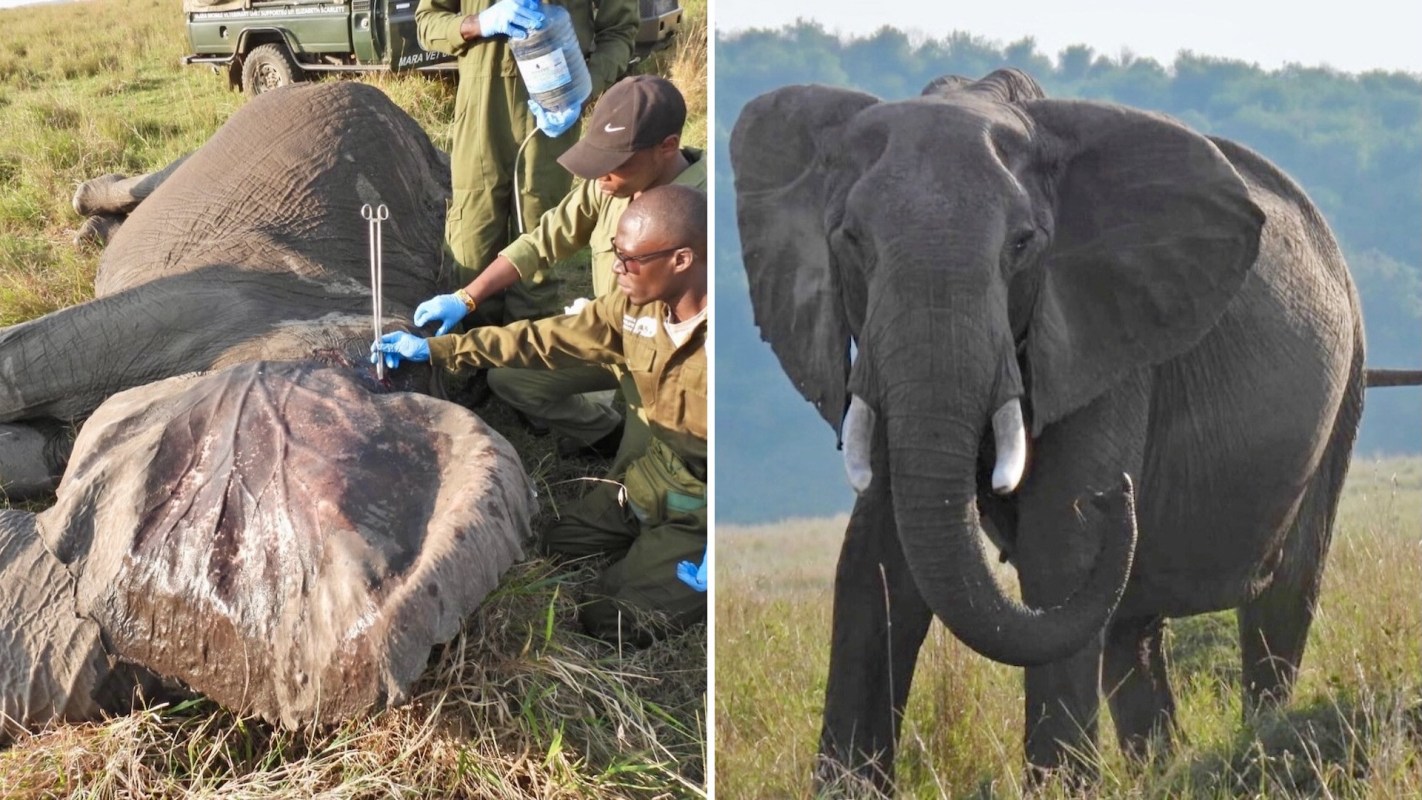
Wildlife veterinarians in the Mara, Kenya, carried out an urgent treatment for an injured elephant matriarch, tending to her while the rest of her herd stayed close.
After the procedure, she was back on her feet and had returned to the group waiting nearby.
What happened?
In an Instagram post, the Sheldrick Wildlife Trust (@sheldricktrust) said the emergency began during a morning game drive in the Mara after conservationist Roan noticed a female elephant with what the organization called "a serious spear wound on her neck."
That sighting prompted the SWT/KWS Mara Mobile Vet Unit to respond.
By the time the veterinary team reached her, the elephant was in the middle of a herd of more than 40, so additional support was brought in to help manage the group during the treatment.
The trust described it as "a logistically complex operation, but everything went smoothly." Dr. Aminga darted the elephant, and vets treated the neck spear injury along with a second arrow wound on her rump.
TCD Picks » Quince Spotlight
💡These best-sellers from Quince deliver affordable, sustainable luxury for all




Afterward, the trust wrote: "Treatment complete, the matriarch got to her feet and rejoined her waiting herd. She is expected to make a full recovery."
Why does it matter?
Elephant family groups depend on experienced adult females, so protecting one matriarch can help preserve stability for the entire herd, including younger elephants that rely on her leadership.
Deep spear and arrow wounds can lead to infection, prolonged suffering, and potentially death if treatment does not arrive quickly enough. Quick intervention can also prevent an injured animal from remaining in distress for days.
Strong wildlife rescue systems help support healthier ecosystems, which can benefit surrounding communities through conservation jobs, tourism, and the continued protection of landscapes shared by both people and animals.
What's being done?
The Sheldrick Wildlife Trust said the rescue was part of its partnership with the Kenya Wildlife Service, through which its Mobile Vet Units and Sky Vets provide emergency care that can mean "the difference between life and death."
The trust said those teams have treated upward of 15,000 wild patients so far, a total that points to how sustained veterinary support can save animals that might otherwise be lost.
One follower wrote: "Bravo to Dr Aminga and everyone else involved in helping this matriarch. We who follow and support you know how vitally important the good health of a matriarch is for the herd."

Get TCD's free newsletters for easy tips, smart advice, and a chance to earn $5,000 toward home upgrades. To see more stories like this one, change your Google preferences here.







