


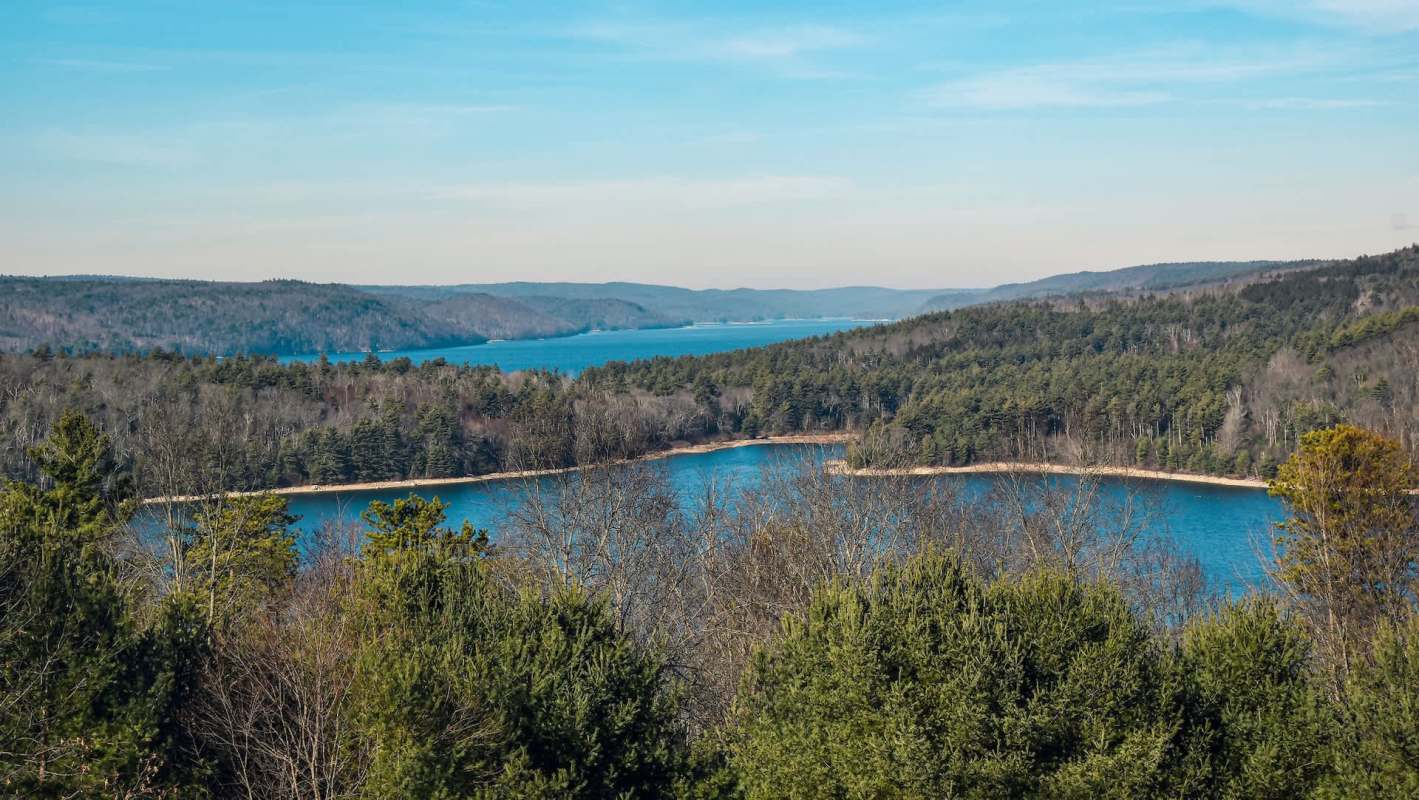
Local officials in Massachusetts towns near the Quabbin Reservoir say the communities helping safeguard drinking water for 2.7 million people in Greater Boston are getting too little help from the state as they absorb service cuts, limits on growth, and worsening drought.
What's happening?
In New Salem, a town of about 1,000 people, the well at town hall has gone dry, forcing municipal staff to work from several temporary offices. At the same time, the town has eliminated three elementary school classroom aides while trying to make its $3.7 million budget work, CommonWealth Beacon reported.
Several other communities around the Quabbin are making similar complaints. Despite bordering one of the region's biggest freshwater resources, these towns depend on their own wells and smaller local water systems rather than the reservoir itself, leaving them more exposed during dry spells.
Since 2024, drought has affected large parts of Massachusetts. In Belchertown, CommonWealth Beacon reported, the especially dry first half of 2026 may keep youth soccer and football teams off their home fields.
Sen. Jo Comerford, a Democrat who represents communities around the Quabbin, described the strain, saying, "It's like the Hunger Games."
Why does it matter?
For these rural towns, the fight is about more than water supply. Local leaders say the strain reaches school staffing, emergency services, and core infrastructure, even as their land helps protect a resource used by millions elsewhere in Massachusetts.
TCD Picks » Quince Spotlight
💡These best-sellers from Quince deliver affordable, sustainable luxury for all




Payments in lieu of taxes, or PILOT funds, bring New Salem about $722,000 for state-owned watershed land, which makes up roughly 20% of the town's budget. But Emily Hill, New Salem's town coordinator, told CommonWealth Beacon that with about 90% of the town inside the watershed, there is little room for the housing or business growth that could widen its tax base.
A 2025 report from Massachusetts Auditor Diana DiZoglio, cited by CommonWealth Beacon, found that the median PILOT payment for state-owned land across Massachusetts was $127 per acre. The Quabbin communities fall well short of that, with New Salem receiving about $21 per acre and Hardwick about $32 per acre.
The costs fall disproportionately on a small number of communities, weakening schools, public safety, and climate resilience in the places doing the work of conservation.
What's being done?
To press for changes on Beacon Hill, the towns have banded together as the Quabbin Stewards coalition. Their requests include larger PILOT payments, a dedicated fund for municipal services and infrastructure, and a permanent seat on the Massachusetts Water Resources Authority board.
Gov. Maura Healey has created a special commission to review whether PILOT funding is being distributed fairly. CommonWealth Beacon reported that commission member Doug Howgate of the Massachusetts Taxpayer Foundation said the system should meet a "commonsense test."
MWRA officials say the matter comes with tradeoffs. Interim executive director Stephen Estes-Smargiassi said the reservoir's size protects Boston-area customers from shorter droughts in ways smaller local systems cannot, and that boosting payments would have implications for ratepayers elsewhere.
"We are not asking for charity," said Matteo Pangallo, land use clerk in Shutesbury. "We are asking for equity."
"The long story short of it is that we are running out of money," Hill said. "We have nowhere else to turn."

Get TCD's free newsletters for easy tips, smart advice, and a chance to earn $5,000 toward home upgrades. To see more stories like this one, change your Google preferences here.






