


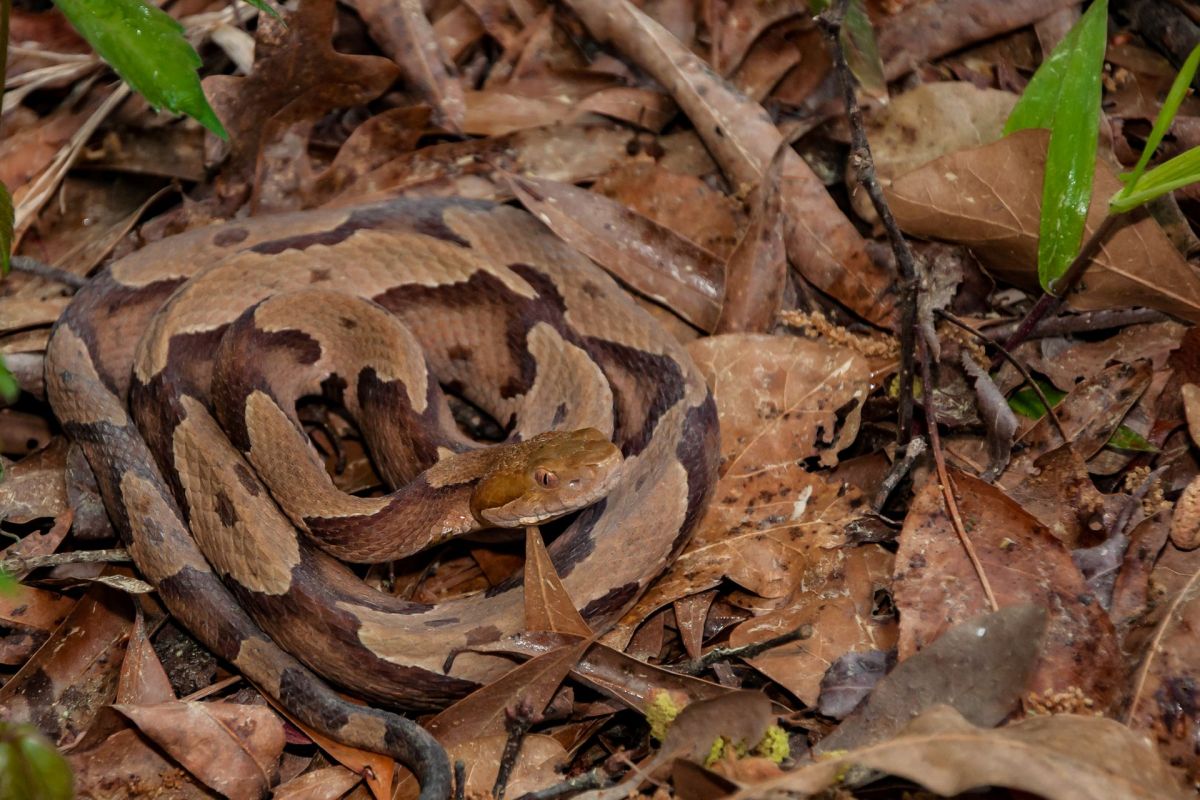
A Missouri reptile expert said an unusual pattern is unfolding in his own backyard: 47 copperheads have turned up on his property so far in 2026, surpassing his previous record, and some of the snakes he moves away later show up again. For people who live near wooded land, creeks or rock piles, it is a reminder that wildlife and human spaces often overlap more than many homeowners realize.
What happened?
According to KY3, Taney County reptile expert Randy Dietz has spent more than 50 years on his farm and is now logging each copperhead he finds around the yard. The 2026 total has already reached 47, topping his previous mark of 45.
Rather than treating the snakes as one undifferentiated group, Dietz photographs and measures each one, then uses the pattern along its back to tell individuals apart.
"Those saddle markings are as unique as fingerprints," Dietz said. "So I have a code where I will count back, starting at the neck, and count. And when they're broken or misshapen, I record it. And then later, I can go back."
Dietz began noticing a rise in copperhead activity around 2020. When he catches one, he moves it about 1,000 feet across his property in a blue barrel to an old rock pile, measures it, and releases it there.
His notes suggest that relocation is not always permanent.
TCD Picks » Quince Spotlight
💡These best-sellers from Quince deliver affordable, sustainable luxury for all




"In the past, about 30 percent of the ones I've released came back to my yard," Dietz said.
Why does it matter?
A high number of encounters near a home can affect how people use their yards, how children and pets play outside, and how carefully residents need to move around porches, gardens, sheds and paths after dark.
Encounters often happen not because animals are "invading," but because people and wildlife are sharing shrinking or overlapping edges of habitat. A BBC Future article explored how human activity and landscape changes can increase contact with wild animals. In Dietz's case, KY3 reported that a spring-fed creek runs below his house and his property connects to thousands of mostly undisturbed acres, making his yard a natural overlap point between snake habitat and human space.
Many homes back up to forests, waterways, fields or brushy areas that can attract snakes looking for shelter, prey and warmth.
What can be done about it?
For people who are not experienced with snakes, Dietz told KY3 to avoid putting their hands where they cannot see, to be careful walking outside after dark if they are barefoot or in sandals, and not to handle a snake unless they truly know how.
That is especially important around wood piles, rocks, tall grass, creek banks and other spots where snakes may rest or hide.
Good lighting, protective footwear and careful visual checks around outdoor clutter can help.
Dietz's long-running recordkeeping may help explain why snakes return to the same human-adjacent areas.
Because his system lets him distinguish one snake from another, Dietz can recognize repeat visitors.
"So that's the mystery, is why they're coming back to my yard," he said.

Get TCD's free newsletters for easy tips, smart advice, and a chance to earn $5,000 toward home upgrades. To see more stories like this one, change your Google preferences here.







