


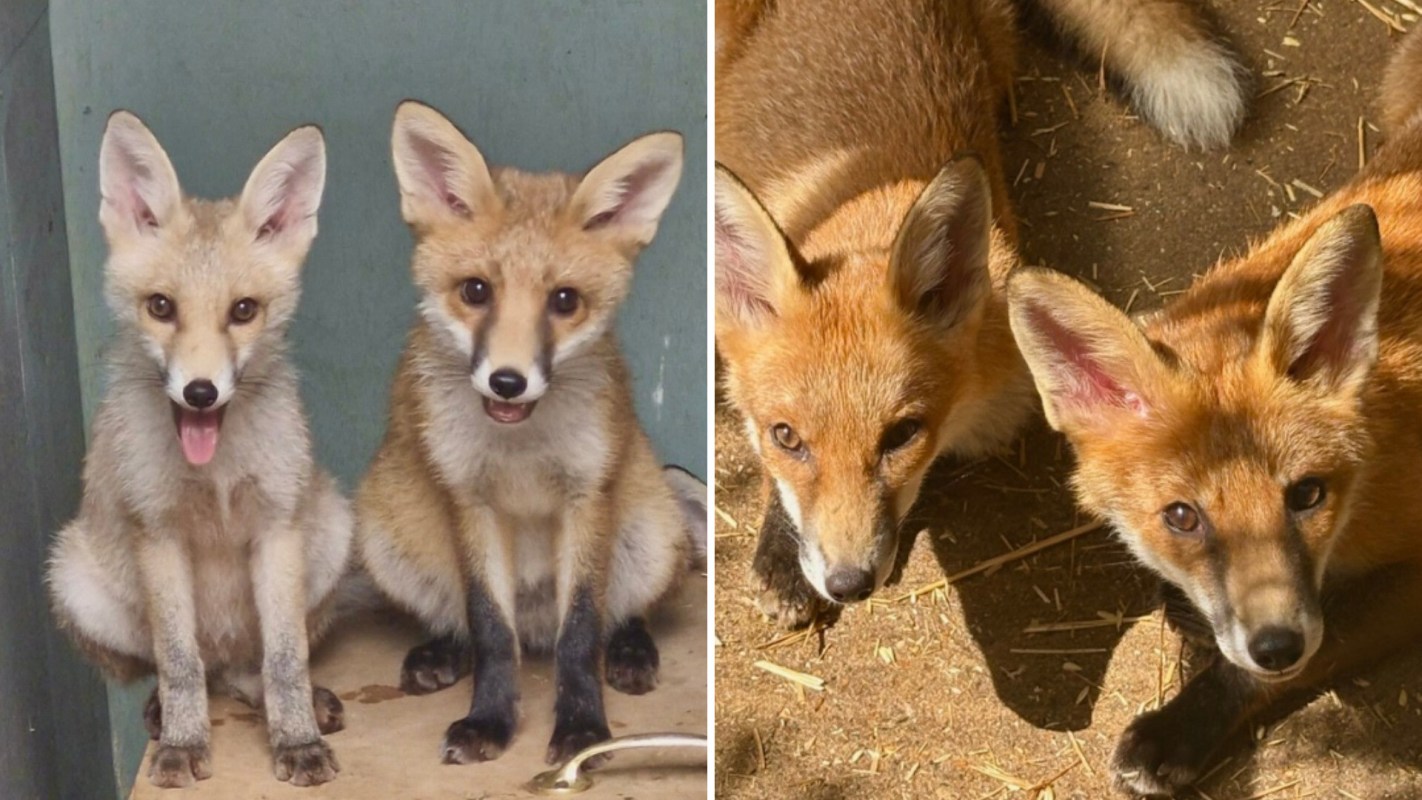
Two fox cubs rescued on different occasions are drawing attention after a wildlife rehabilitation center shared a new update about them.
One was brought in with a severe case of mange, while the other had a pale coat linked to stress or illness during pregnancy.
Though their starts were very different, the two have since become closely bonded.
What happened?
Wildlife Aid Foundation (@wildlifeaid) checked back in on Grogu and Glaceon, two fox cubs now growing into more confident young animals.
Grogu first arrived in poor condition. The rescue said the pair "didn't actually arrive together" and that each had "their own story to tell," describing Grogu as "just a tiny cub suffering from one of the worst cases of mange we've ever seen in an animal so young."
Glaceon, by contrast, stood out because of her unusually light fur. The rescue said she had a "fever coat," a condition caused by stress or illness during pregnancy that can leave cubs with white or pale coloring that fades as they get older.
TCD Picks » Quince Spotlight
💡These best-sellers from Quince deliver affordable, sustainable luxury for all




The post also highlighted how attached the pair have become.
"They may have arrived separately, but they're now inseparable!" the caption said, noting that when Grogu goes off to explore, Glaceon is often right beside him.
Why does it matter?
Mange can be especially devastating for foxes, particularly cubs, because it damages the skin and fur they depend on for warmth and protection.
A fever coat can make an animal look entirely different from what people expect, which can create confusion about whether the animal is healthy, abandoned, or even part of another species.
What's being done?
Before they are fully returned to the wild, the rescue said the pair will soon head to a "soft release site."
Rather than going straight from rehabilitation to complete independence, a soft release gives young animals time to acclimatize to their surroundings, practice natural behaviors, and build confidence in a more protected setting.

Get TCD's free newsletters for easy tips, smart advice, and a chance to earn $5,000 toward home upgrades. To see more stories like this one, change your Google preferences here.







