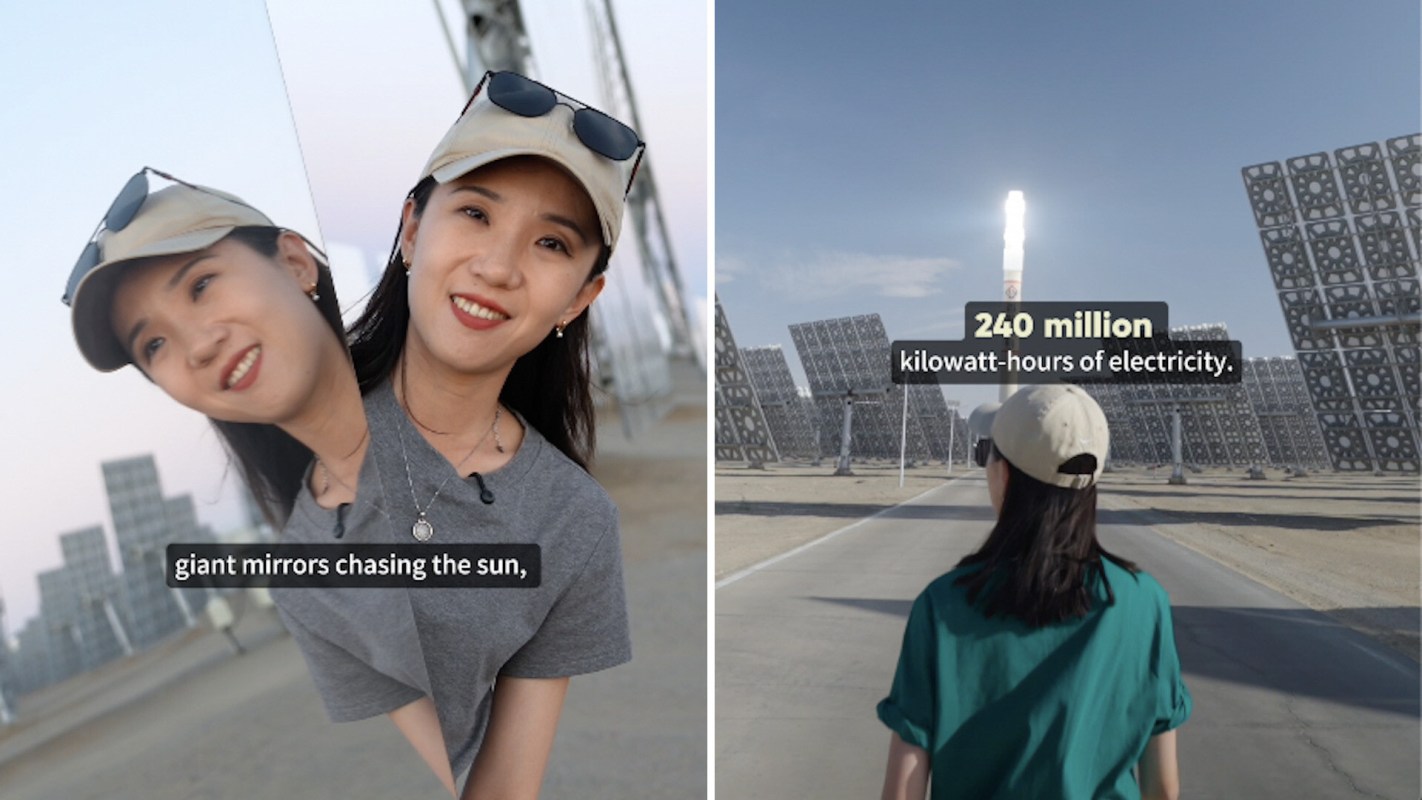
In China's Gobi Desert, a massive project is highlighting a new way to harvest solar energy.
An array of thousands of mirrors and a tower at its center are being used to heat salt to extreme temperatures.
What's happening?
A TikTok video from The Nature Reporter (@the_nature_reporter) highlighted a concentrated solar plant outside Dunhuang in Northwest China. Its mirrors follow the sun and redirect the light to a central receiver.
@the_nature_reporter Would you believe this cutting-edge solar power station is built on a principle you probably learned in high school physics? A concave mirror concentrates sunlight at a focal point. Now scale that up to tens of thousands of mirrors, add molten salt to store the heat. From there, it works much like a coal-fired power plant. The heat turns water into steam, the steam spins a turbine, and the turbine drives a generator to produce electricity. Except there's no coal and no CO₂ emissions. #solarpower #renewableenergy #concentratedsolar #china #climateaction
♬ original sound - the_nature_reporter
The plant uses that solar intensity to heat molten salt above 900 degrees Fahrenheit, and the stored heat is later used to make steam that turns a turbine and generates electricity.
Rather than relying on coal, the facility uses captured solar heat to run the same basic steam-and-turbine process used at many traditional power plants, avoiding the carbon dioxide pollution tied to fuel combustion.
According to The Nature Reporter, the site generated more than 240 million kilowatt-hours of energy in 2025, enough to cover the annual electricity needs of a small city in China.
TCD Picks » Quince Spotlight
💡These best-sellers from Quince deliver affordable, sustainable luxury for all




Unlike a conventional solar farm, the technology can continue working after the sun goes down by treating the heated salt like a powerful battery. The Nature Reporter explained, "the molten salt can store energy as heat for up to 11 hours."
Why does it matter?
A major issue for renewable power is matching supply with demand. Solar and wind output depends on the time of day and the weather. If sunlight or wind aren't abundant, grid operators often lean on dirty fuels to fill the shortfall.
Thermal storage like this can shift solar energy into the evening, when households are cooking, doing laundry, running air conditioning, and charging phones, laptops, and electric vehicles. That ability can make electricity supply more consistent during the hours when use is highest.
For cities and businesses, it could also reduce dependence on fuel-burning backup power, which may lessen exposure to fuel price swings over time. Because the plant generates electricity without coal combustion, it points to a path toward cleaner air and fewer health risks linked to fuel-related pollution.
What's being done?
The Dunhuang facility also illustrates how combining different renewable resources instead of depending on only one can create a more reliable energy system. In the video, The Nature Reporter said that the city that made it through 2025 on renewable electricity did so by using concentrated solar power alongside wind, photovoltaic solar, and other sources.
With heat storage, mirror-based solar can be dispatched after sunset, while wind turbines and conventional solar panels contribute power whenever conditions allow. Used together, those technologies can help make grids with high renewable shares more reliable.

Get TCD's free newsletters for easy tips, smart advice, and a chance to earn $5,000 toward home upgrades. To see more stories like this one, change your Google preferences here.