


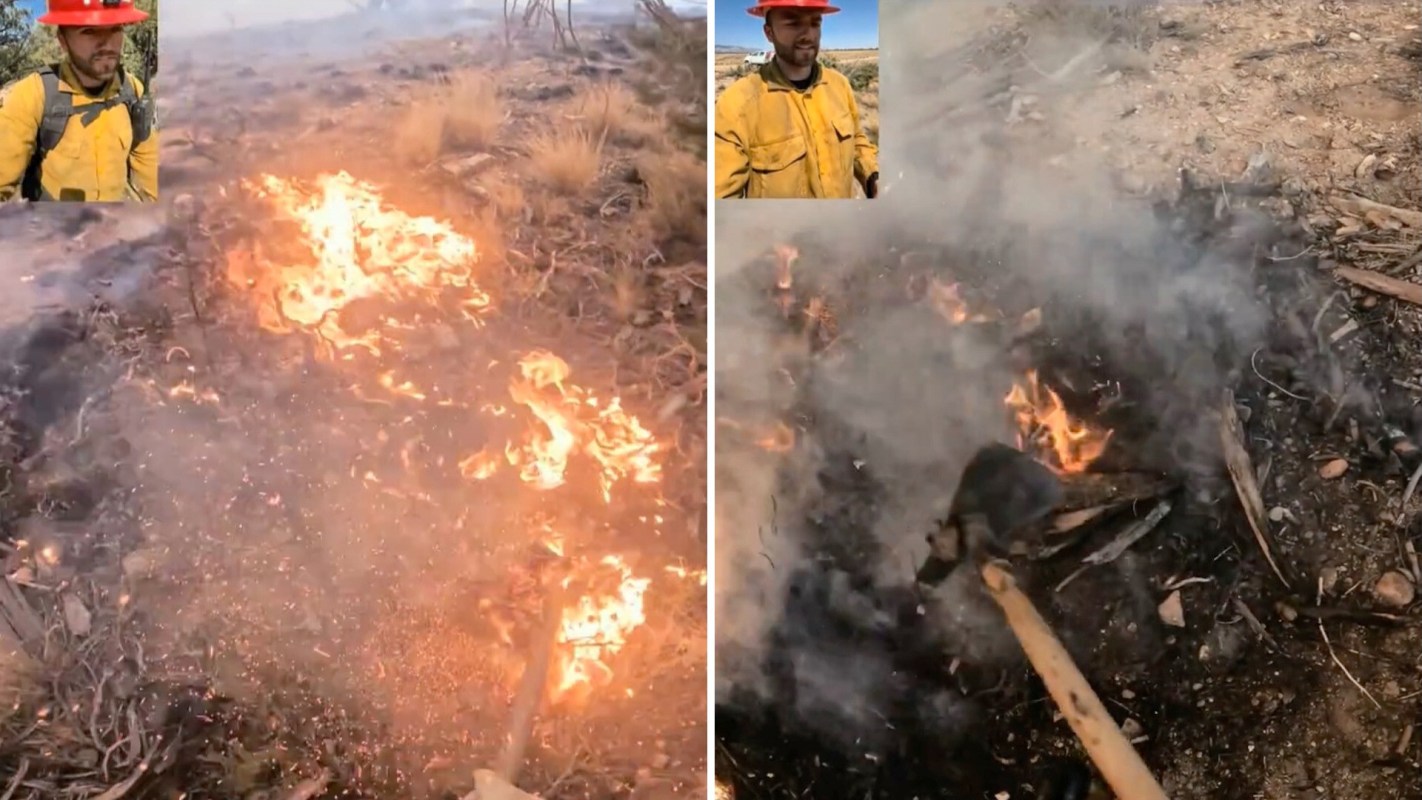
A viral first-person wildfire video shows a firefighter facing one of fire season's harshest constraints: No water on hand.
In that moment, stopping the flames meant relying on protective gear, quick judgment, and manually moving burning material before a small spot fire could grow more dangerous.
What's happening?
Firefighter Cole Christensen was in a spot fire and started tackling it without water. In the caption, he describes it as "Just a little dry mop." He explains in the voiceover that he began pulling burning fuels away from unburned ones to make a break and keep the fire from spreading.
@colechristensenff This is what it looks like to fight a wildfire with no water. 🔥 Just a little dry mop. NBD. #wildlandfire #firefighter #fireseason #firefightertiktok #pov ♬ Saxophones getting louder - Sped Up - AntonioVivald
The risk, he says, was that nearby branches could ignite, torch the tree, and send embers farther away, creating additional spot fires.
The footage also shows how close firefighters sometimes work to active flames. In the video, he says their personal protective equipment allows them to stay near the heat long enough to cut hand lines and keep fuels separated as conditions get hotter.
Why does it matter?
The clip captures wildfire response in its most physical form.
TCD Picks » Quince Spotlight
💡These best-sellers from Quince deliver affordable, sustainable luxury for all




Before a blaze grows into a larger emergency, crews may need to stop small spot fires quickly, especially if flames are close to vegetation that could carry fire upward and outward.
Spot fires can escalate quickly. Once embers spread, they can threaten trees, property, air quality, and the safety of people living in fire-prone areas.
Even a small flare-up can become much harder to contain if it reaches heavier fuels.
What's being done?
The video points to a core wildfire tactic for moments when water is limited or unavailable: separating what is burning from what might catch next.
That kind of fast, hands-on work can help keep a spot fire from growing into a broader threat.
In wildfire-prone areas, that can mean clearing dry vegetation near homes, keeping roofs and gutters free of debris, staying alert to local fire restrictions, and having an evacuation plan ready before conditions worsen.
People who want to support resilience in their own communities can also explore resources on taking local action and donating money to climate causes.

Get TCD's free newsletters for easy tips, smart advice, and a chance to earn $5,000 toward home upgrades. To see more stories like this one, change your Google preferences here.







