


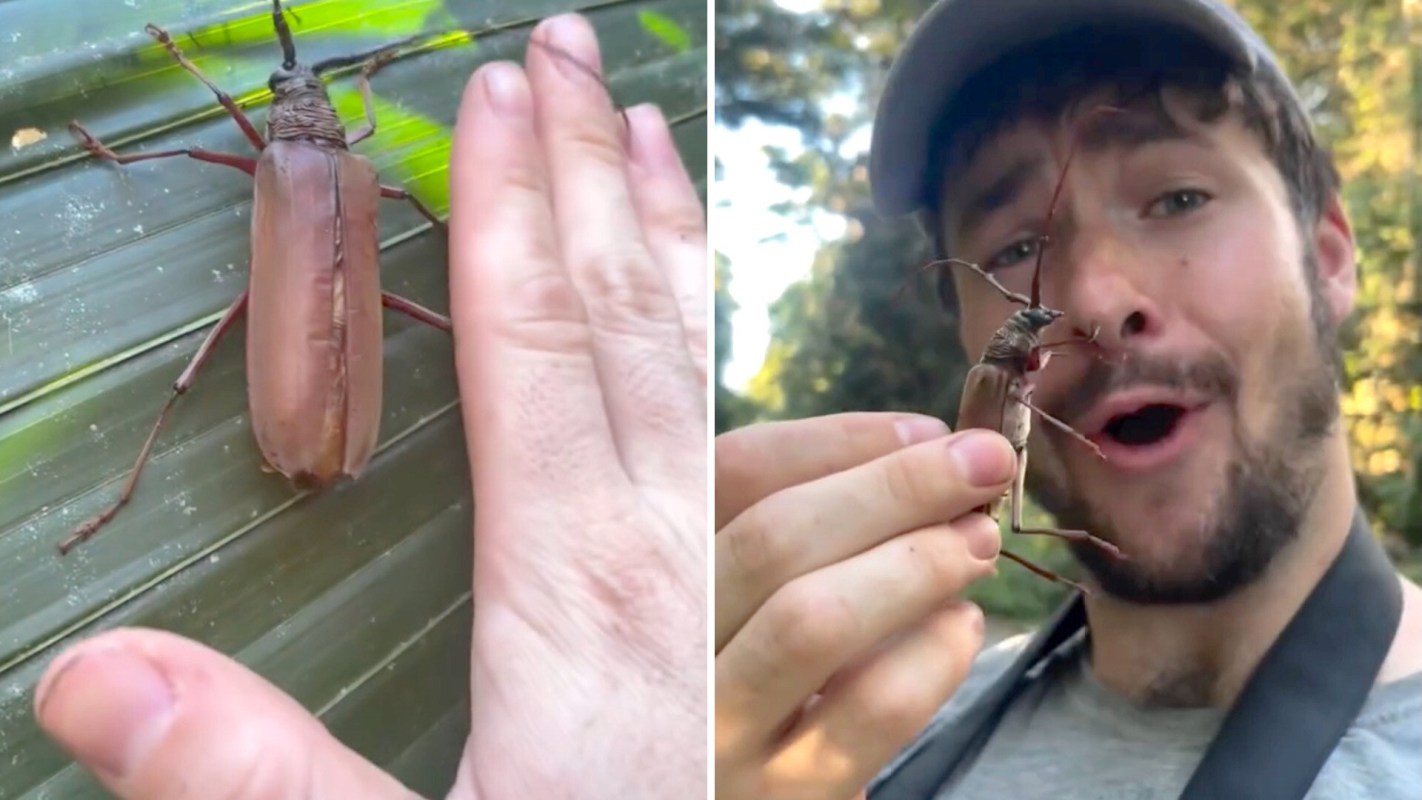
An entomology-focused creator was surprised by an unusual encounter while traveling in Ecuador.
Zach O'Neil took out his camera to film "the biggest beetle of my life," which he speculates might be a Plocaederus bellator — which can be up to 3 inches in length.
What happened?
Ecuador is home to some of the largest beetles in the world because of its tropical rainforest ecosystems.
"I was star-struck to encounter this beautiful insect," O'Neil wrote.
Why does it matter?
Beetles are actually very helpful for the environment.
They play both a role as predators of pests and as pollinators, according to Penn State. Different species help break down dead plant material, recycle nutrients, pollinate plants, and provide food for other wildlife.
TCD Picks » Quince Spotlight
💡These best-sellers from Quince deliver affordable, sustainable luxury for all




Insects are often overlooked in conversations about biodiversity, even though they do essential work that supports forests, farms, and food webs. When insect habitat disappears, the effects can ripple outward to plants, birds, and other animals.
Biodiversity includes small, strange, and vital animals, and protecting habitat benefits entire ecosystems, not just the most photogenic species.
What can I do?
Learning about local insects, planting native species, and reducing pesticide use at home can help support the pollinators and decomposers that keep ecosystems functioning.
Online, educational wildlife creators like O'Neil can also play a positive role by helping people appreciate species they may never encounter in person. Sharing credible nature content can build public interest in conservation.
And even far from tropical forests, people can support parks, habitat restoration projects, and science education programs that protect biodiversity close to home. Big conservation challenges are global, but many useful actions start locally.

Get TCD's free newsletters for easy tips, smart advice, and a chance to earn $5,000 toward home upgrades. To see more stories like this one, change your Google preferences here.






