


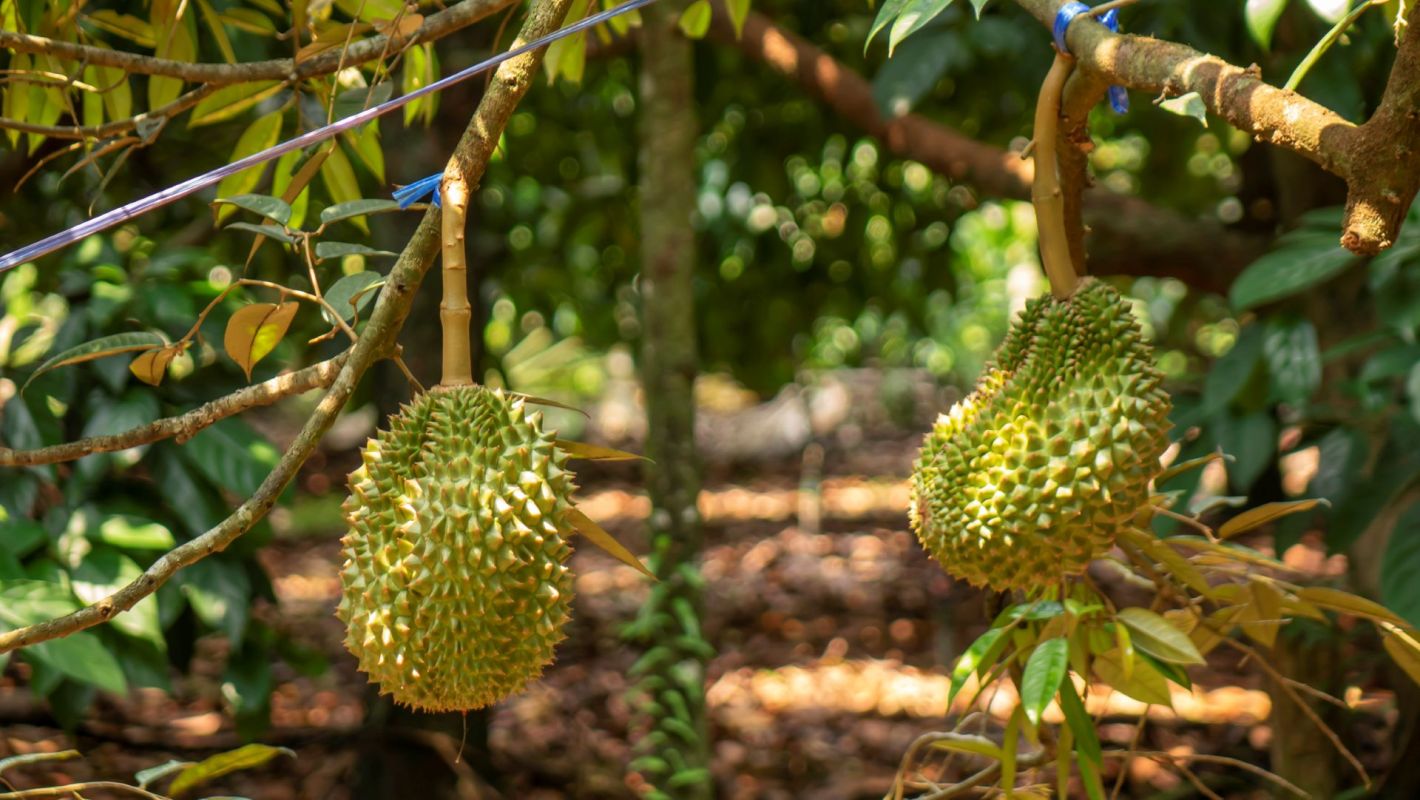
Malaysia's durian boom is being driven by soaring demand from China, where the famously pungent fruit has become a multibillion-dollar import.
The export boom, however, is colliding with harsher growing conditions, leaving farmers who harvest ripe fruit at night to contend with floods, heat, and increasingly erratic weather, according to The Associated Press.
What's happening?
The business opportunity is reflected in the numbers. In 2023, as reported by the AP, China imported 1.81 million tons of fresh durians worth $5.8 billion, six times the volume from a decade earlier. Malaysia's durian-growing area also expanded sharply, reaching 153,470 acres, nearly 70% above 2015 levels, while production of the fruit during the same period jumped almost 90%.
Despite the massive increases in production, the AP noted those gains are vulnerable to worsening weather. Heavy rain can disrupt pollination during flowering and cut yields.
According to Stephen Chow, a durian grower cited by the AP, changing weather has already resulted in direct losses: flooding in 2021 damaged about 100 of his durian trees and also impacted his farm machinery.
Market conditions are adding another strain. The AP reported that higher output from Malaysia, combined with competing shipments from Thailand and Vietnam, has dragged prices lower.
TCD Picks » Quince Spotlight
💡These best-sellers from Quince deliver affordable, sustainable luxury for all




Why does it matter?
According to the AP, Peninsular Malaysia has been warming by an average of 0.45 degrees Fahrenheit per decade since 1981. As temperatures rise, rainfall patterns can shift, floods can intensify, and orchards that depend on fairly specific conditions for flowering and fruiting can come under added stress.
When farms are hit by flooding or poor pollination, growers may lose trees, equipment, and income, while buyers can face supply swings and price volatility. Farmers can end up trapped between climate damage on one side and falling prices on the other. Even when harvests are strong, profitability can fall if oversupply floods the market.
What's being done?
Adaptation is taking more than one form. The AP reported that farmer Kie Kim Hwa installed sensors and other equipment to monitor rainfall, humidity, and wind speed, giving him more precise data about changing orchard conditions.
Better weather tracking can help growers decide when to irrigate, protect blossoms, manage labor, and reduce avoidable losses.
Another grower cited by the outlet, Ooi Teik Hock, sought cooler nights and more humid air by moving his orchard from lowland plains to higher areas. That strategy is intended to better match the fruit's needs as lowland conditions become less dependable.
These steps do not solve climate change on their own, but they can help farmers protect crops, incomes, and food supplies.
For Malaysian growers, China's durian boom still offers enormous potential. But the future of that trade may depend less on demand alone and more on whether farms can adapt quickly enough to withstand floods, heat, and a rapidly changing climate.

Get TCD's free newsletters for easy tips, smart advice, and a chance to earn $5,000 toward home upgrades. To see more stories like this one, change your Google preferences here.






