


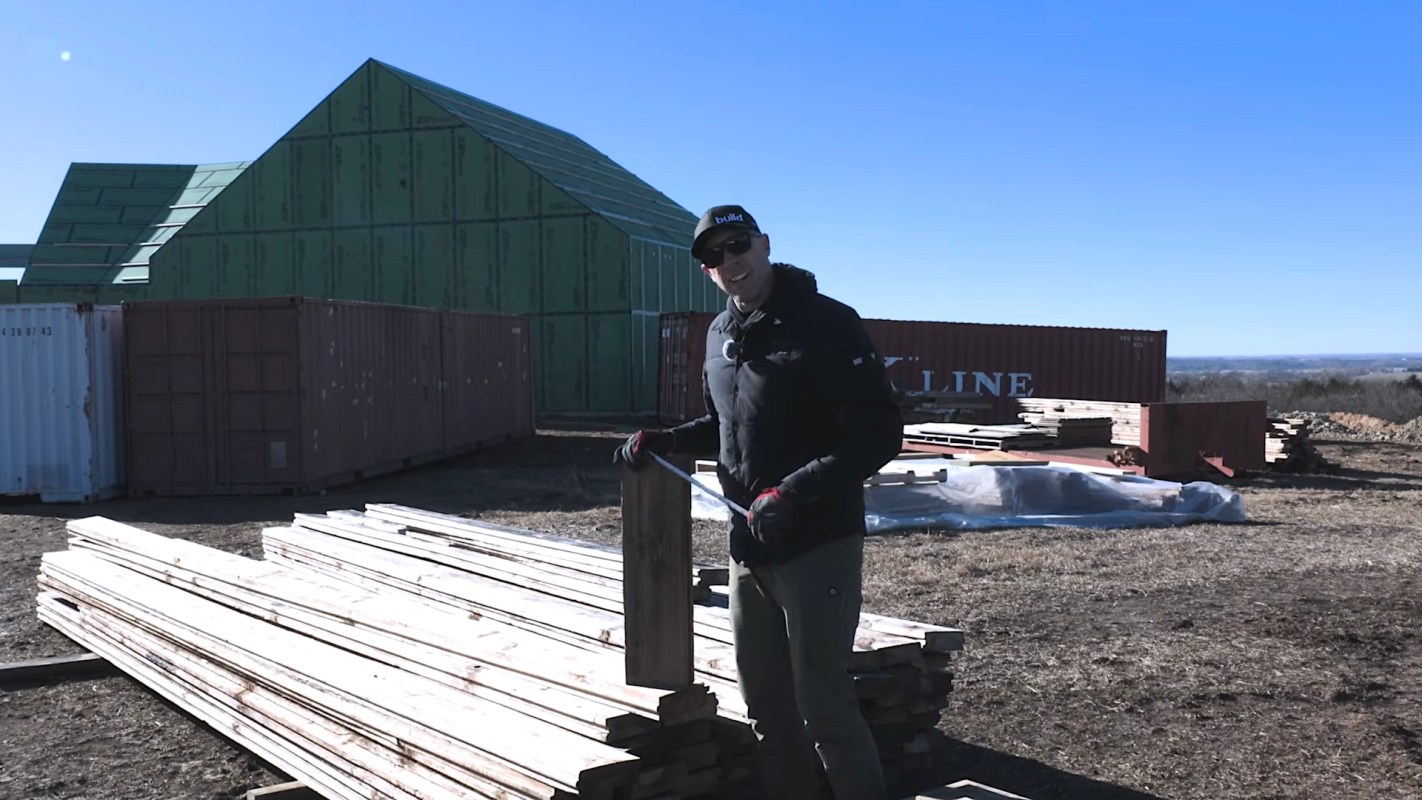
A Kansas house is illustrating how extensive material reuse can become when a project goes beyond salvaged decor and into the structure itself.
In Silver Lake, builders are assembling a high-performance home with reused lumber, steel, foam insulation, and even a section of wind turbine tower.
What's happening?
"This is obviously reclaimed lumber," content creator Travis Brungardt says near the start of a walkthrough from Build Show Network (@BuildShowNetwork) on YouTube. In the video, he tours the project alongside Randy Williams, editor of Green Building Advisor.
The homeowners approached the build with experience in demolition, salvage, and engineering, and they based the design on materials they had already gathered. That inventory includes reclaimed I-beams, a reclaimed steel truss, heavy timber beams, tongue-and-groove roof decking, and salvaged rigid foam insulation.
Among the boldest choices is a wine and whiskey cellar built from what Brungardt called "the structural tower section of a wind turbine." It is the sort of custom feature that would be difficult to recreate with standard materials.
The project also highlights the added complexity that comes with this kind of reuse. Reclaimed steel made for a different structure and insulation with uncertain product histories both require extra review, engineering calculations, and careful detailing before they can be used in a new home.
TCD Picks » Quince Spotlight
💡These best-sellers from Quince deliver affordable, sustainable luxury for all




Why does it matter?
Giving building materials a second life can keep useful products out of landfills and reduce the need for newly manufactured steel, lumber, and foam.
The Kansas build also demonstrates why salvaged components usually demand more vetting than materials purchased new from a supplier. New products generally come with documented ratings, specifications, and code references. Reclaimed ones often do not.
Williams summed up that tension this way: "There's both, right? I mean we obviously have risk." He pointed to issues such as uncertain insulation performance, damaged facers, and the chance of moisture problems if wall assemblies are not detailed correctly.
A house can be visually impressive and still miss the mark if the building science is not handled well. Energy efficiency, durability, and indoor comfort all rely on details that are easy to overlook when reused materials are worked into a modern build.
What's being done?
To reduce that uncertainty, the team is combining reclaimed materials with professional oversight. Brungardt said the owners have an engineer reviewing the structural components, especially where reclaimed steel and heavy reused wood are serving in major load-bearing roles.
The foam is also being sorted and used strategically. Better pieces are being reserved for more important assemblies, rougher sections are going into less critical areas like the conditioned garage, and new ZIP sheathing was installed over the insulation for structure, water control, and air control.

Get TCD's free newsletters for easy tips, smart advice, and a chance to earn $5,000 toward home upgrades. To see more stories like this one, change your Google preferences here.






