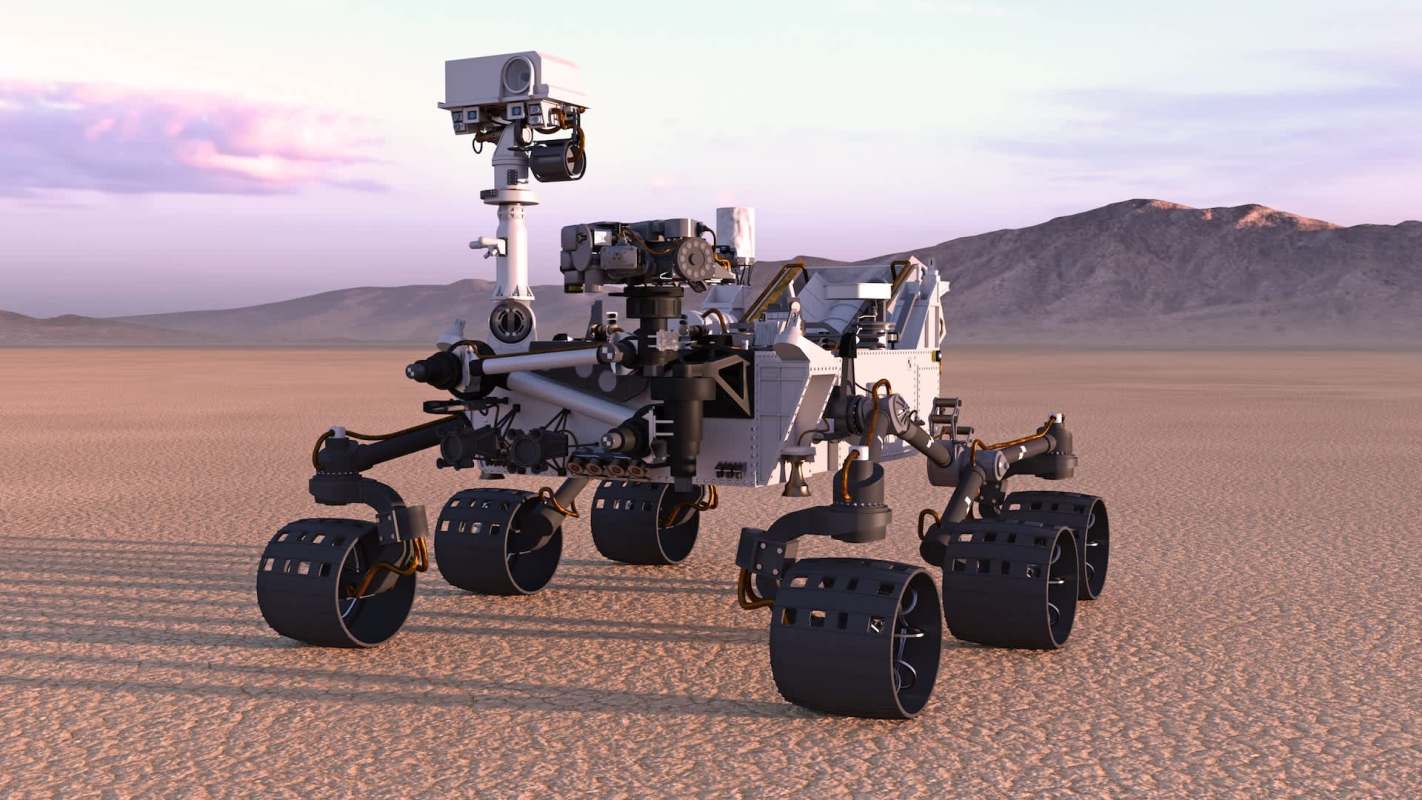
NASA's Curiosity rover has sent back one of its most striking views of Mars yet: a valley floor that appears almost tiled with giant honeycomb-like shapes stretching toward the horizon. The discovery offers a fresh clue in the long-running effort to understand how water once moved across the Red Planet, while also underscoring how robotic exploration can continue to unlock insights with benefits back on Earth.
What happened?
In photos taken as Curiosity moved through the Martian valley Valle Grande in June, scientists identified an enormous expanse of features known as polygonal fractures, as Good News Network reported.
NASA said the rover had encountered smaller areas of these geometric patterns before, but never anything on this scale.
A 360-degree panorama captured June 19-20 shows the polygons covering the landscape in every direction the rover can see. The same pattern extends around a nearby butte called Miraflores, which stands about 20 feet tall and is topped by a thick layer of sand.
Ashwin Vasavada, project scientist for the Curiosity mission at NASA's Jet Propulsion Laboratory in California, said, "We've seen a lot of fascinating landscapes through Curiosity's eyes, but this sea of polygons took our breath away."
No single explanation has been confirmed for how the formations arose. Scientists are considering possibilities including dried mud cracks, alternating warm and cold conditions, or compression after burial that may have squeezed water from the sediment.
TCD Picks » Quince Spotlight
💡These best-sellers from Quince deliver affordable, sustainable luxury for all




Why does it matter?
One of Curiosity's key jobs is to help scientists determine whether ancient Mars once offered the water, chemistry, and nutrients microbes would need.
Understanding how water shaped another world can help researchers refine models of climate, erosion, and soil change, giving scientists better tools to study harsh environments on Earth as well.
Space missions such as Curiosity also help advance technologies that can make daily life easier and safer. Autonomous navigation, durable robotics, compact sensors, and advanced imaging systems developed for extreme missions can support infrastructure inspections, disaster response, and remote environmental monitoring, reducing risks for workers while saving time.
What's being done?
NASA scientists are now closely analyzing the shapes and chemistry of the newly discovered polygons to determine how they formed and what they may reveal about Mars' ancient environment.
The work adds to a record of discoveries that has been growing since Curiosity touched down in 2012.
The rover has already found sulfur crystals, meteorites, and chemical evidence tied to Mars' wetter past. It has also detected carbon-based compounds thought to precede RNA and DNA, deepening interest in the planet's potential habitability billions of years ago.
Curiosity has been ascending the foothills of Mount Sharp since 2014, effectively reading layer after layer of Martian history. Each new rock pattern gives scientists another data point in understanding how planets evolve over time.
Vasavada said, "We measured their shapes and chemistry carefully and are hopeful there are clues in the data as to how these features formed."

Get TCD's free newsletters for easy tips, smart advice, and a chance to earn $5,000 toward home upgrades. To see more stories like this one, change your Google preferences here.