


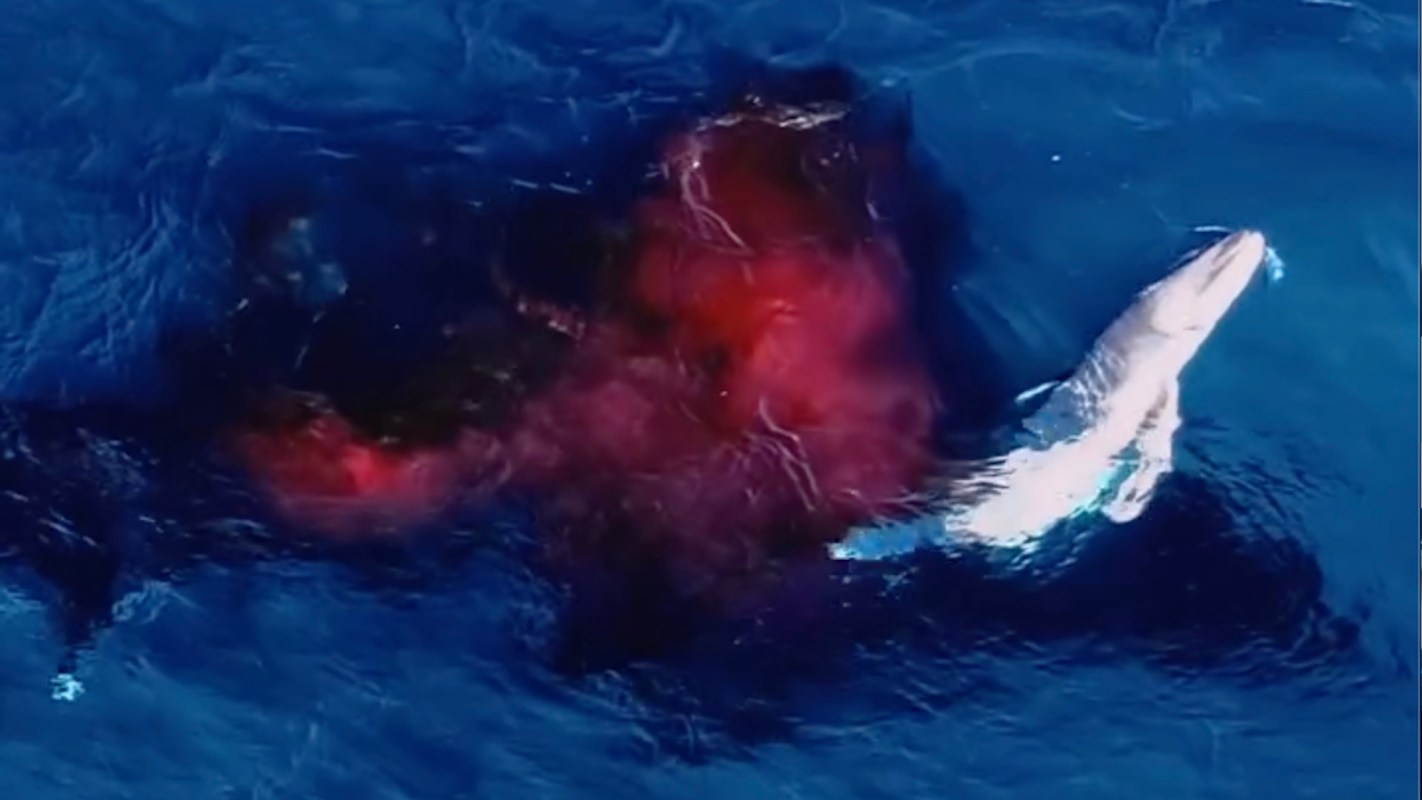
A drone off the coast of Australia captured something humans almost never get to see: a humpback whale giving birth in the open ocean.
The July 28 footage may be one of the rarest wildlife recordings ever captured. According to CBS News, it is thought to be only the fourth humpback whale birth fully filmed and the first recorded by drone.
What happened?
Alexander Forrest, a drone pilot filming whales during their northward movement past New South Wales, became focused on one adult female after her behavior stood out, CBS reported.
On social media, ORRCA — the rescue and research nonprofit with which Forrest was working — also described the whale as "displaying unusual behavior."
The recording Forrest captured shows the sea clouding with blood. Moments later, a calf comes into view and rises to breathe.
"I was naive in the rarity I was about to document," Forrest wrote in his own post. "The whale suddenly rose toward the surface, so I hit record — any breath is [a] chance to capture a unique behavior. In this instance she didn't rise for an exhale, but to birth her new calf."
TCD Picks » Quince Spotlight
💡These best-sellers from Quince deliver affordable, sustainable luxury for all




Members of the ORRCA team were there with Forrest and remained nearby for hours afterward to observe the mother and newborn.
Why does it matter?
A complete humpback whale birth is extraordinarily difficult to witness, let alone record. That's part of why the video matters: It may offer scientists unusual insight into humpback whale reproduction, how mothers behave around birth, and what calves do immediately afterward.
As ORRCA put it, "Every observation like this has the potential to expand our understanding of humpback whale reproduction, maternal behavior, and the earliest stages of a calf's life."
Chances to study humpback whales at such a vulnerable point remain limited.
The footage also comes against the backdrop of the species' long recovery from commercial whaling. A better understanding of whale life cycles could help shape protections for marine ecosystems that people rely on for food systems, biodiversity, and coastal economies.
What's being done?
In this case, the most immediate response was scientific observation.
After the birth, ORRCA said its team continued following the mother and calf for several hours to document the newborn's earliest moments of life.
That kind of fieldwork can help researchers compare events across regions and over time, especially as drone technology makes it possible to observe marine mammals from a safer distance and with less disturbance. Aerial footage may also help experts identify behaviors that would be difficult to observe from a boat.
Humpback whales have benefited from decades of conservation work, including protections tied to the end of commercial whaling.
Continued monitoring, rescue work, and habitat protection remain important for populations that are still under threat.
"It's a privilege to have witnessed such a remarkable moment, and even more rewarding to know it may contribute to marine mammal science for years to come," Forrest said.
ORRCA added: "We hope this remarkable encounter will make a valuable contribution to the international understanding of these incredible animals."

Get TCD's free newsletters for easy tips, smart advice, and a chance to earn $5,000 toward home upgrades. To see more stories like this one, change your Google preferences here.







