


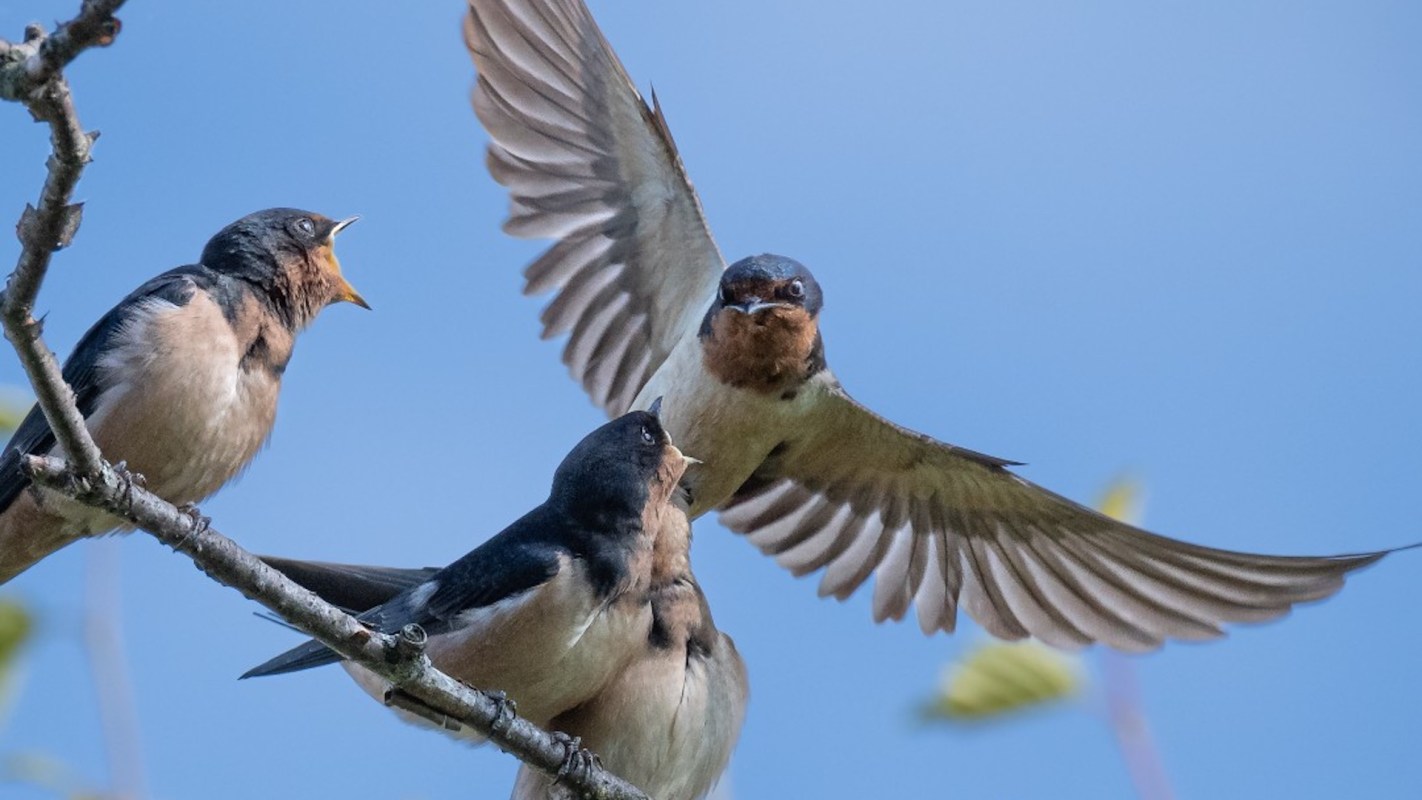
A graceful bird in midair and a line of juveniles waiting on a branch made for a striking wildlife moment on Instagram. In the post, the National Audubon Society featured the barn swallow, a species many people may recognize for its low, fast passes over open land.
What's happening?
In the post, the National Audubon Society shared a photo on Instagram by photographer Scott Broad that shows an adult barn swallow flying just above several juveniles perched on a branch.
The organization described the bird as "one of our most familiar birds in rural areas and semi-open country" and said it is "often seen skimming low over fields with a flowing, graceful flight."
The post also beckoned a question to commenters: "Where have you noticed any Barn Swallows lately?"
And, under the post, users answered.
"They're all over at the barn where we board our horse," one user wrote. "Saw four or five babies in there yesterday."
TCD Picks » Quince Spotlight
💡These best-sellers from Quince deliver affordable, sustainable luxury for all




"I see them in my neighborhood almost every day! They fly over the creek and golf course nearby," another commented.
"I've got three of their nests under my front porch ceiling on ledges in each corner," another wrote.
Why does it matter?
Barn swallows are more than a familiar sight above fields. Like many swallows, they feed on flying insects, making them part of the natural rhythms that shape the outdoor spaces where people live, work, and spend time.
They also stand out because they often share space with humans. Barn swallows are known for nesting on structures such as barns, sheds, bridges, and porches, which can make them easier to observe than many other wild birds. That can make them an accessible entry point for noticing local biodiversity.
What can I do?
If you spend time near fields, wetlands, farms, or country roads, look for the quick bird with a low, sweeping flight pattern. Watching from a respectful distance can help you learn where barn swallows feed and gather without disturbing them.
It also helps to avoid disturbing active nests. If barn swallows are using a ledge, beam, or structure on your property, giving them space during nesting periods can reduce stress on the birds and improve the odds that juveniles successfully reach adulthood.
Learning more about native birds in your area and supporting habitat conservation efforts nearby can build on that curiosity. Public-facing posts from organizations such as Audubon can make that easier by showing people what to look for.

Get TCD's free newsletters for easy tips, smart advice, and a chance to earn $5,000 toward home upgrades. To see more stories like this one, change your Google preferences here.







