


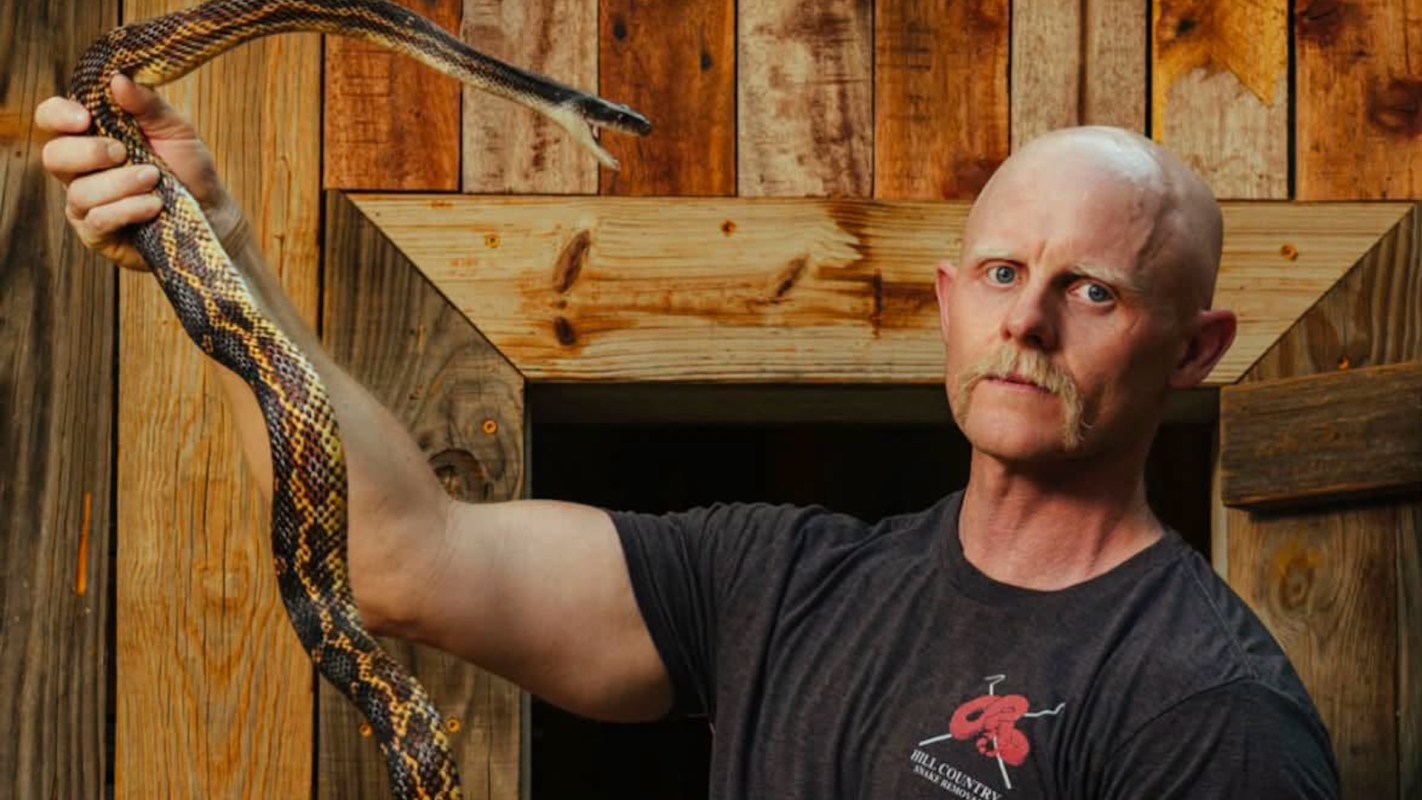
For many people, finding a snake at home is the stuff of nightmares. For 41-year-old Texas resident Brett Parker, it was the moment that helped turn a personal fascination with snakes into a 10-year business focused on keeping both people and snakes safer.
What happened?
Brett Parker owns Hill Country Snake Removal. He told Texas Monthly that one house call involving a woman who was new to Texas ended up setting the course for his career.
The outlet explained that after Parker graduated from college, he had gained a reputation for his fascination with snakes. That is what led a fire chief to reach out to Parker after receiving a call about a woman who found snakes in her house.
Those snakes turned out to be baby water snakes, Texas Monthly reported. Parker told the outlet he spent about an hour talking to the woman, a new Texas resident from Michigan, about the local species she might find around her home, including which ones were dangerous and which were not.
As Parker put it to Texas Monthly: "Before I left, she asked me what I charged, and I kind of looked at her funny. I've been in the snake-removal business for about 10 years since."
His busiest periods are spring and fall, the outlet noted. Many of the calls involve western diamondback rattlesnakes, and they usually come in two forms: homeowners who want guidance after seeing a snake and homeowners who need help immediately because they are looking at one right in that moment.
TCD Picks » Quince Spotlight
💡These best-sellers from Quince deliver affordable, sustainable luxury for all




Why does it matter?
As homes, garages, patios, and yards push deeper into natural areas, encounters with animals such as snakes become more likely. That broader pattern is not unique to Texas. Human-wildlife conflicts often rise when people alter or expand into animal habitat.
In that sense, a snake on a porch or in a garage is not always a sign that wildlife is "invading" so much as a reminder that people and animals are increasingly sharing the same ground.
Snakes play an important role in ecosystems, including helping control rodent populations, so killing them on sight removes useful predators while doing little to address the conditions that attracted them in the first place.
For homeowners, the human impact is more immediate: fear, emergency calls, and potential medical risk. Parker knows that danger firsthand. He said he has been bitten once by a rattlesnake and needed 26 vials of antivenom before his hand recovered.
What can I do?
Parker's approach is straightforward: remove the snake safely and move it away from people. Texas Monthly reported he often uses a snake hook, gets the animal under control, and moves it into a bucket before releasing it farther from homes.
Trying to kill a snake can increase the chance of being bitten, so people can contact trained removal experts or local animal control when a venomous snake appears on their property.
Homeowners can also reduce the odds of an encounter by clearing brush piles, sealing gaps around garages or foundations, and limiting rodent activity that may attract snakes. Learning which species in an area are venomous can also help replace guesswork with informed caution.
Experts urge people not to handle snakes themselves. Distance, observation, and calling a professional are often the safest options available.
"A lot of what people think they know about snakes is wrong, and that drives their irrational fear," Parker said to Texas Monthly. "My goal is to empower my clients: to not be so terrified of snakes and to respect them."

Get TCD's free newsletters for easy tips, smart advice, and a chance to earn $5,000 toward home upgrades. To see more stories like this one, change your Google preferences here.






