


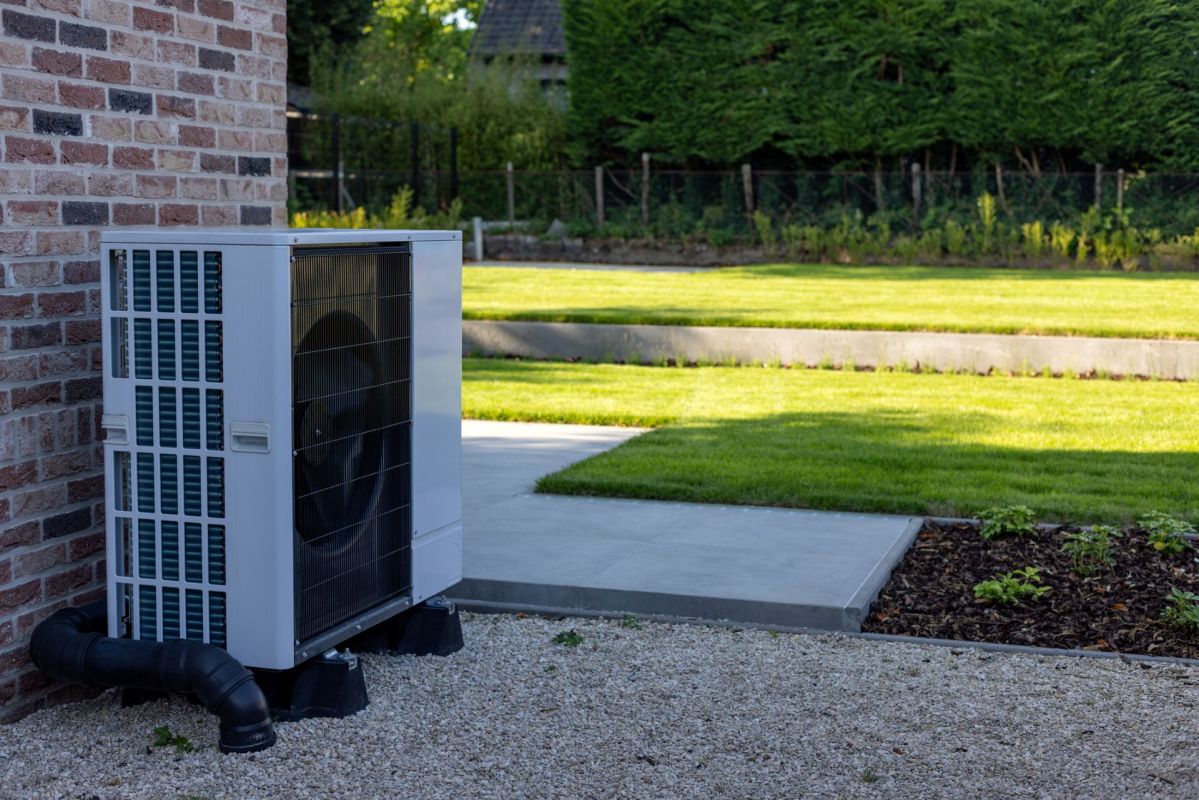
Heat pumps can help homeowners cut utility bills and gain some protection from rising energy prices, but one industry expert says the biggest obstacle to wider adoption may have a surprisingly simple solution.
What's happening?
Speaking on Latitude Media's Open Circuit podcast, home performance expert Nate Adams — also known as the House Whisperer — said the U.S. still makes heat pumps harder to purchase than they need to be.
Adams highlighted how often contractors install cooling-only systems, saying, "Every eight seconds in the US, an HVAC contractor installs an air conditioner that has only one mode, cooling."
Adams said the difference between a standard air conditioner and a heat pump is narrower than many homeowners might think. A heat pump can heat as well as cool, and he said the added hardware is relatively limited, with the main change being a reversing valve that only modestly raises equipment cost.
If you're exploring an upgrade, EnergySage's heat pump marketplace can help you understand your HVAC options, find efficient heating and cooling solutions for your home, connect with trusted installers, and slash your energy bills with new, efficient HVACs.
A key part of Adams' case is that HVAC replacements usually happen when something has gone wrong. In those emergency moments, homeowners often choose from whatever equipment a contractor already has available.
Why does it matter?
This matters for more than just emissions. Efficient heating and cooling can reduce energy bills, make homes more comfortable, and lessen dependence on fossil fuel prices that can swing unpredictably.
Because 80% to 90% of HVAC replacements are emergency jobs, Adams said, consumer rebates often fail to influence the decision when it actually happens.
"If it's not on the shelf, it doesn't get installed," he said.
Save $10,000 on solar panels without even sharing your phone number Want to go solar but not sure who to trust? EnergySage has your back with free and transparent quotes from fully vetted providers in your area. To get started, just answer a few questions about your home — no phone number required. Within a day or two, EnergySage will email you the best options for your needs, and their expert advisers can help you compare quotes and pick a winner. Solar panels can save you more than $50k over their 25-year lifespan, and EnergySage can help you save as much as $10k on installation. Which begs the question — isn't that worth an email or two? |

When a household ends up with a one-way air conditioner, that choice can keep it tied to fossil fuel heating for 15 to 20 years.
Jigar Shah, a clean energy investor and entrepreneur who co-hosts Open Circuit, also pointed to a compromise that could make electrification easier: hybrid systems.
Homeowners do not have to get rid of a furnace right away. A heat pump can handle much of the heating, while the furnace stays in place for the coldest days.
That approach can reduce costs and improve comfort without making the change feel like an all-or-nothing decision.
What's being done?
Adams said policymakers should pay less attention to consumer rebates and more to manufacturers and distributors, since those companies control what gets made, financed, and stocked.
In his view, if two-way units became standard inventory, homeowners dealing with a breakdown could wind up with a better system without having to navigate paperwork during a crisis.
If you want to act sooner, EnergySage can help you compare efficient HVAC options. If you're not ready to spend up front, Palmetto offers a $0-down HVAC leasing program that can lower your energy costs by up to 50%. Palmetto's HVAC leases start as low as $99/month and include 12 years of free maintenance.
At a lower price point, Merino makes single-room ultra-efficient HVACs targeted for heating and cooling that can be installed in under an hour.
You can also pair solar panels with electric appliances such as efficient HVACs to drive your utility costs even lower. EnergySage makes it easy to find the best solar system and installer for your home and budget, saving you up to $10,000 on installations.
Adams framed the change as minor: "It's reverse gear guys. Come on. This is not some major shift. It's one extra part, essentially."
Shah's version was even shorter: "Buy one, get heat free."

Get TCD's free newsletters for easy tips, smart advice, and a chance to earn $5,000 toward home upgrades. To see more stories like this one, change your Google preferences here.






