


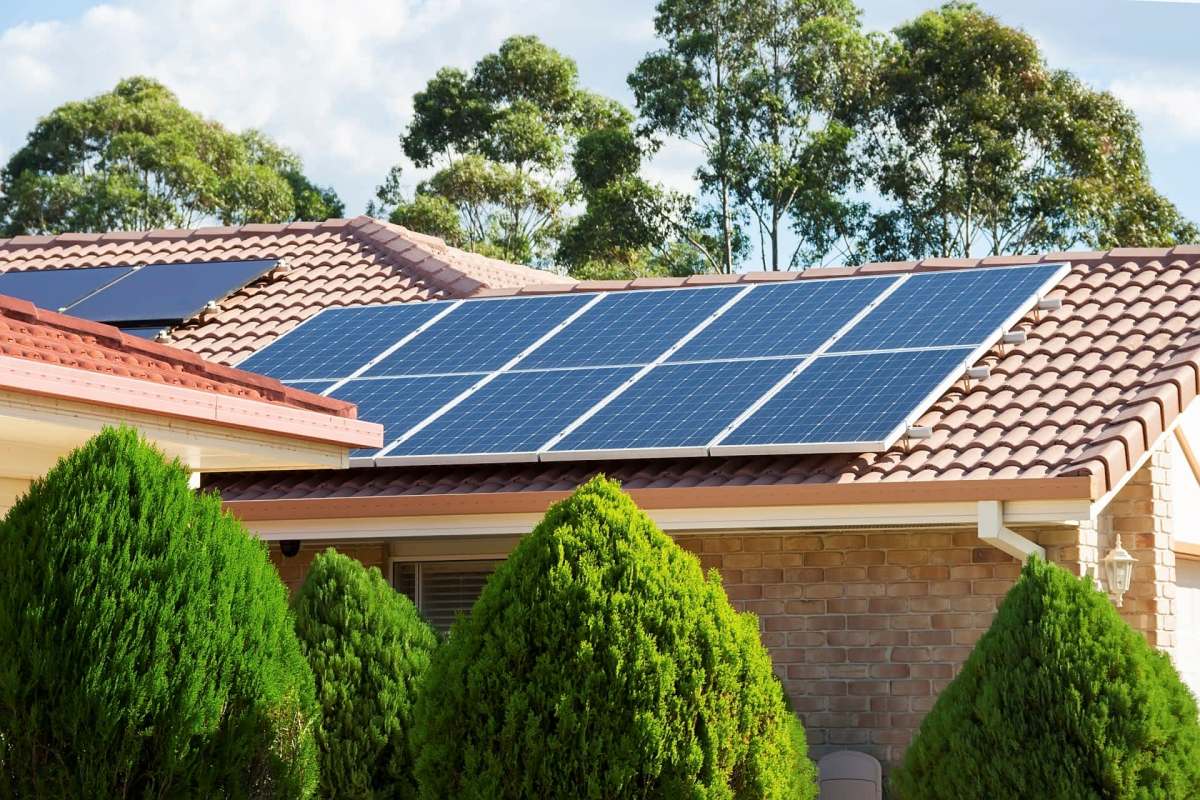
A New Jersey homeowner thought taking over a rooftop solar lease would help keep energy bills predictable after buying a first house.
Instead, the first electric bill raised questions about whether the inherited system is producing what was promised.
What happened?
The issue started when the South Jersey homeowner began scrutinizing the rooftop system that came with the house, and posted to Reddit about the issue. It is a roughly 3-year-old 6.075-kilowatt Sunnova lease handled through SunStrong, with payments set at $86.60 a month or $78 on autopay and no yearly increase, and the closer review came after what looked like damage to one panel.
Although the homeowner said one panel's glass "appears to be shattered and caved in slightly," they said the lease company responded that "everything is okay because its performing within acceptable margins at 93%."
The figures they shared showed a gap between projected and reported output. Their paperwork listed 8,660 kilowatt-hours for the first year and 8,574 kWh in year three, while SunStrong said the most recent 12-month total was 6,612 kWh. The utility bill, they added, showed 700 kWh used and 202 kWh of excess production.
One commenter quickly pointed to the central concern: "Got the contract? Read it closely. What does it require and guarantee? Estimates mean nothing."
TCD Picks » Quince Spotlight
💡These best-sellers from Quince deliver affordable, sustainable luxury for all




Why does it matter?
If a leased system underperforms, a customer could wind up paying both the lease bill and a higher-than-expected utility bill.
In this case, the homeowner is paying about $936 to $1,039 per year for the lease, depending on autopay. If the system is consistently generating far less than expected, they may not be getting the full value of what they are paying for.
There may also be a safety concern. A commenter warned, "I would consider a shattered solar panel to be a fire and electrocution hazard. Depending on how your solar system is set up, there could be 500 volts DC running through that panel."
What can I do?
A logical first move is to go through the lease for any terms covering output guarantees, upkeep responsibilities, and true-up provisions.
The homeowner said their paperwork states that deficiencies may be addressed through "repair or replacement of materials as necessary, or annual true-up payments equal to the deficiency multiplied by the annual kWh rate for the year."
Commenters also suggested requesting monthly production data from the solar provider and comparing it with utility import and export records. That could help show whether the system was offline for part of the year or whether one damaged component is dragging down output.
Commenters also pointed to PVWatts, a free estimator, as a way to check whether the reported generation is in a normal range. One person ran a nearby South Jersey example and said a 6.075-kW system could be expected to produce about 8,168 kWh per year, which suggests 6,612 kWh would be unusually low.
If a system is covered under warranty, a repair could restore expected savings, while a documented production shortfall could support compensation under the lease terms.
"Yeah come Monday I'm gonna try and get more info out of them," the homeowner wrote.

Get TCD's free newsletters for easy tips, smart advice, and a chance to earn $5,000 toward home upgrades. To see more stories like this one, change your Google preferences here.






