


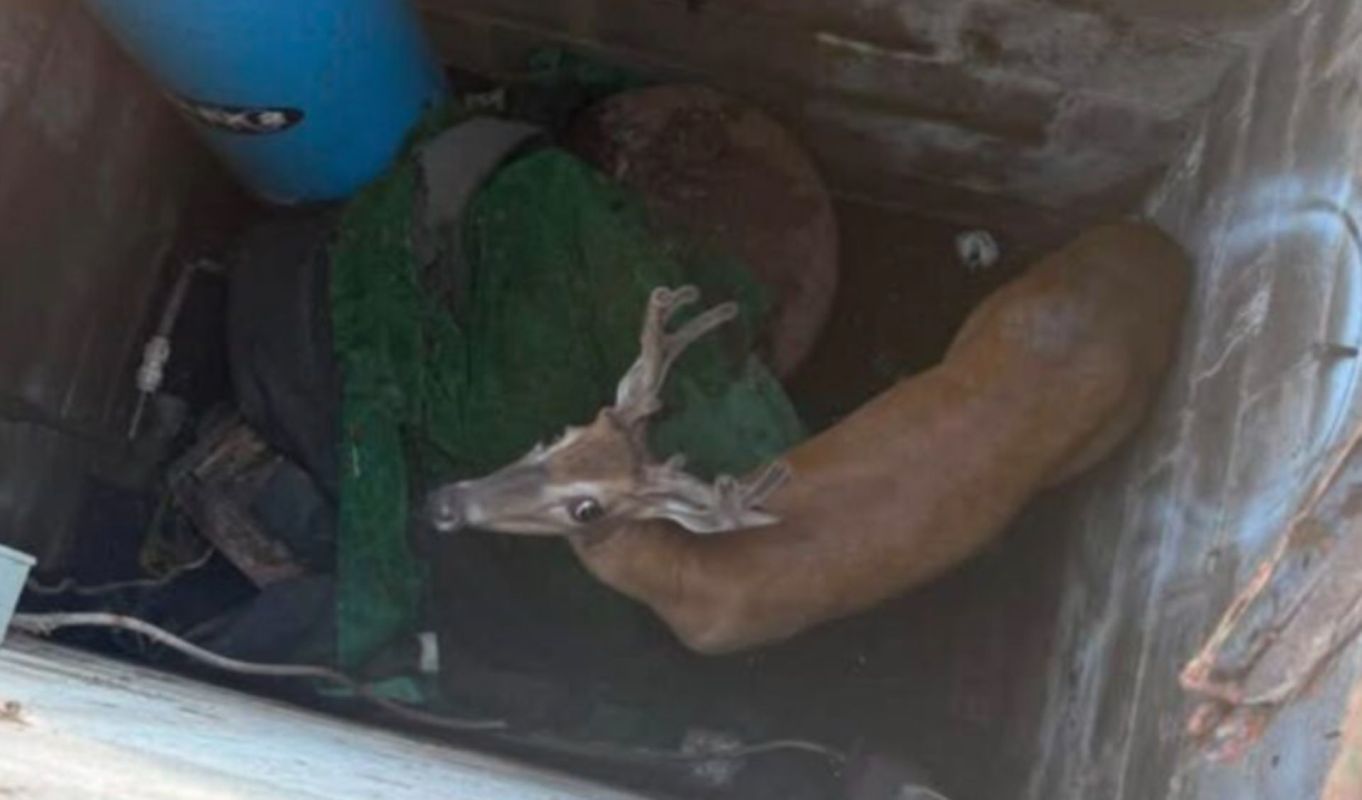
A dried-up well in New Jersey turned into an accidental trap for a white-tailed buck after the animal fell roughly 12 feet to the bottom and was unable to escape on its own.
The buck fortunately avoided injuries because police, wildlife officials, and firefighters were able to work together to get it out.
What happened?
The Hopatcong Police Department said a white-tailed buck was safely released back into the wild after authorities in Hopatcong Borough, N.J., answered reports of a deer stuck in a dry well, according to WRNJ Radio.
The rescue required teamwork from multiple agencies and specialists. WRNJ Radio reported that responders included Christian Nitko, a Wildlife Control Technician, and Senior Biologist Ryan Ferraro, both from New Jersey Fish & Wildlife's Wildlife Control unit, as well as Conservation Officer Della Vella from New Jersey Fish & Wildlife Enforcement and Patrolman Barnor of the Hopatcong Police Department.
WRNJ Radio also reported that members of the Hopatcong Fire Department assisted, while the department's Humane Law Enforcement Officer worked in coordination with New Jersey Fish & Wildlife.
After responders brought the buck up from the well, they released it back into its natural habitat.
TCD Picks » Quince Spotlight
💡These best-sellers from Quince deliver affordable, sustainable luxury for all




Why does it matter?
Wildlife can face serious danger in developed areas, including hazards many residents may never consider.
An uncovered well, abandoned structure, or open hole can quickly become a trap for deer and other animals simply passing through neighborhoods or along wooded edges.
The risk is not limited to wildlife, either. Hopatcong police noted that the same hazards can threaten people as well.
The incident also highlighted the role of trained responders in wildlife emergencies. A panicked animal trapped in a confined space can injure itself — or people trying to help — without the proper equipment and expertise.
In places shared with wild animals, prevention and quick coordination can make a difference.
What's being done?
Situations where animals become trapped in holes or manmade structures like this with no way out are why officials urge property owners to inspect and maintain their land. Police specifically pointed to abandoned structures, open wells, and uncovered holes as dangers that should be secured or repaired before they injure an animal or person.
Covering old wells, fencing off unstable areas, and reporting wildlife emergencies to trained authorities can help protect both animals and neighbors.
People who want to support wildlife-friendly efforts in their own communities can also check out the TCD Guide's page on taking local action for more ideas on getting involved close to home.
Hopatcong police thanked those involved in the rescue and commended their professionalism, teamwork, and dedication to protecting New Jersey's wildlife.

Get TCD's free newsletters for easy tips, smart advice, and a chance to earn $5,000 toward home upgrades. To see more stories like this one, change your Google preferences here.







