


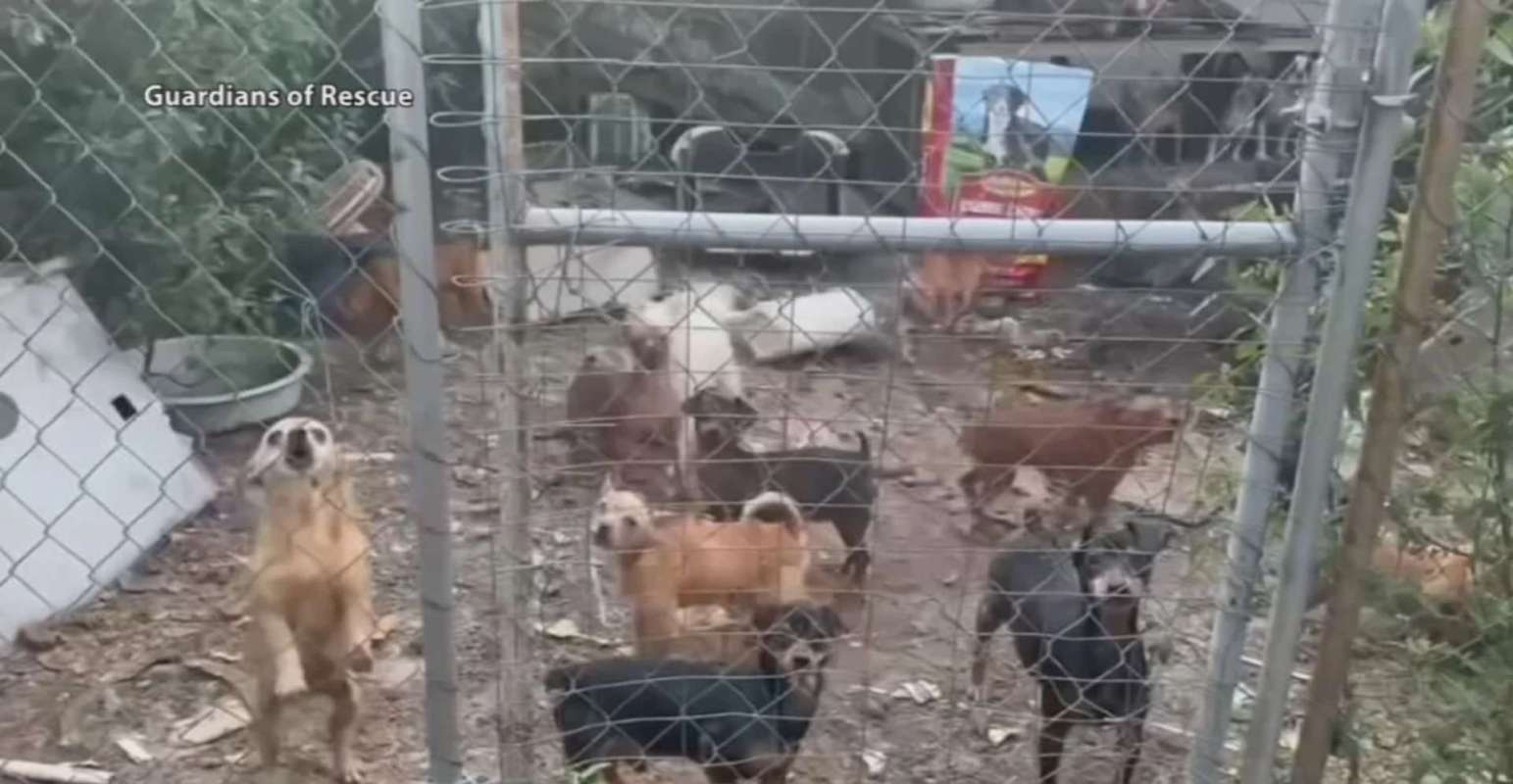
A major rescue operation is unfolding in Kentucky after volunteers discovered nearly 250 dogs in unsafe, overcrowded conditions on a wooded property near the Adair-Metcalfe county line.
WDRB reported that the animals represented a wide mix of ages and breeds, including Chihuahuas and Rottweilers. Some were kept in cages, while others were found under cars or rummaging through trash on the property.
What happened?
On a Kentucky property covering about five acres, volunteers found 244 dogs (and four cats), according to WDRB. The animals were living in severely neglected conditions, with many confined and others loose across the site.
The group included dogs at very different life stages and sizes, the outlet reported, from very young puppies to elderly animals.
The animals were found after one rescue nonprofit, the Guardians of Rescue, received a tip about the animals and reported it to the Kentucky State Police. According to WDRB, the police then told the homeowner that she could either surrender the animals or expect a warrant.
The homeowner then surrendered the animals, and explained to police that her late mother was a breeder and had died a few months prior.
TCD Picks » Quince Spotlight
💡These best-sellers from Quince deliver affordable, sustainable luxury for all




Thankfully, many of the rescued dogs have been transported to Louisville for care, with others being sent to rescues across the country, including other areas of Kentucky, Ohio, Pennsylvania, and Tennessee, per WDRB.
Why does it matter?
Cases like this are often described as hoarding situations, where the number of animals far exceeds any realistic ability to provide adequate food, sanitation, veterinary treatment, or safe shelter.
Large-scale hoarding cases often leave animals with health and behavioral challenges. Dogs kept in cramped, unsanitary conditions may suffer from infections, untreated injuries, malnutrition, parasites, and severe stress.
For shelters and rescue groups, taking in nearly 250 animals at once can place major strain on staffing, kennel space, medical resources, and foster networks. Even when an operation is successful, recovery rarely happens quickly.
Situations like this also tax local animal welfare systems, but earlier reporting and intervention can help prevent neglect from escalating.

Get TCD's free newsletters for easy tips, smart advice, and a chance to earn $5,000 toward home upgrades. To see more stories like this one, change your Google preferences here.







