


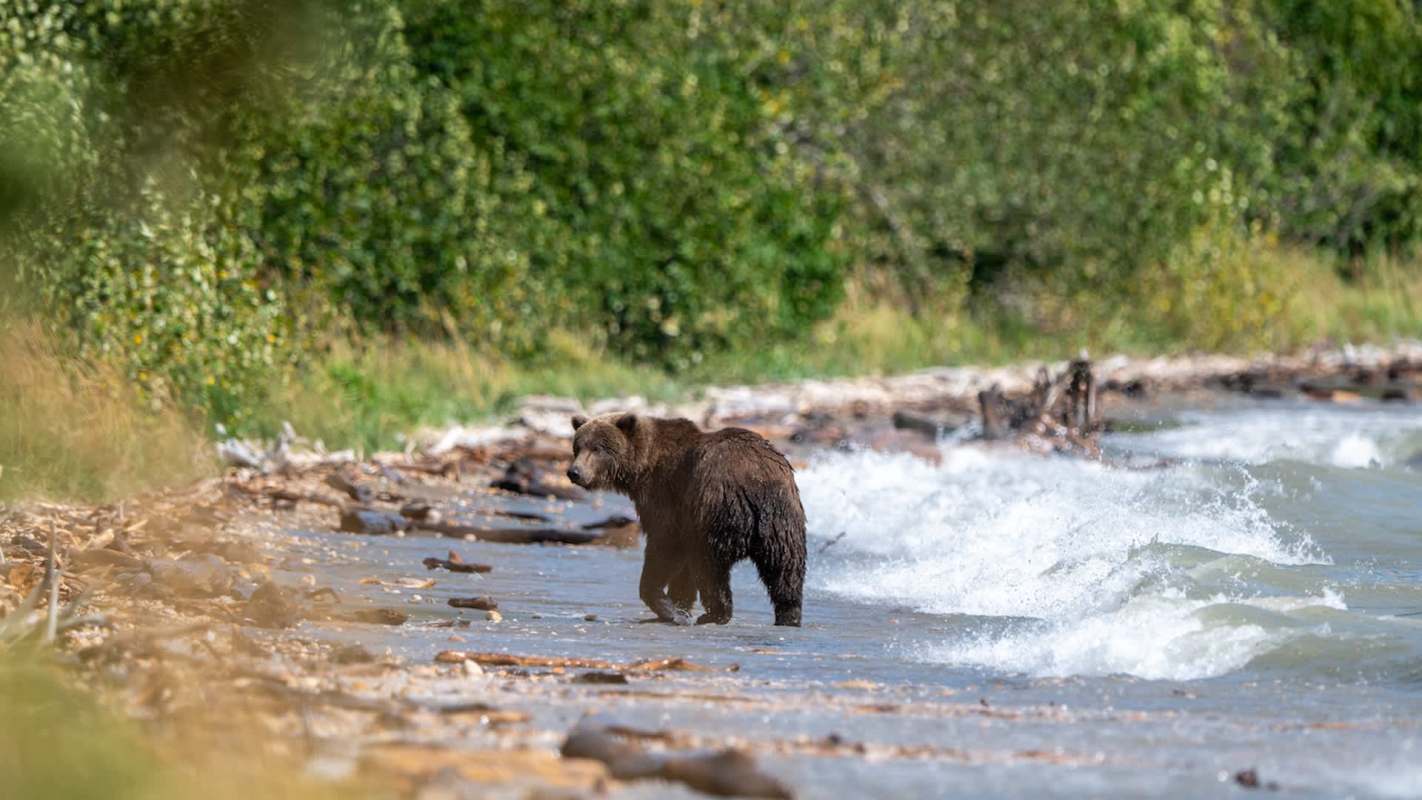
Most people watch Alaska's Katmai National Park bear cameras for salmon runs and everyday moments in the wild. But within just a week, the livestreams have shown two cub deaths, a grim turn in what rangers describe as an unusually crowded year for bears.
What happened?
According to KTUU, rangers said the fatal attack on one of bear 335's spring cubs happened below the Riffles platform, near the Angler Trail.
The encounter began when one of 335's cubs climbed into a tree that already held three cubs belonging to an unidentified mother, rangers said.
"A female went after 335's cub, attacked it in a tree, and pulled it out, significantly injuring it," park ranger Sarah Bruce said.
Park staff found the cub's body along the river. Bruce told KTUU that moving the carcass is standard practice because "Dead bears along the river pose harm to not only humans in the area, but also the other bears."
The incident followed another cub death just days prior. Bear 806 killed and ate a cub in what became the first recorded infanticide near Brooks River captured on the live cameras.
TCD Picks » Quince Spotlight
💡These best-sellers from Quince deliver affordable, sustainable luxury for all




Why does it matter?
Rangers say the two killings are happening during a season at Katmai that is already unusual for cubs.
Dr. Michael Saxon, a wildlife and bear biologist with the park, estimated that spring cub survival usually ranges from 33% to 50%, depending on density and other factors.
In 2026, crowding appears to be central to the problem. KTUU reported that rangers counted 25 spring cubs at Brooks River and more than 30 young bears overall, including yearlings and older cubs.
High water has also concentrated more bears near the falls, where the fish are gathered. Bruce said, "When we have over 30 cubs, in addition to the 60 to 80 regular bears that come to the falls every year, that's a lot of bears in Brooks Camp."
The incidents also have immediate effects, including trail closures and tighter access around one of Alaska's best-known bear-viewing areas.
What's being done?
The National Park Service is not stepping in over the cub's death.
According to KTUU, rangers shut down the area around the attack and expect the closure to last several days. Christine Loberg, a ranger at Brooks Camp, said the restriction is meant to protect both people and bear 335, which stayed nearby after the incident.
"The mother is possibly grieving and still continuing to look, hoping that maybe she'll find her," Loberg said. "We need to have the bears have their space."
Rangers said 335's other two cubs are still alive, and Bruce said she does not think the mother will abandon them.
The Katmai Conservancy also said it will offer a written summary in its newsletter for viewers who do not want to watch disturbing footage in real time.
"Nothing in nature is ever wasted even though it is really hard to watch," Bruce said.

Get TCD's free newsletters for easy tips, smart advice, and a chance to earn $5,000 toward home upgrades. To see more stories like this one, change your Google preferences here.







