


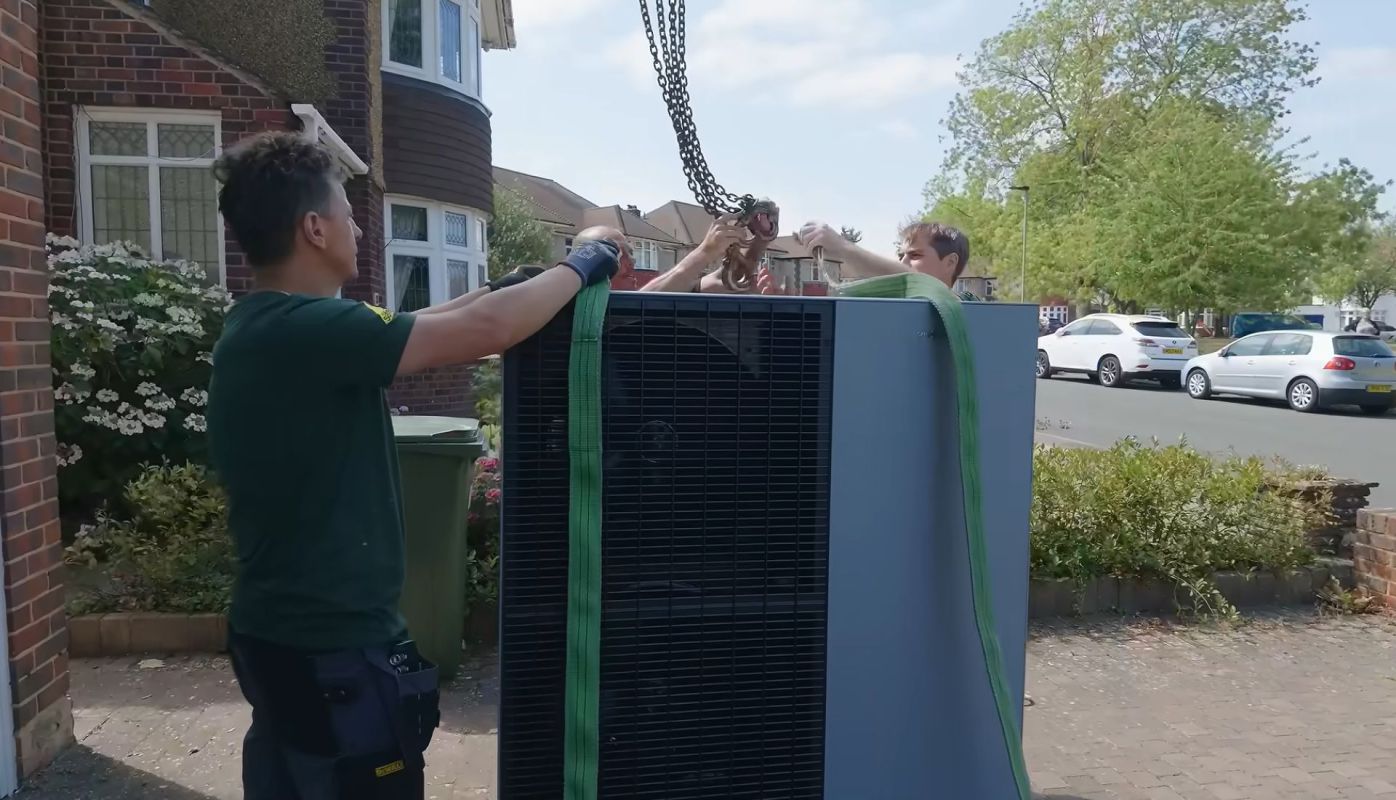
Putting a heat pump on a roof may sound unusual, but one contractor's video suggests that even a difficult retrofit can become much more manageable with the right equipment.
To hoist the large, heavy heat pump onto a roof, the crew avoided smaller lifts that the installer had called "sketchy" on other jobs and used a crane instead, getting the outdoor unit up and into place in roughly 30 minutes.
What happened?
A YouTube video from Urban Plumbers (@UrbanPlumbers) follows the installation of a 13-kilowatt Viessmann Vitocal 150 at an older home where severe layout limitations led the team to place the unit on the roof.
The content creator, who covers ultra-efficient heating solutions, first stressed how awkward the lift seemed, saying: "We got a very sketchy job today of lifting this unit onto the roof with this gigantic crane."
However, after the unit was set, he highlighted how quickly and smoothly the process had gone.
"Using a crane to lift this unit here took half an hour including setting up the crane and packing it up," the creator said.
TCD Picks » Quince Spotlight
💡These best-sellers from Quince deliver affordable, sustainable luxury for all




The property created challenges beyond the lift itself. According to the installer, it was an older solid-wall house with loft insulation and double glazing but no floor insulation, leading to about 10.5 kW of heat loss.
When it came to finding a suitable place for the heat pump, several ground-level locations were ruled out because of considerations such as drainage constraints and window clearance. After alternative locations were eliminated from consideration, the roof remained the most workable place for the unit.
As for using a crane to lift the heat pump to the roof, commenters agreed with the creator's approach.
"I love using a crane for getting heat pumps into place," one commenter wrote. "It's so much safer and quicker than the alternatives."
Why does it matter?
Finding ways to retrofit older homes with new, energy-saving technology can be one of the biggest challenges facing homeowners and contractors.
Finding an easier, more efficient way to install roof-mounted heat pumps is significant because heat pumps can save money on energy costs while reducing the pollution generated by older home-heating methods that directly use oil or gas.
Despite these advantages, older homes can make electrification much more complicated than simply swapping out one piece of equipment for another.
For houses like these, the obstacles to installation can include access, siting, pipe sizing, and radiator compatibility.
The retrofit depicted in the YouTube video combined many of those issues in one installation: The team used large-diameter copper piping, moved the hot water cylinder into the loft, and checked radiator performance with thermal imaging.
The creator also said the custom curved radiators used for the bay windows cost more than £2,000 (about $2,700) each.
As one commenter pointed out, some installers won't even consider doing rooftop heat-pump installations because of all the challenges involved.
"In the Netherlands installers don't want to support heatpumps installed on roofs," they said. "Main reason is installer safety and the amount of measures they have to take to avoid accidents."
What can I do?
A difficult home layout does not necessarily eliminate heat pump options, but it can mean the system needs more careful planning.
Still, the time and expense can be worth it in the long run, as the homeowner can benefit from reduced energy costs and the peace of mind of knowing that their home-heating upgrade is also generating less air pollution.

Get TCD's free newsletters for easy tips, smart advice, and a chance to earn $5,000 toward home upgrades. To see more stories like this one, change your Google preferences here.






