


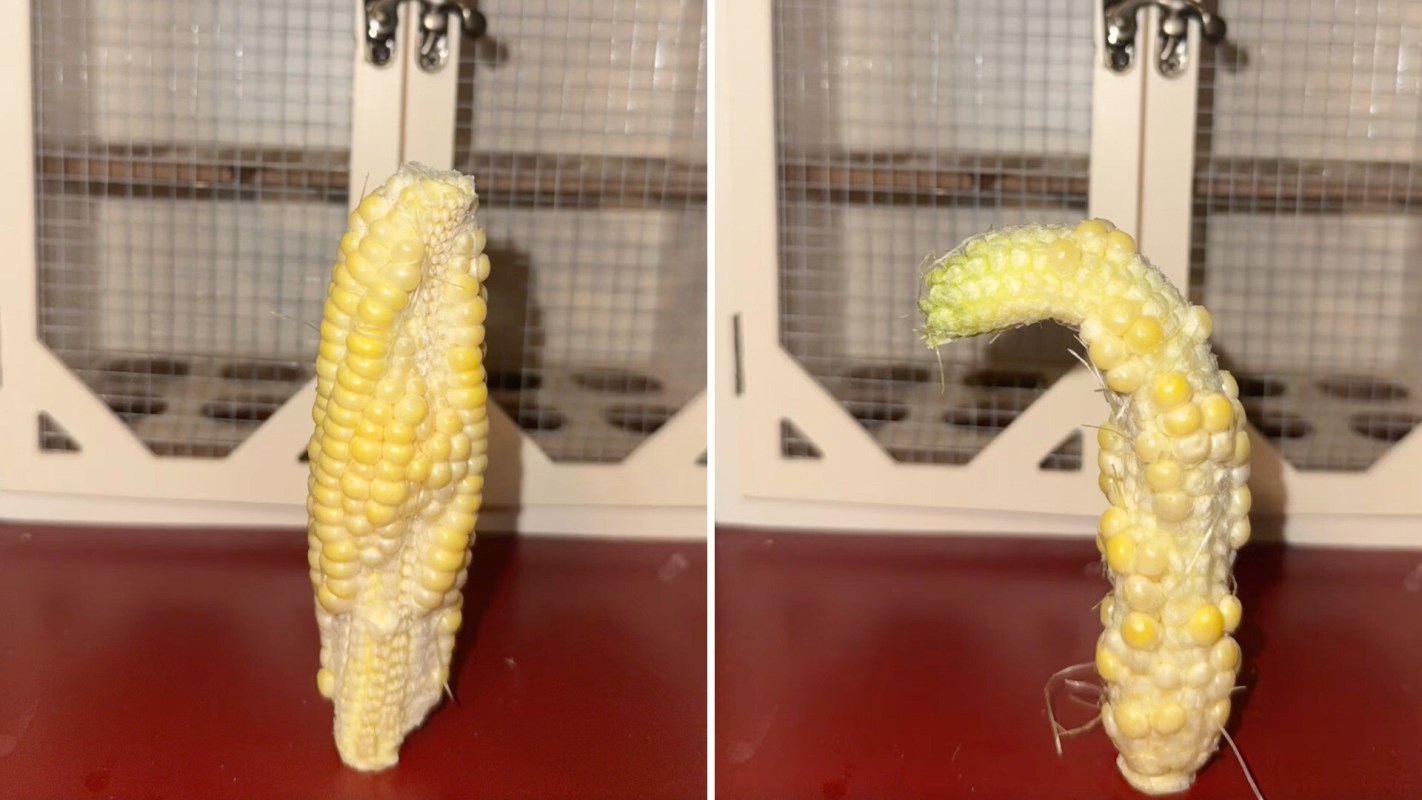
Growing food at home can bring a satisfying win — or a humbling lesson — sometimes in the very same harvest.
One homesteader learned this the hard way after one corn harvest came in beautifully and the next exposed a common challenge for home growers.
What happened?
In a video posted on TikTok, Emily (@emilygwashington) described the stark contrast between harvests with the caption: "My first harvest was perfect…my second one not so much."
@emilygwashington My first harvest was perfect…my second one not so much 💀 #garden #corn #homesteading ♬ original sound - amaliatown
The pictures from the homesteader's second harvest showed that the corn suffered from misshapen ears and missing kernels.
In the replies, gardeners pointed to pollination as the likely issue.
"You may need to self pollinate lol," one person wrote.
TCD Picks » Quince Spotlight
💡These best-sellers from Quince deliver affordable, sustainable luxury for all




"Need to add more plants for better pollination," another added.
For corn, that advice tracks. Unlike many garden plants that rely heavily on bees and other insects for pollination, corn is primarily wind-pollinated. If there are too few stalks, or if they are planted in a way that limits pollen spread, ears can develop with missing kernels or uneven, patchy growth.
Why does it matter?
As farmers know, a disappointing harvest isn't always the grower's fault. Rather, a poor harvest can simply mean a crop lacked the conditions to grow optimally. Sometimes, these conditions are outside of the grower's control.
However, there are still steps that people can take to increase the chances of favorable growing conditions.
Corn is a classic example of this. Many first-time growers plant corn the way they would tomatoes or peppers, without realizing that corn typically does better in blocks than in long, isolated rows. That setup improves the odds that pollen from the tassels reaches the silks on every ear.
Learning that lesson can save growers time, money, water, and garden space.
What can I do?
If you want to grow better corn at home, one of the simplest steps is to plant enough stalks close together in a block formation so wind can move pollen around more effectively.
Gardeners with limited space can also try hand-pollinating. That usually means collecting pollen from the tassels and gently applying it to the silks, especially if the planting is small or conditions are not ideal.
It also helps to keep expectations realistic. Corn can be fun to grow, but it is not always the easiest crop for compact gardens.
One commenter noted this reality, writing: "I grow corn for fun, hardly ever for nutrition."

Get TCD's free newsletters for easy tips, smart advice, and a chance to earn $5,000 toward home upgrades. To see more stories like this one, change your Google preferences here.






