


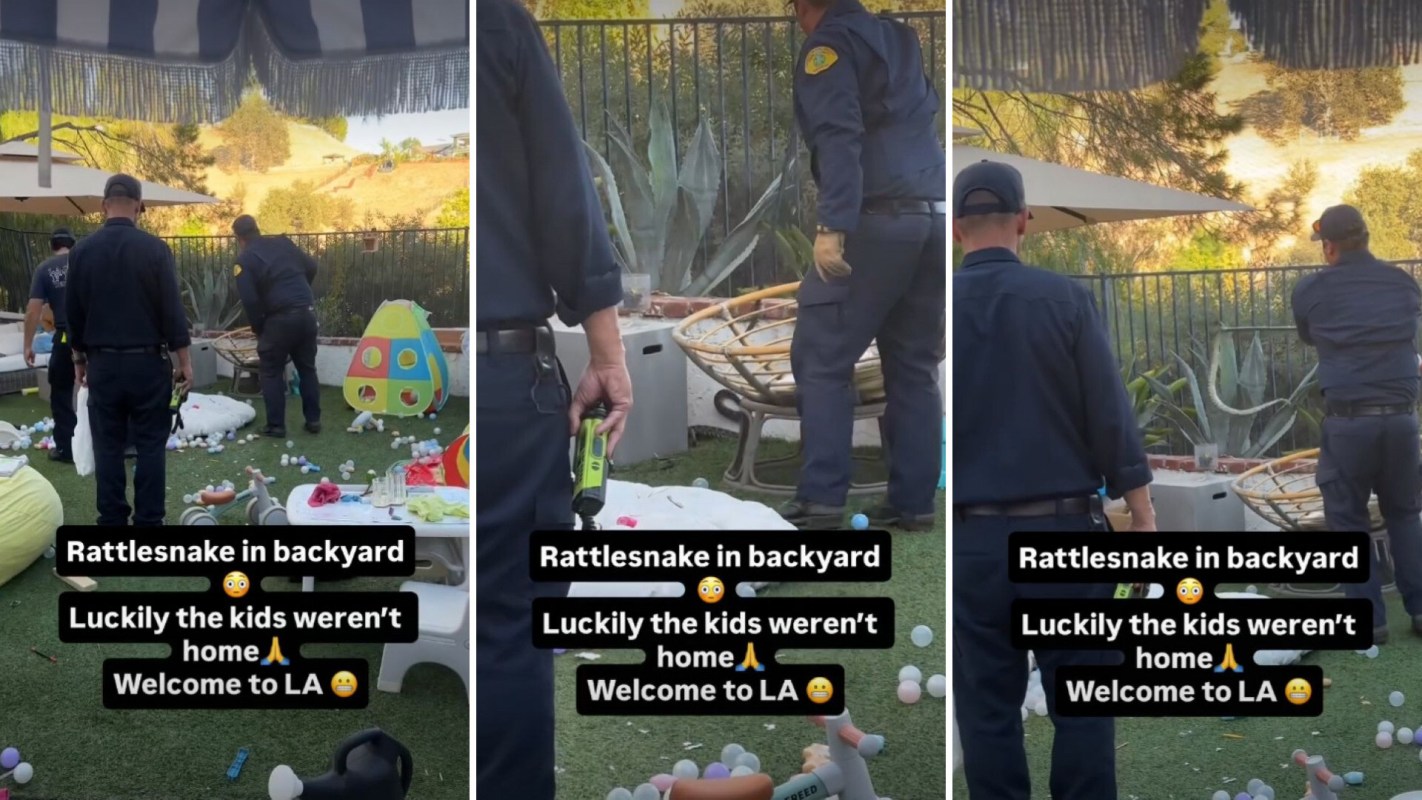
Los Angeles County firefighters answering a call in Calabasas, California, ended up removing a rattlesnake from an especially unexpected spot: a backyard play area filled with children's toys.
While no one was injured, the incident highlighted how quickly a wildlife encounter can become dangerous when residential neighborhoods overlap with animal habitat.
What happened?
Video shared on Instagram showed firefighters using a grabber tool on a rattlesnake as it struggled to wriggle free. The snake had been found around 6 p.m., when crews responded to a Calabasas home and discovered it concealed among children's toys in the yard, KTLA reported.
No children were home when the snake was found, a circumstance that may have prevented a much more serious incident.
Even though rattlesnakes generally avoid people, they can show up in residential yards during warm weather. California has seven species, and hotter conditions may draw them toward shade, water, or other forms of cover near homes.
Why does it matter?
The encounter also reflects a broader pattern. Wildlife dangers do not exist only on hiking trails or in remote places.
TCD Picks » Quince Spotlight
💡These best-sellers from Quince deliver affordable, sustainable luxury for all




As development expands into wild areas and yards provide shelter through toys, landscaping, wood piles, and other hiding places, people and wildlife are increasingly likely to cross paths. Reporting on human-wildlife conflict has explored these interactions in coverage of why wild animals attack humans.
Rattlesnake bites are medical emergencies. Young children can be especially vulnerable because of their smaller body size and natural curiosity, so a snake concealed near toys could easily go unnoticed.
As human activity alters local ecosystems, animals adapt in ways that can bring them into neighborhoods to find heat, food sources, and shelter.
What can I do?
If you live in snake country, experts generally recommend making yards less attractive to wildlife by removing clutter, trimming overgrown vegetation, and checking shaded areas where snakes may hide. Children's play areas, storage piles, and pet spaces may require extra attention.
Homeowners can also reduce risk by sealing gaps around their homes, keeping grass short, and watching for rodents. Also, when spending time outside, wearing closed-toe shoes and doing a quick visual check of the area can provide another layer of protection.
If you do spot a rattlesnake, the safest response is to keep your distance and call trained professionals. Attempting to handle or kill the snake yourself can sharply increase the risk of a bite.
Coexisting with wildlife often means focusing on prevention, awareness, and respect for the fact that animals may use the same spaces humans have built in former habitats.

Get TCD's free newsletters for easy tips, smart advice, and a chance to earn $5,000 toward home upgrades. To see more stories like this one, change your Google preferences here.







