


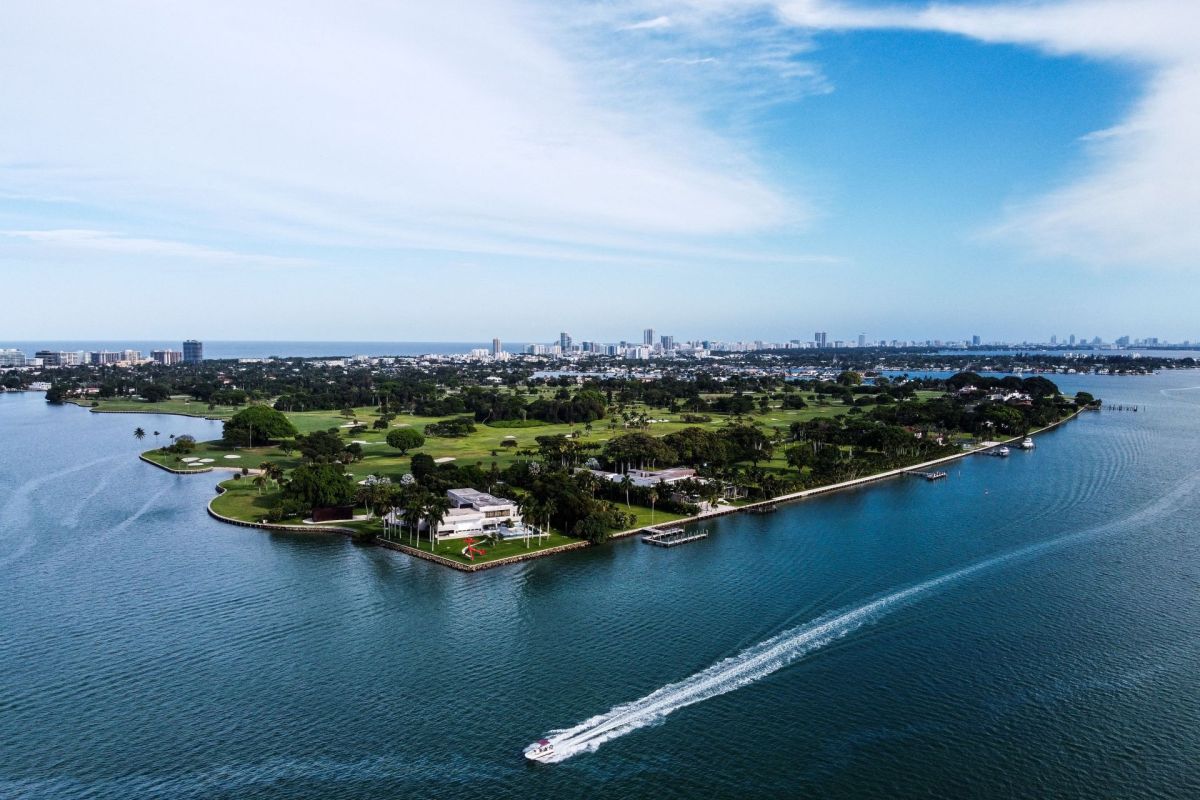
Indian Creek Island, a man-made enclave near Miami Beach, is Miami's most exclusive neighborhood — not just expensive, but designed to keep nearly everyone else out. The island had a population of just 84 in 2020 and, as Fortune reported, is protected by a guarded bridge and a police force that patrols by land and sea.
What's happening?
According to Fortune, known as the "Billionaire Bunker," the 300-acre artificial island has become one of the most tightly controlled concentrations of wealth in the United States.
Among the residents, the outlet reported, are Amazon founder Jeff Bezos, Meta CEO Mark Zuckerberg, NFL quarterback Tom Brady, and Ivanka Trump, daughter of President Donald Trump.
Access to the island's golf course comes with a $500,000 initiation fee, Fortune reported, and the main island has only 41 waterfront lots, underscoring how scarce that slice of South Florida real estate is.
Michael Martirena, a real estate expert specializing in ultra-luxury developments, told Fortune that the area's appeal goes well beyond its staggering home prices.
"It's a bubble, and no one can get on and off, unless you have a reason," he said.
TCD Picks » Quince Spotlight
💡These best-sellers from Quince deliver affordable, sustainable luxury for all




Anyone entering by the island's lone bridge to the mainland must show identification, and many homes are sold off market, which keeps deals quiet and largely out of public view.
Why does it matter?
Indian Creek offers an example of how concentrated wealth can shape land use and community design. In a region where land is limited and demand remains high, the existence of enormous estates spread across oversized waterfront lots shows how much space and infrastructure can be devoted to a very small number of people.
Florida's lack of state income tax remains part of the draw, Martirena told Fortune.
Some wealthy buyers appear to be reshuffling where they live and where they hold assets in an effort to avoid future taxes. Moves like that can influence development patterns, local housing markets, and the public resources available to surrounding communities.
"It's the place to be," Martirena told Fortune. But he also summed up the appeal more simply: "People of that caliber feel safe and not bothered."

Get TCD's free newsletters for easy tips, smart advice, and a chance to earn $5,000 toward home upgrades. To see more stories like this one, change your Google preferences here.






