


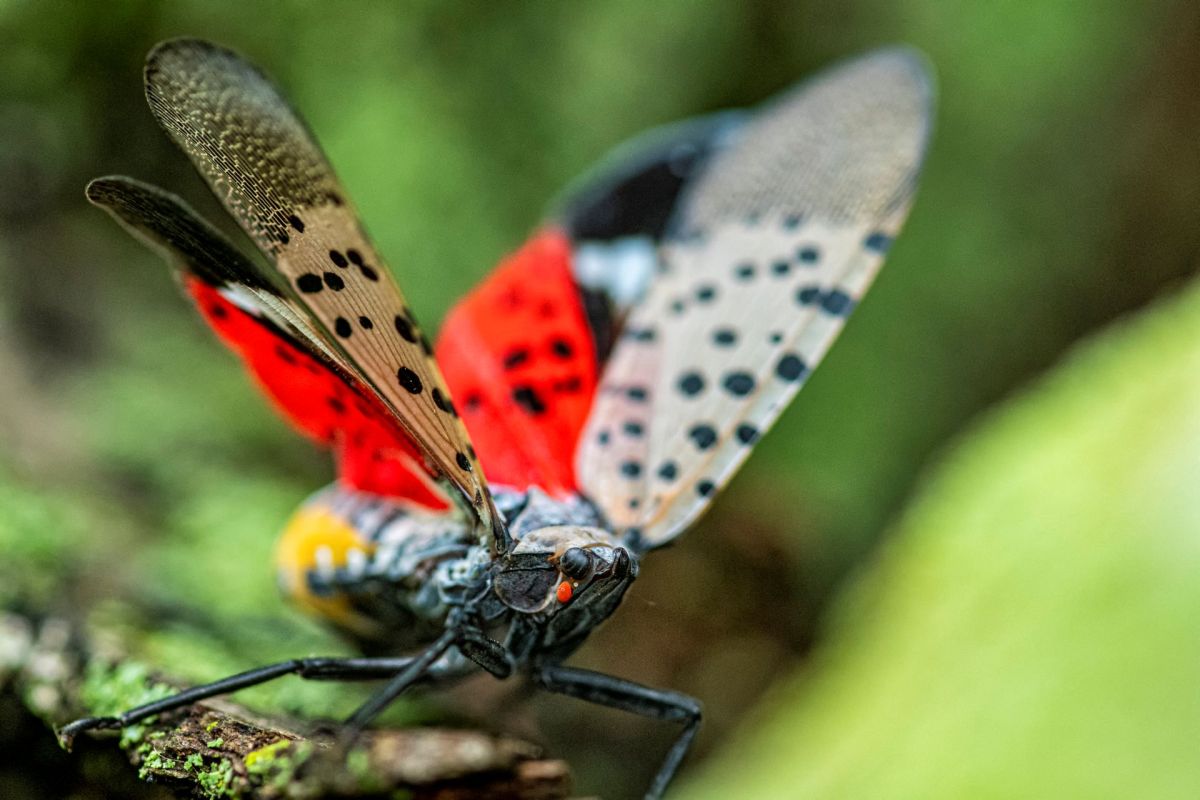
Even if people across the Pittsburgh area feel like they are seeing fewer invasive spotted lanternflies, Allegheny County is still reporting more of them than any other county in Pennsylvania.
Yet this apparent decline in visibility does not necessarily mean the invasive pest has been brought under control, the Pittsburgh Post-Gazette reported.
What's happening?
State Department of Agriculture data shows a drop in citizen reports both in Allegheny County and across the Keystone State.
From January through June, Allegheny County logged 104 reports, still the state's highest total but down from 211 during the same period in 2025. Statewide, reports fell from 765 to 528, per the Post-Gazette.
Since the invasive insect was first found in Berks County, in 2014, the spotted lanternfly has been confirmed in 56 of Pennsylvania's 67 counties and has spread to at least 19 states.
Shannon Powers, press secretary for the Pennsylvania Department of Agriculture, told the outlet that the decline in reports should not be mistaken for the insect's disappearance. "We have less of them, but they are still here," Powers explained.
TCD Picks » Quince Spotlight
💡These best-sellers from Quince deliver affordable, sustainable luxury for all




Weather may be one factor, said Holly Shugart, an assistant research professor in Penn State's entomology department. "It's complicated this year," Shugart told the Post-Gazette, noting that a late-April freeze alongside drought conditions may have reduced some populations.
So, just because Pittsburghers are seeing fewer lanternflies this year doesn't mean their populations won't rebound.
Why does it matter?
For many residents, spotted lanternflies are a stubborn nuisance. They show up in clusters, feed on plant sap, and leave sticky honeydew behind.
But the risk goes beyond annoyance to broader economic and environmental damage. These insects can kill grapevines, threatening vineyards and, the Post-Gazette reported, the larger agricultural economy that supports jobs and local businesses.
One Penn State estimate showed that these invasive bugs could cost the Pennsylvania economy nearly $324 million a year.
The impact is not limited to farms, either. Homeowners can face harm to ornamental plants and vegetable gardens, while towns and neighborhoods bear the cost and frustration of dealing with a pest well suited to urban and suburban areas.
Officials are still urging people to kill the bugs when they find them and to keep submitting reports. Fewer sightings may reflect public fatigue as much as a real population decline, the Post-Gazette noted.

Get TCD's free newsletters for easy tips, smart advice, and a chance to earn $5,000 toward home upgrades. To see more stories like this one, change your Google preferences here.






