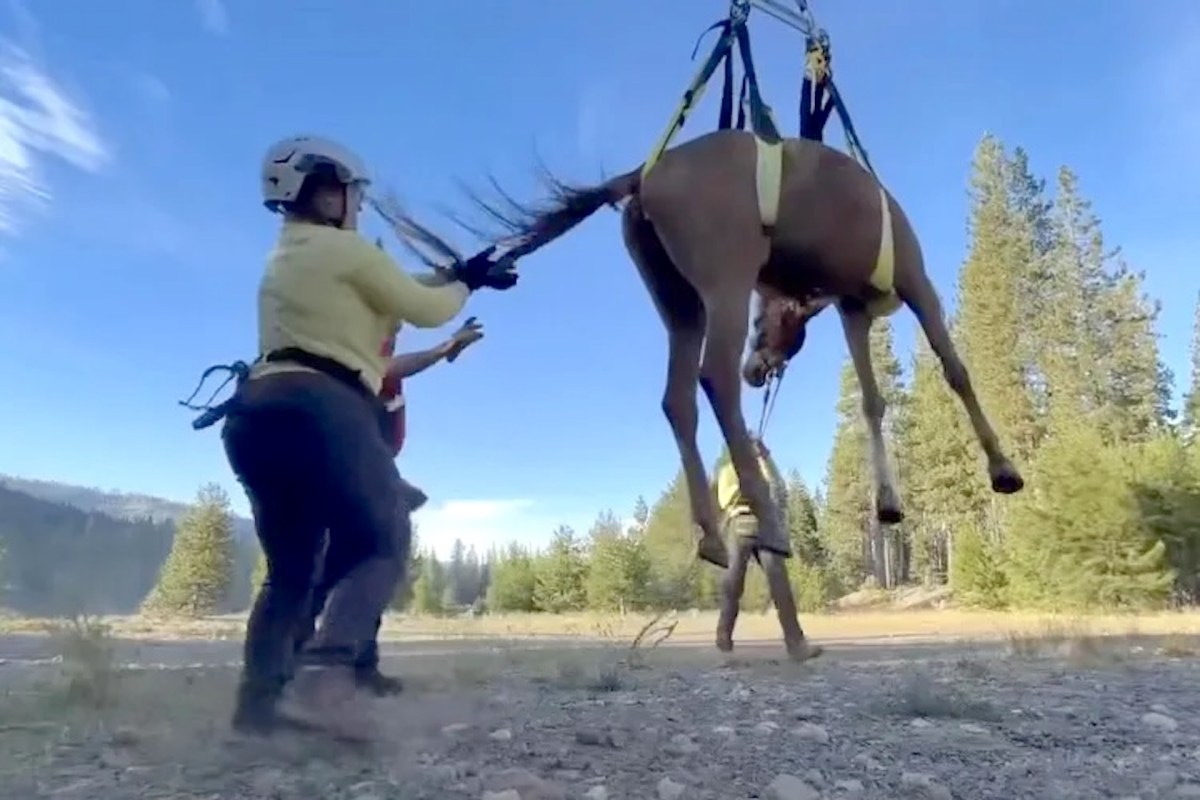
A helicopter was deployed to rescue a horse stranded high in the California wilderness after bucking its rider during a 100-mile endurance ride on Aug. 1.
"As temperatures continued to rise, time became a critical factor," the Nevada County Sheriff's Humane Emergency Animal Rescue Team (HEART) shared in a social media post about the rescue. "We knew when the horse had last been able to hydrate, and it was becoming increasingly important to get eyes on him."
What happened?
The horse and its rider were participating in the Tevis Cup, which sends 102 teams across 100 miles in the Lake Tahoe, California, area with 24 hours to finish the route, which is known for its steep and rocky backcountry conditions.
The horse had bucked its rider — who was found quickly and uninjured — and became stuck in an area at around 7,200 feet that was inaccessible by foot or vehicle, officials told People. Luckily, the horse had a GPS device in its saddle, so the rescue teams were able to locate it for the helicopter.
Once with the horse, a veterinary team from the University of California, Davis, sedated the horse so HEART could transport it safely to a landing area near the French Meadows Reservoir.
Why does it matter?
Animals working alongside humans are vulnerable in extreme conditions. When something goes wrong far from roads or trailheads, a rescue can quickly turn life-threatening without specialized equipment and trained crews.
TCD Picks » Quince Spotlight
💡These best-sellers from Quince deliver affordable, sustainable luxury for all




For local communities, helicopter units and emergency responders often serve as a safety net not only for people but also for pets, livestock, and wildlife caught in dangerous situations. Maintaining those services can be expensive.
In this case, a sheriff's helicopter unit responded in remote terrain. Specialized public safety teams can bridge a gap that ordinary rescue methods cannot, especially when an injured or stranded animal cannot be moved safely over land.
"It's important to remember that Large Animal Technical Rescue isn't about dramatic moments," HEART said. "It's about making good decisions under pressure, adapting to changing conditions, trusting your partners, and executing the fundamentals flawlessly. This mission was a perfect example of all of the above. It couldn't have been completed without all involved teams doing their thing!"
For readers looking to strengthen emergency readiness in their own communities, check out resources on taking local action. People who want to support broader resilience and conservation efforts can also explore information about donating money to climate causes.
Community responders can make a lifesaving difference in the wilderness — not just for people, but also for the animals that share the journey with them.

Get TCD's free newsletters for easy tips, smart advice, and a chance to earn $5,000 toward home upgrades. To see more stories like this one, change your Google preferences here.