


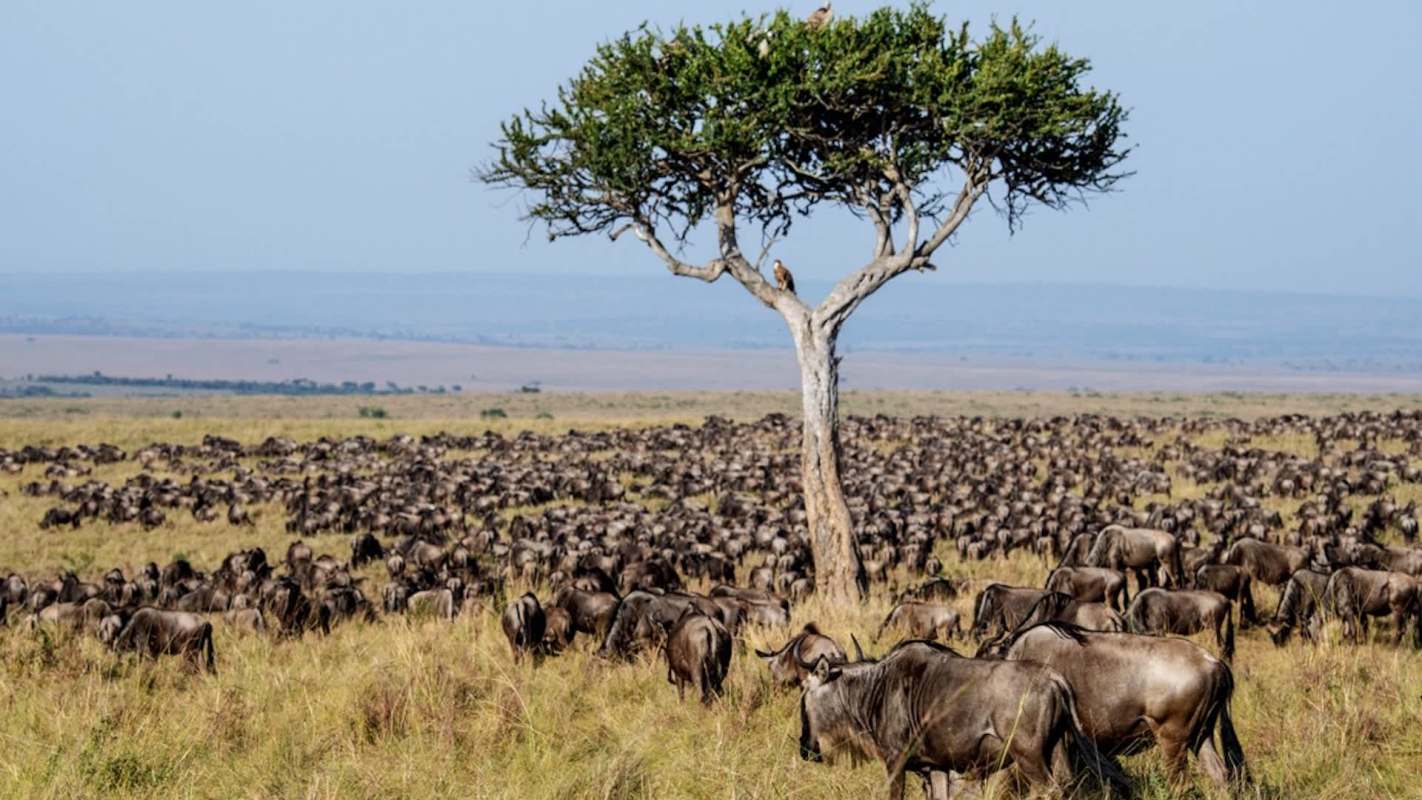
Kenya's Maasai Mara is again seeing the return of huge wildebeest herds. The movement, which unfolds across East Africa's grasslands year after year, is one of the planet's most dramatic wildlife migrations and has been happening for generations.
The scene is breathtaking, but it also underscores how deeply life depends on open, connected landscapes.
What's happening?
On July 31, National Geographic Explorer and wildlife photographer Beverly Joubert shared a photograph of the migration spreading across the Mara plains. In an Instagram post, Joubert described the annual arrival of wildebeest into Kenya's Maasai Mara after a long journey north from Tanzania's Serengeti.
"It's that time of year again, when Kenya's Maasai Mara thunders with the sound of a million hooves," she wrote.
Her caption emphasized the sound, scale, and urgency of the event, portraying the herds as they "bring the grasslands to life in every direction you look."
The migration is more than a scenic spectacle. It is part of a cyclical journey shaped by rainfall, grazing conditions, and instinct.
TCD Picks » Quince Spotlight
💡These best-sellers from Quince deliver affordable, sustainable luxury for all




The route is perilous, and many animals die before the herds complete it, moving through dangerous rivers, wooded stretches, and areas where predators are common.
Why does it matter?
The wildebeest migration is one of the clearest examples of how ecosystems function at scale.
When massive herds move through grasslands, they shape grazing patterns, fertilize the land, and help sustain a food web that includes predators and scavengers.
Healthy wildlife populations can support tourism economies and local livelihoods in places such as the Maasai Mara, where visitors travel from around the world to witness migrations, river crossings, and the region's biodiversity.
Animals that depend on long-distance movement are especially vulnerable when habitat becomes fragmented.
Fences, development pressure, and environmental stress can all make ancient routes harder to follow.
The migration is a vivid illustration of why biodiversity protection is not an abstract idea.
When landscapes remain healthy and connected, species have a better chance to adapt, feed, and reproduce as they have for centuries.
What can I do?
One practical step is to support organizations and community-led efforts that protect wildlife habitat and migratory corridors.
Large animal movements do not happen by accident; they depend on land staying open and being managed in ways that allow wildlife and people to coexist.
People planning safaris or wildlife trips can look for operators that follow responsible viewing rules, respect animal space, and support local conservation and community benefits rather than exploit fragile habitats.
Photography and firsthand documentation from people like Joubert can help keep public attention focused on species protection, habitat conservation, and the value of preserving ecosystems before they are broken apart.
Learning more about biodiversity and sharing credible information can also build support for policies and projects that protect wild places on a larger scale.
Joubert captured the stakes in her caption.
She said the migration "begins far south on the Serengeti's open plains and cuts through predator-rich territory, tangled woodlands, and rivers fraught with danger."
It is, she added, "an ancient pull toward greener grazing."

Get TCD's free newsletters for easy tips, smart advice, and a chance to earn $5,000 toward home upgrades. To see more stories like this one, change your Google preferences here.







