


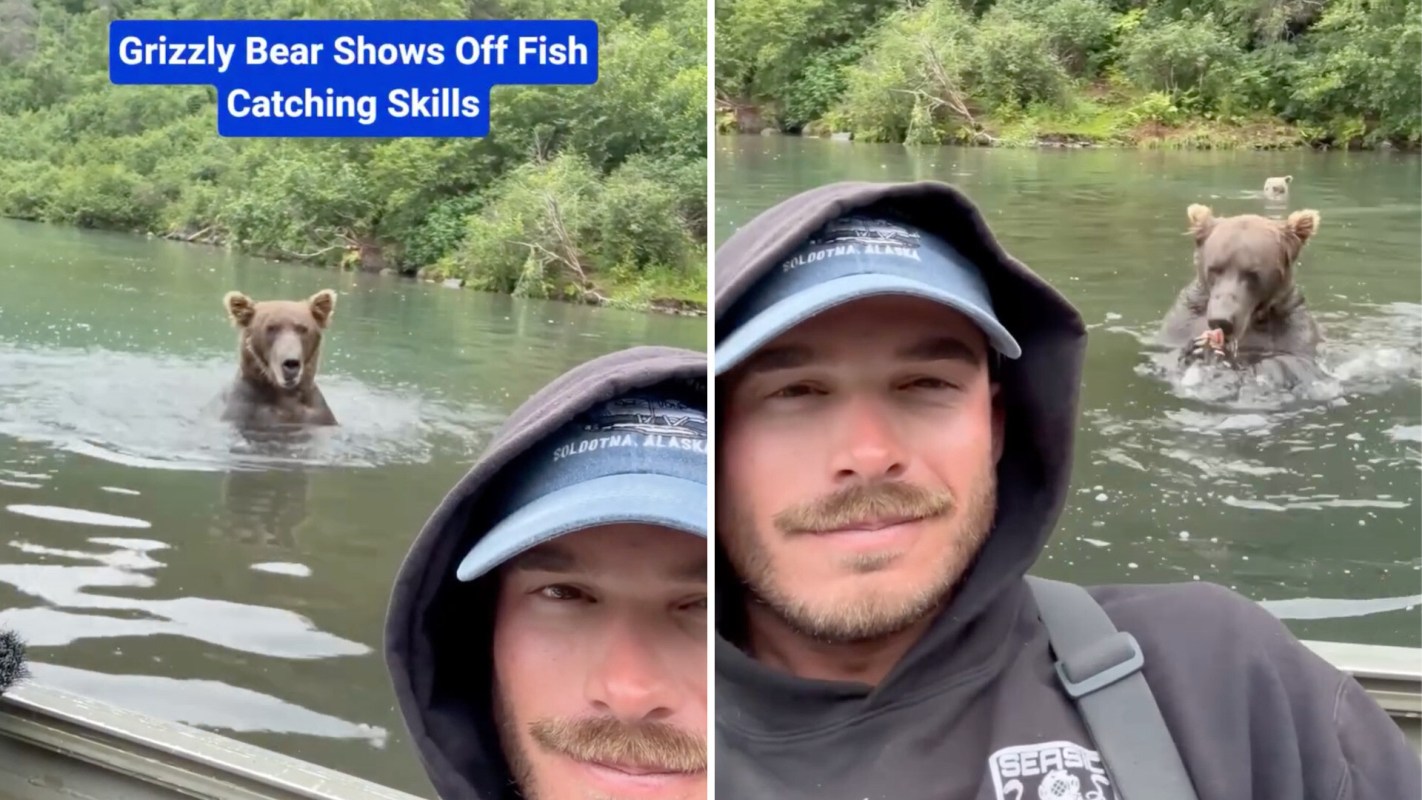
A fishing outing in Alaska became an unusually intimate wildlife sighting when a fisherman recorded a mother grizzly catching a salmon and eating it beside his boat near Soldotna.
Rather than a distant glimpse, the video offers the kind of close view of wild behavior that most people never get.
What happened?
Shared by The Weather Channel, the video showed a mother grizzly next to a fishing charter boat, taking a salmon and eating it as the people onboard look on.
Though the clip is short, it keeps the bear in view at the water's surface as it feeds alongside the boat.
In the comments, one person wrote, "That's amazing," while another said, "Love this so much. Just co-existing."
Why does it matter?
The footage shows how closely people and wildlife can overlap in places where rivers, salmon runs, and recreation all intersect. In Alaska, those shared spaces can create extraordinary moments, but they also reflect how human activity puts people in direct contact with wild animals.
TCD Picks » Quince Spotlight
💡These best-sellers from Quince deliver affordable, sustainable luxury for all




Fishing charters, boats, bait, fish handling, and heavy use of prime waterways all bring human presence into habitats where bears naturally hunt. The bear in this clip appears focused on food, not people, but the scene shows how easily an ordinary day for humans can unfold in an animal's feeding ground.
These encounters can change quickly if animals feel stressed, surprised, or food-conditioned.
A moment that appears peaceful on camera can still carry real risk for everyone involved, including the animal.
What can I do?
If you spend time fishing, boating, hiking, or camping in bear country, the safest approach is to assume that any waterway rich with fish may also attract predators. Give animals space, keep noise predictable, and avoid doing anything that could make food sources seem tied to people.
That also means securing catches, disposing of fish waste properly, and following local wildlife guidance for charters and recreation areas. Habituated animals can become more vulnerable to conflict, relocation, or death when they begin linking humans with easy meals.
Choosing operators that emphasize wildlife-safe practices can help reduce unnecessary pressure on animals while still allowing for unforgettable experiences. The goal is not to eliminate wild encounters, but to keep them wild.

Get TCD's free newsletters for easy tips, smart advice, and a chance to earn $5,000 toward home upgrades. To see more stories like this one, change your Google preferences here.







