


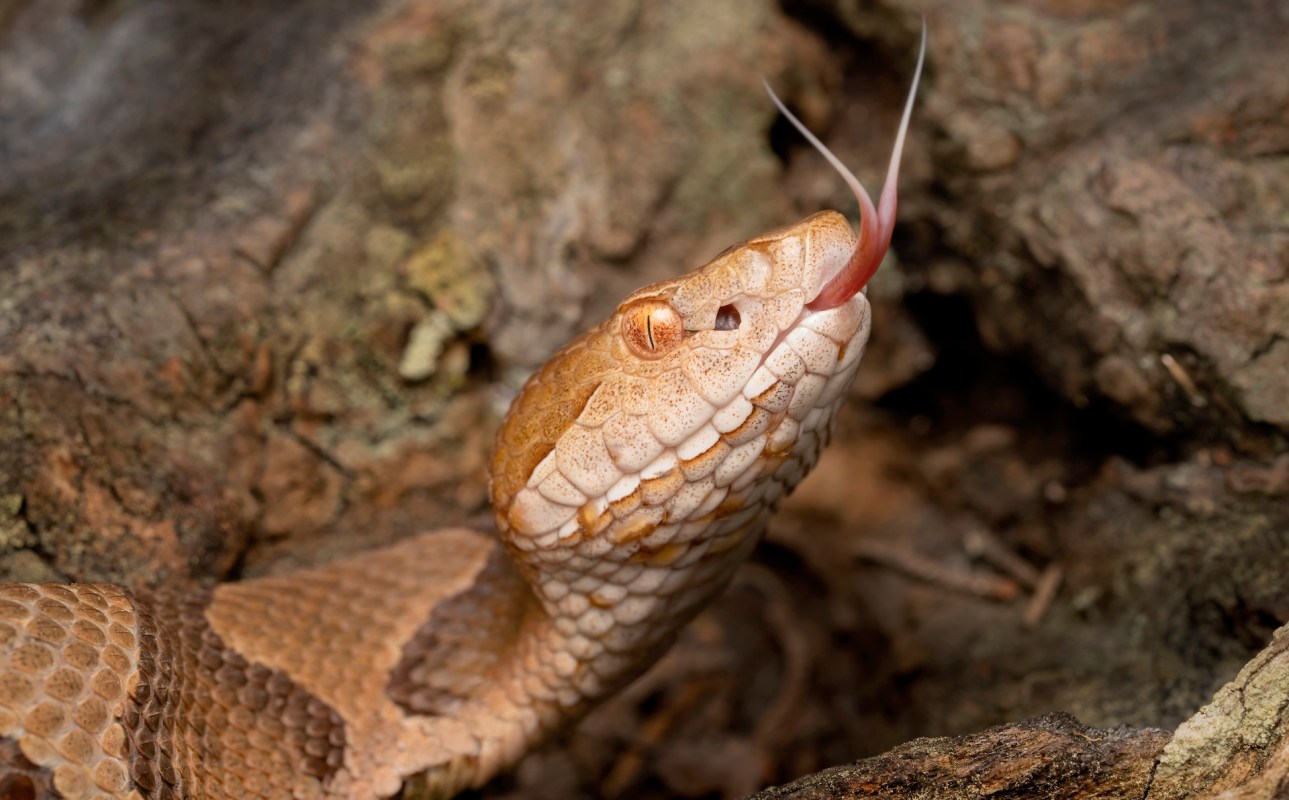
A South Carolina woman's search for lifesaving treatment turned into a three-hospital ordeal after a venomous snake bite on her own porch.
A copperhead concealed in jasmine vines on the back porch of Myrtle Beach resident Ree Lawson's home bit her hand, abruptly turning a routine moment at home into a medical emergency.
What happened?
According to WMBF, as reported by People, Lawson had to keep moving among Myrtle Beach-area hospitals until she reached one where antivenom was available.
"It was a few hours before I got the antivenom, which was absolutely terrifying and horrifying," Lawson said in an interview with WMBF. "You spend the whole time thinking... I'm going to lose this hand, or I'm going to lose this finger, and it's terrifying."
Luckily, Lawson is not going to lose a hand or a finger. The Myrtle Beach resident showed off a swollen and bruised finger, but is doing well.
Copperheads are venomous pit vipers, and while their bites are not always fatal, they can cause intense pain, swelling, tissue damage, and serious complications without prompt treatment. A bite to the hand can be especially alarming because swelling can quickly affect mobility and circulation.
TCD Picks » Quince Spotlight
💡These best-sellers from Quince deliver affordable, sustainable luxury for all




Why does it matter?
Wildlife encounters do not happen only on remote hiking trails or deep in the woods. They can also happen in everyday spaces such as porches, yards, and gardens, especially in warmer regions where snakes may hide in dense vegetation, shade, or clutter.
Human activity can also increase the chances of these encounters. As neighborhoods expand into wildlife habitat and people reshape landscapes around their homes, animals and humans are pushed into closer contact.
A snake encounter can quickly become both a health crisis and a logistical one. Delays in treatment may add stress, pain, and medical risk, particularly when specialized care such as antivenom is not immediately available.
What's being done?
Emergency response systems and hospitals in snake-prone areas can help reduce these risks by improving coordination around where antivenom is stocked and how patients are transferred. Clearer protocols can save valuable time when minutes matter.
If a venomous snake is spotted, wildlife professionals or animal control are a safer option than trying to move it yourself.
Knowing which nearby hospitals are best equipped for emergencies can also help when specialized treatment is needed.

Get TCD's free newsletters for easy tips, smart advice, and a chance to earn $5,000 toward home upgrades. To see more stories like this one, change your Google preferences here.






