


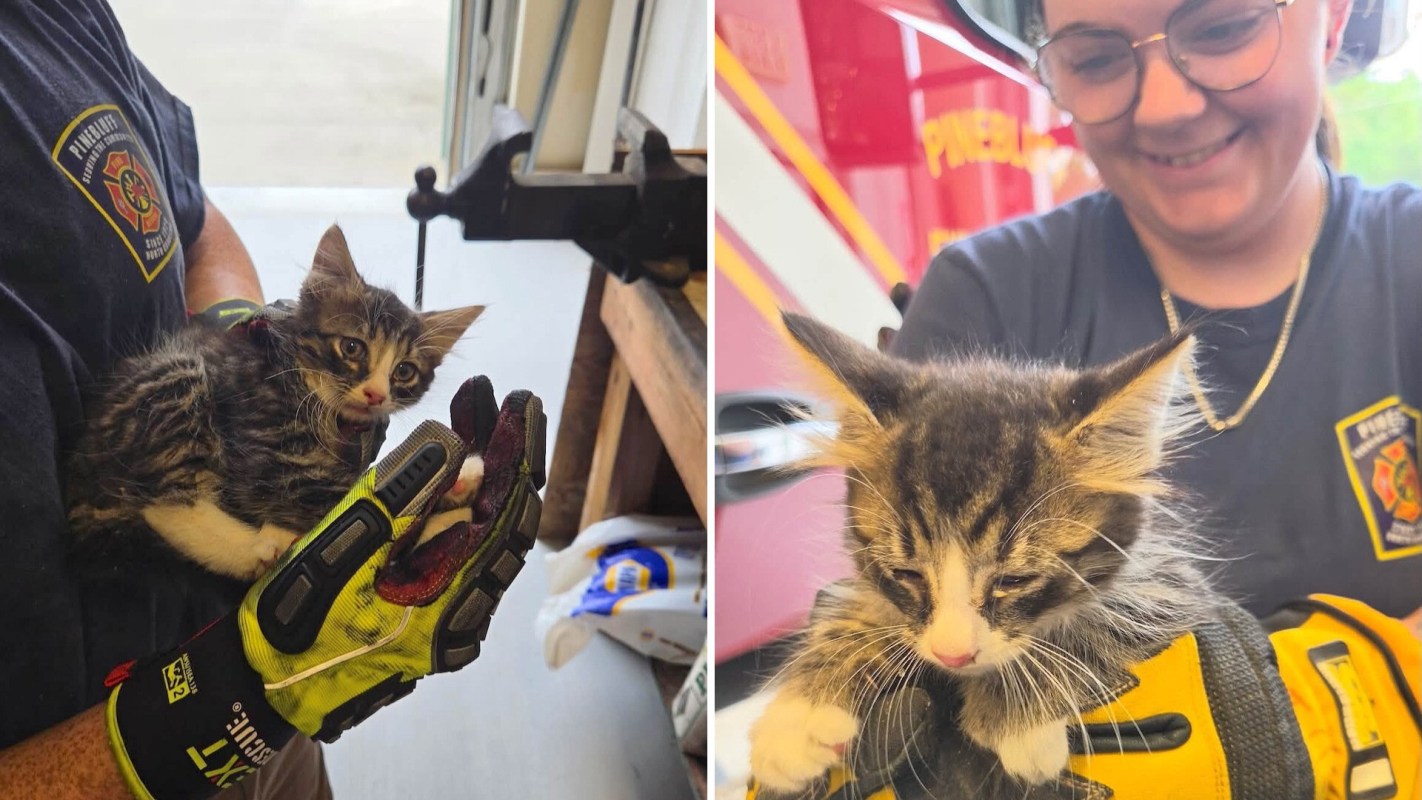
A driver took to a local fire station in North Carolina after hearing an odd noise coming from their car. After some investigation from the fire team, they discovered a small kitten tucked in the car's engine bay.
The subsequent rescue took time as the small cat avoided the first responders at all costs.
What happened?
According to The Pilot, shortly after a July lunch, a driver asked Fire Capt. Paul Christopher and his crew to check out a strange sound coming from his vehicle. When they looked under the hood, they found that the issue was not the car itself but a kitten tucked into the engine compartment.
The firefighting team tried to get him out using tongs normally deployed for snakes, but the kitten kept finding new spots to avoid them. Eventually, the cat ran out of the car, and a low-speed chase ensued.
"We all thought it was hilarious to watch five firefighters chasing a cat," Christopher told The Pilot.
Eventually, the cat got tuckered out, and the firefighters took it in. Animal control officers then examined the animal.
TCD Picks » Quince Spotlight
💡These best-sellers from Quince deliver affordable, sustainable luxury for all




Why does it matter?
An animal hiding in a vehicle can turn a routine drive into a safety hazard.
Engine compartments can attract cats and kittens because they offer warmth, cover, and a sense of protection. If a driver starts the car or heads onto the road without noticing one is there, the situation can quickly become dangerous.
Firefighters do more than answer fire calls; they also help with the smaller emergencies that can be deeply important to residents, such as animal rescues, car-related problems, and other surprises.
So a sound from under the hood is not always a sign of mechanical trouble. On rare occasions, it may mean an animal is trapped and needs help.
This case ended well, but without a quick response, the result could have been much worse.
What's being done?
In this case, Christopher and his crew traced the sound, found the kitten, and got him out of the engine compartment safely.
Drivers can lower the risk of animals finding their way into their cars by circling the vehicle before leaving, paying attention to unusual noises, and even knocking on the hood to warn off animals that may have crawled inside to stay warm or hidden.
If an animal seems to be stuck, reaching into a cramped or hot engine bay is usually not the safest option. Calling animal control, a mechanic, or first responders can reduce the chance of injury for both the person and the animal.

Get TCD's free newsletters for easy tips, smart advice, and a chance to earn $5,000 toward home upgrades. To see more stories like this one, change your Google preferences here.







