


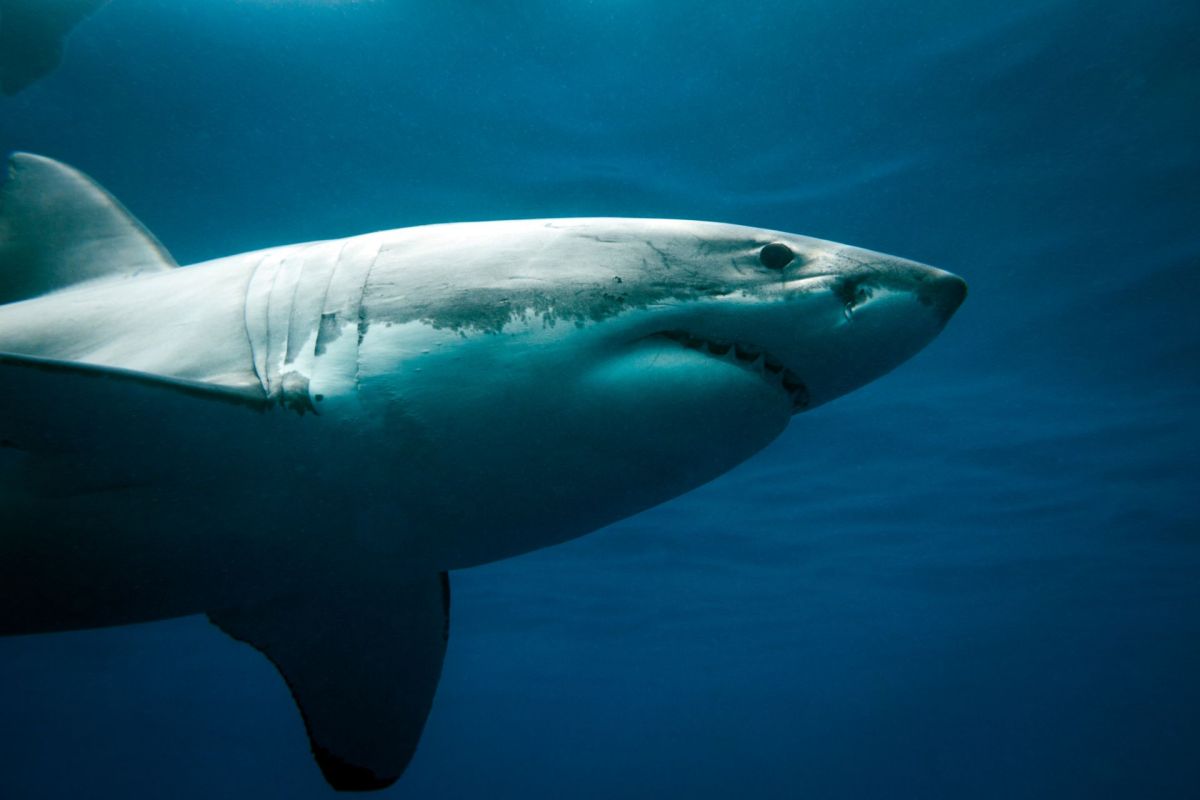
An autopsy of a 55-year-old ocean swimmer who drowned off the Monterey, California, coast in December found that she was killed by a single shark bite.
The Santa Cruz County Sheriff-Coroner's Office confirmed in the report that the victim, Erica Fox, had died from "sharp and blunt force injuries and submersion in water due to a shark attack," the Monterey Herald reported on July 30.
"The only comfort I find is that Erica was every Sunday here, excited to go in the water," her husband, Jean-Francois Vanreusal, told the Monterey Herald. "She really passed in the place she loved."
What happened?
Fox, who was the co-founder of a local open-water swimming group called Kelp Krawlers, was returning to Pacific Grove beach with more than a dozen fellow swimmers when she suddenly disappeared, the Monterey Herald reported.
Witnesses saw a large splash offshore and then what appeared to be a shark surfacing with a human body in its jaws before going under again.
Pacific Grove Police Commander Brian Anderson said, "Based on witness statements, we believe a shark was involved," USA Today reported.
TCD Picks » Quince Spotlight
💡These best-sellers from Quince deliver affordable, sustainable luxury for all




Authorities searched for her for more than 15 hours before ultimately suspending the operation. Four days later, on December 27, Fox's body was found 25 miles away near Wilder Ranch State Park.
Her wetsuit was torn in areas corresponding to her injuries, the Monterey Herald reported. There were tooth wounds from her knees to her abdomen, and the force of the bite had fractured her pelvis and severed a major artery in her midsection, the autopsy report found.
"This was a big shark," Chris Lowe, a professor of marine biology and director of the Shark Lab at California State University Long Beach, told the Monterey Herald. "I think she was probably knocked unconscious immediately. It was a horrible trauma."
What does it mean?
The death has renewed focus on the dangers of open-water recreation in Northern California's Red Triangle, the stretch from Bodega Bay to Big Sur is considered one of the world's busiest great white shark areas.
Even so, experts say sightings should not automatically be treated as evidence that attacks are becoming unavoidable.
"Our data suggest no, but it depends on the species of shark," Lowe told USA Today. "So far, juvenile white sharks seem to show no interest in people despite hundreds of encounters each week."

Get TCD's free newsletters for easy tips, smart advice, and a chance to earn $5,000 toward home upgrades. To see more stories like this one, change your Google preferences here.







