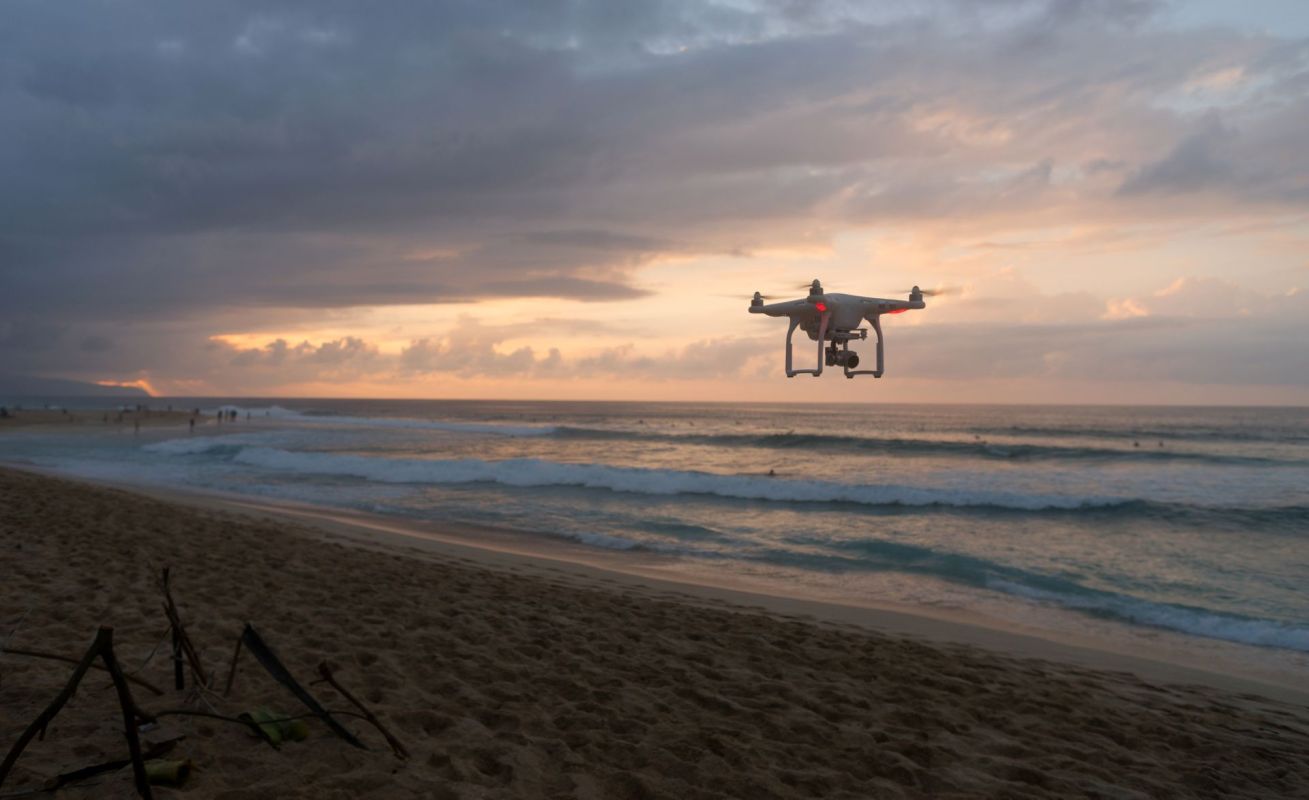
Beach safety teams in New York are now using drones as part of the city's response to shark activity.
After more sightings along the coastline, the New York Police Department began sending the aircraft over crowded beaches so lifeguards can be alerted sooner if swimmers are getting too close.
According to the New York Post, the effort is meant to give beach crews a faster warning system while helping protect both people and wildlife.
What's happening?
As shark sightings rise, the New York Police Department has been relying on its Technical Assistance Response Unit, or TARU, to fly drones above city beaches. The aerial perspective helps officers and lifeguards keep watch over the water.
Shark patrols are only one job for the devices; they are also used to aid distressed swimmers, support search-and-rescue operations, and monitor crowded shorelines.
If operators spot a shark offshore, lifeguards are warned immediately and then clear swimmers from the water as a precaution.
TCD Picks » Quince Spotlight
💡These best-sellers from Quince deliver affordable, sustainable luxury for all




Citing the New York City Department of Parks and Recreation, ABC 7 noted that 16 sharks were logged off Rockaway Beach from July 1 to July 5, and NYPD drones detected seven of those sightings.
Even so, shark bites in New York remain rare. Pointing to figures from the Florida Museum of Natural History, the New York Post reported that New York had 12 recorded unprovoked shark bites over more than a century and a half up to 2022. However, nonfatal encounters around Long Island and New York City waters have increased in recent years.
Why does it matter?
The main advantage of the drones is speed. Instead of waiting until a shark can be seen from shore, lifeguards can get an earlier alert and move swimmers out of the water before the situation becomes more serious.
People and animals are increasingly sharing the same spaces. Human development into green spaces that were once animal habitats can make encounters with creatures more common. In the case of sharks, warming waters because of human-caused global heating are pushing them into new territories in search of food or more comfortable conditions, which could increase their proximity to swimmers and surfers in coastal areas.
TCD Picks » Quince Spotlight
💡These best-sellers from Quince deliver affordable, sustainable luxury for all
That overlap does not mean sharks are heading to beaches because of people. They are moving through waters that are increasingly a part of their natural habitat.
Better monitoring can help protect swimmers without turning every sighting into a reason to harm animals that are simply adapting to a new environment.
What's being done?
New York's response is focused on prevention.
By connecting drone operators with lifeguards, the city is expanding its watch over the water with an aerial view that covers far more area than crews on the sand can see by themselves.
That kind of early detection can make beach management more precise. Lifeguards can temporarily clear the water when necessary, then reopen it once the area is considered safe, helping reduce risk while limiting unnecessary disruption for visitors.

Get TCD's free newsletters for easy tips, smart advice, and a chance to earn $5,000 toward home upgrades. To see more stories like this one, change your Google preferences here.