


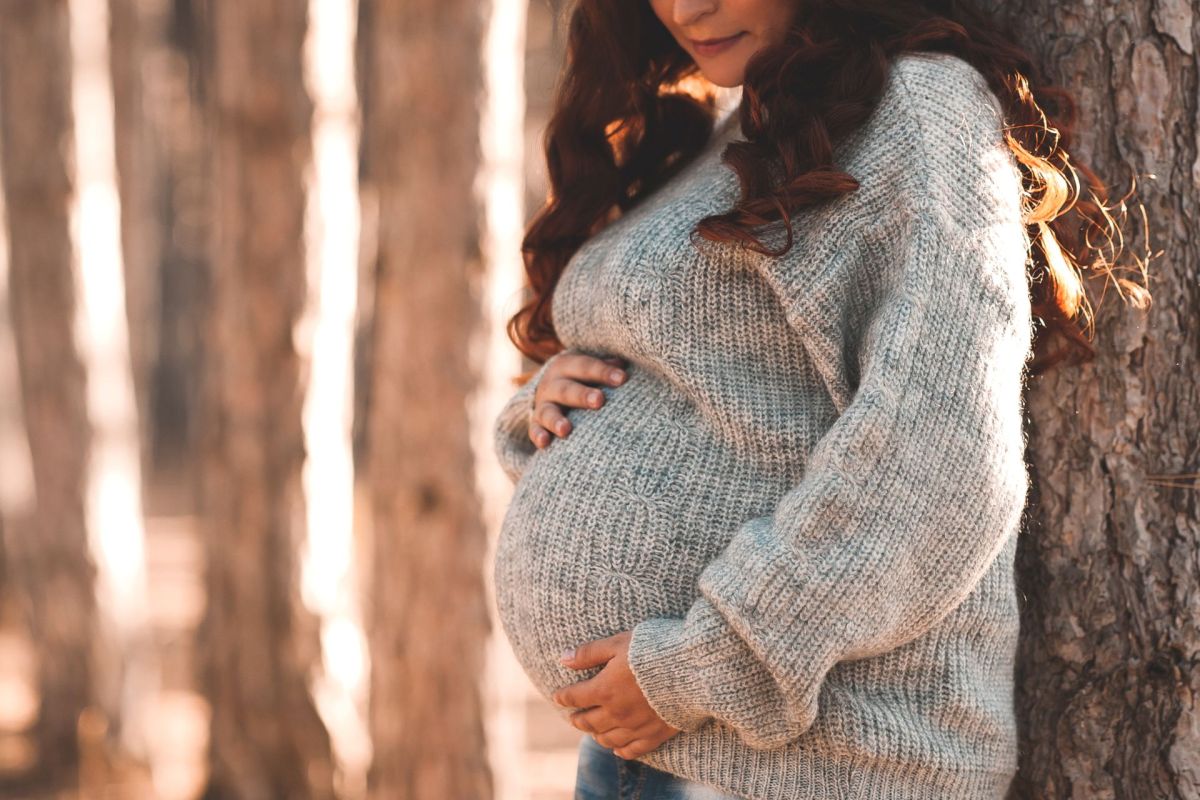
For years, efforts to support cleaner cars, stricter industrial rules, and other air-quality measures have helped to cut many forms of pollution in the United States. But pregnant people are increasingly contending with another problem: wildfire smoke.
What's happening?
A study forthcoming from Frontiers in Environmental Health reviewed data from roughly 64.5 million pregnancies recorded between 2003 and 2019 in more than 2,800 counties across 48 states. Its conclusion: Wildfire smoke is eroding some of the progress made through cleaner air efforts.
To estimate the share of air pollution tied specifically to fires, researchers compared one model that included all fine-particle pollution with another that excluded fire-related pollution, Stateline reported. Based on that approach, wildfire smoke was linked to about 65% of the days during the study period when pollution levels surpassed the National Ambient Air Quality Standard.
The pattern was not confined to regions usually associated with major wildfires — the Southeast also experienced notable increases in wildfire-related pollution. Even so, the Northwest faced the most severe burden, with pollution connected to wildfires rising to more than double its earlier rate over the course of the study.
In a news release cited by Stateline, Menglu Liang, the study's lead author and an assistant clinical professor of biostatistics at the University of Maryland, said that improvements in air quality in recent years "have genuinely protected pregnant people and unborn babies, and without them, exposures today would be considerably worse."
"What our findings show is that wildfire smoke is offsetting a growing share of these hard-won improvements," Liang continued.
TCD Picks » Quince Spotlight
💡These best-sellers from Quince deliver affordable, sustainable luxury for all




Why does it matter?
Recent research has associated wildfire smoke exposure during pregnancy with higher risks of serious health concerns, such as preeclampsia, preterm birth, low birth weight, and high birth weight.
Much of the concern involves fine particulate matter pollution, or PM2.5. These are the tiny particles that can penetrate deep into the lungs when inhaled.
While vehicles and industrial activity produce these particles, wildfire smoke also contains them in large amounts. Scientists believe smoke may set off inflammatory responses that harm the placenta, and some pollutants may also cross the placental barrier and interfere with fetal growth and development.
For families already facing inequitable access to care, a bad fire season can cancel out even more of the benefits otherwise delivered by cleaner tailpipes and smokestacks. The study found the greatest burdens in rural low-income communities, areas lacking access to maternity care, and places with significant Native American and Alaska Native populations.
What can be done?
Even as wildfire smoke accounts for a growing share of the danger, pollution reductions from transportation and industrial sources can continue to mitigate some of these risks for pregnant people and pregnancies.
Also, the study did not assess whether people used safeguards such as masks, air filters, or temporary relocation, but such steps, along with watching local air-quality alerts and reducing time spent outside when conditions worsen, may help lower risks during severe smoke events.
"These outcomes matter well beyond the delivery room and harms experienced before birth can echo for decades," Liang said in the release. "That makes prenatal exposure a particular public health concern."

Get TCD's free newsletters for easy tips, smart advice, and a chance to earn $5,000 toward home upgrades. To see more stories like this one, change your Google preferences here.






