


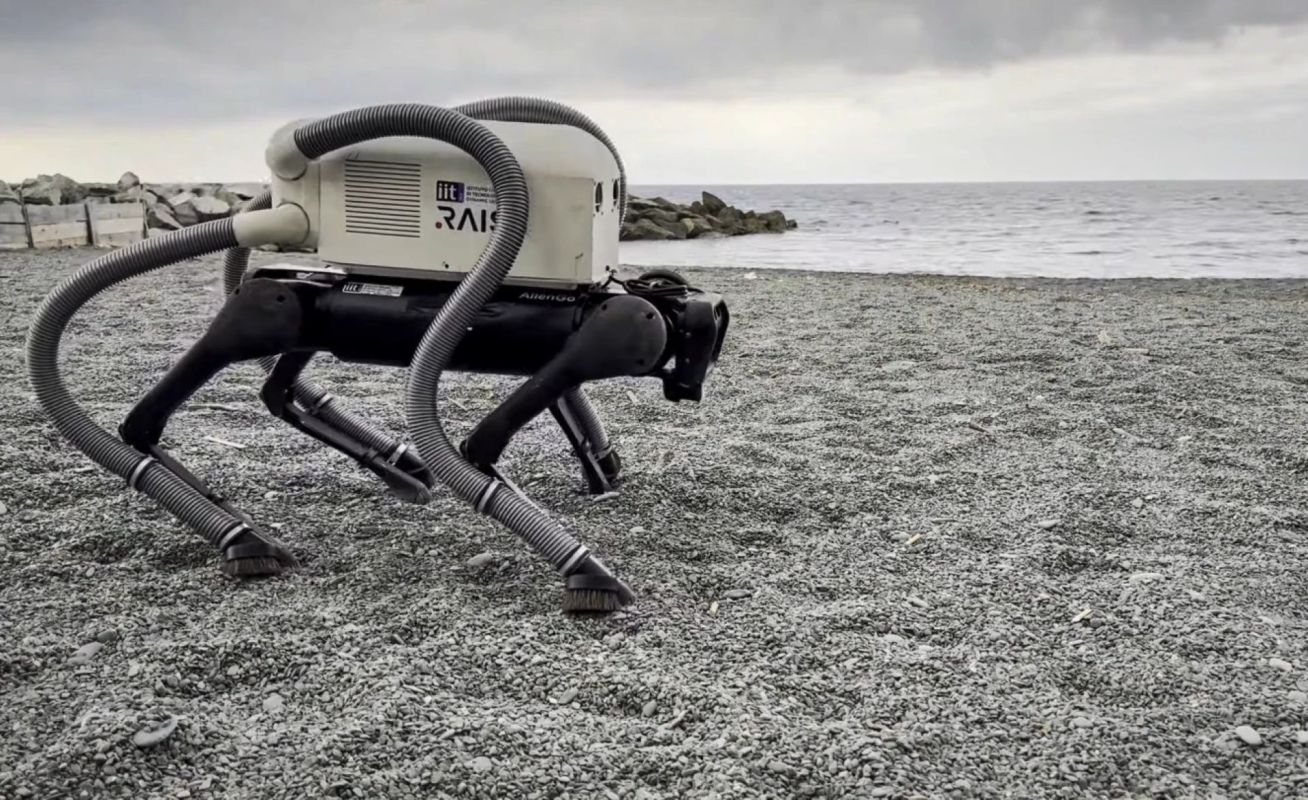
While humans have trained dogs to do a number of amazing tricks over the years, it is highly unlikely that anyone ever has taught a canine to operate a vacuum cleaner.
However, that has not stopped an Italian tech company from designing a robotic beach cleaner that walks on four legs, resembling an electronic pup.
The AI-powered machine, called VERO, uses vacuum attachments on its feet to collect cigarette butts and other small litter while moving over areas that traditional robot vacuums often fail to handle, according to a YouTube video by EuroBytes (@EuroBytes).
What's happening?
The Italian Institute of Technology, a research center in Genoa, is presenting VERO as an autonomous cleaning robot. The machine operates on Unitree Robotics' AlienGo quadruped platform and carries four vacuum hoses — one on each leg — fitted with custom 3D-printed nozzles.
Instead of needing to stop and reach for debris, VERO, for vacuum-cleaner equipped robot, can vacuum up small bits of trash when its feet pass close by. While traveling through a preset cleaning zone established by a human operator, the robot uses onboard cameras and a convolutional neural network to identify litter, plan its route, and manage its balance during vacuuming.
The team behind VERO has said that the robo-dog collected about 90% of the cigarette butts in its designated test zone. Researchers also reported that the technology worked on sand, stairs, and uneven ground, terrain on which wheeled robots can have trouble.
TCD Picks » Quince Spotlight
💡These best-sellers from Quince deliver affordable, sustainable luxury for all




Why does it matter?
The focus on cigarette butts is significant because, as EuroBytes explained, cigarette butts are among the most commonly discarded waste items worldwide. Though small, they can release toxic chemicals and microplastics into oceans and other ecosystems.
Cleaner beaches, parks, and pedestrian areas can help reduce pollution exposure for both people and wildlife while also making outdoor spaces safer and more pleasant for everyone who uses them.
A robot that can traverse difficult terrain could reduce the amount of manual cleanup needed in hard-to-reach places, potentially saving time and labor costs while allowing human workers to focus on larger, more specialized, or more hazardous jobs.
What's being done?
VERO was created by the Dynamic Legged Systems lab at the IIT, and the researchers see possible uses beyond litter pickup. They said the same combination of mobility, artificial intelligence, and precision could be used for tasks such as crop spraying, infrastructure work, inspections, construction, and other tasks in challenging environments.
However, it is important to remember that, even with smarter cleanup tools on the way, preventing waste still matters. To help stop litter before it starts, avoid dropping cigarette butts and properly dispose of trash.
EuroBytes said VERO was where "next-level mobility meets practical cleaning" and that the machine provides "a glimpse into the future of automated cleaning."

Get TCD's free newsletters for easy tips, smart advice, and a chance to earn $5,000 toward home upgrades. To see more stories like this one, change your Google preferences here.






