


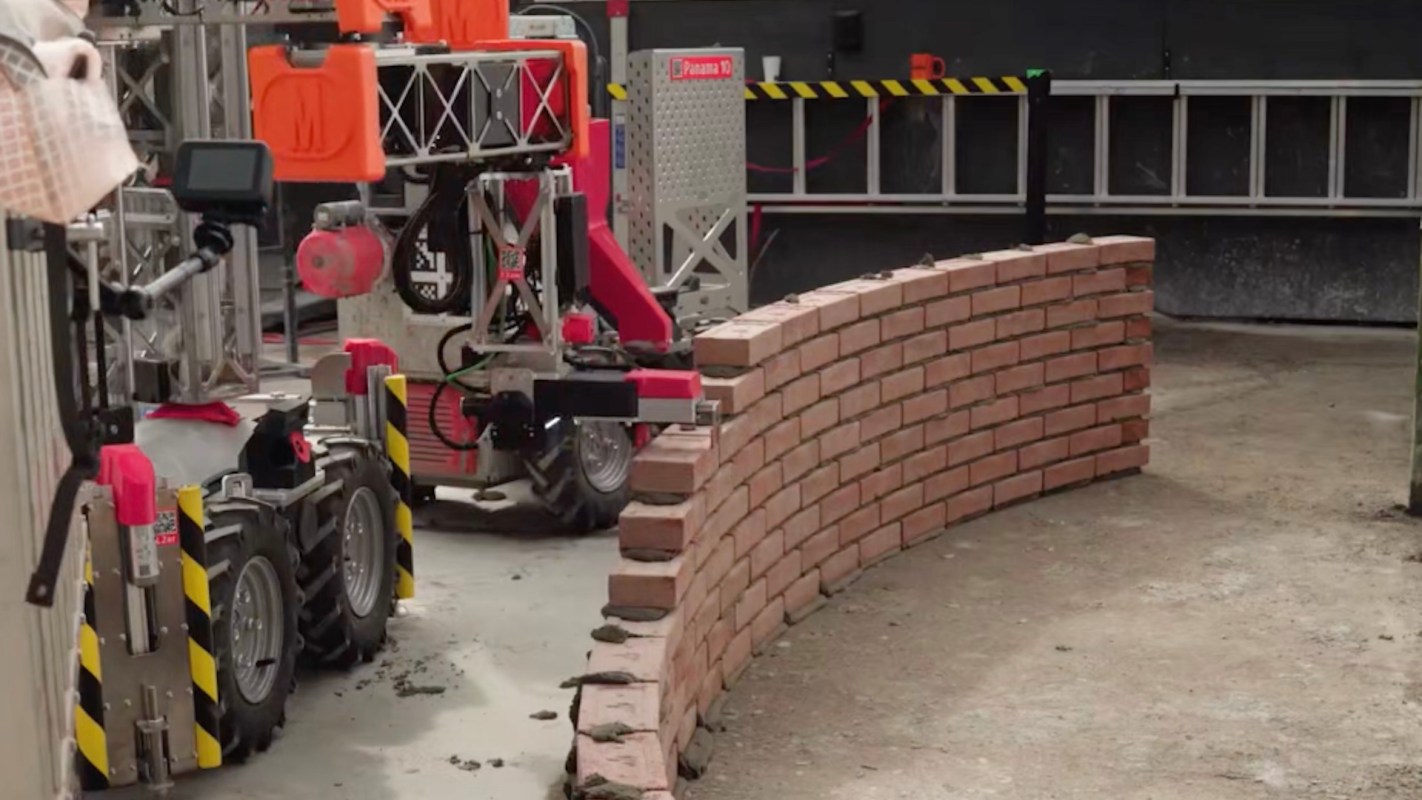
For centuries, human bricklayers have painstakingly constructed some of history's most durable and memorable structures.
However, if a Dutch robotics startup has its way, these human workers could soon be replaced by a fleet of autonomous, electric machines, which are already laying brick and mortar on construction sites across Europe.
What happened?
Launched in 2021, Monumental was started by CEO Salar al Khafaji and CTO Sebastiaan Visser. Before founding Monumental, al Khafaji and Visser launched Silk, a data-visualization company that Palantir acquired in 2016.
According to an Instagram post, the startup's latest Series B funding round raked in an additional $32 million from investors.
The funding is meant to help scale a system that is already doing work on active job sites rather than running experiments in a lab.
Presently, Monumental has more than 100 robots in operation, using sensors, vision systems, and compact cranes to place bricks and mortar with accuracy of about 0.04 inches (1 millimeter). The robots' work is coordinated by the company's AI platform, Atrium.
TCD Picks » Quince Spotlight
💡These best-sellers from Quince deliver affordable, sustainable luxury for all




So far, the technology has been used in the walls of more than 100 homes in the Netherlands and the United Kingdom, along with a school, a community center, a hotel, and sections of a canal wall, according to the Instagram post.
Why does it matter?
Bricklaying is highly skilled work, but it is also repetitive, physically demanding, and time-sensitive. A robot that can take on part of that workload could help construction crews finish projects faster while reducing physical strain on workers.
Many regions are grappling with housing shortages, labor challenges, and rising construction costs. More efficient building projects could ease delays and cut waste.
The robot bricklayers also have the potential to help the environment. Monumental's robots are electric, allowing for cleaner job-site operations than equipment that runs on fossil fuels. Additionally, pairing electrification with precision construction could also help reduce errors and limit material waste.
For all these benefits, however, skeptics have voiced concerns that AI-powered robotics will leave human workers out of a job.
What's being done?
For Monumental, the immediate goal is broader deployment of its technology. The new funding will be used to add more robots and to put its bricklaying system to work at a wider range of job sites.
The company's AI platform, Atrium, is central to that effort. Rather than treating each robot as a standalone machine, Monumental is building a broader, coordinated system that can direct precision work at active construction sites.
Monumental's next chapter is less about proving the concept works and more about demonstrating that it can grow. With more than 100 robots already operating on job sites, the company now has the funding to test how far robotic masonry can go.

Get TCD's free newsletters for easy tips, smart advice, and a chance to earn $5,000 toward home upgrades. To see more stories like this one, change your Google preferences here.






