


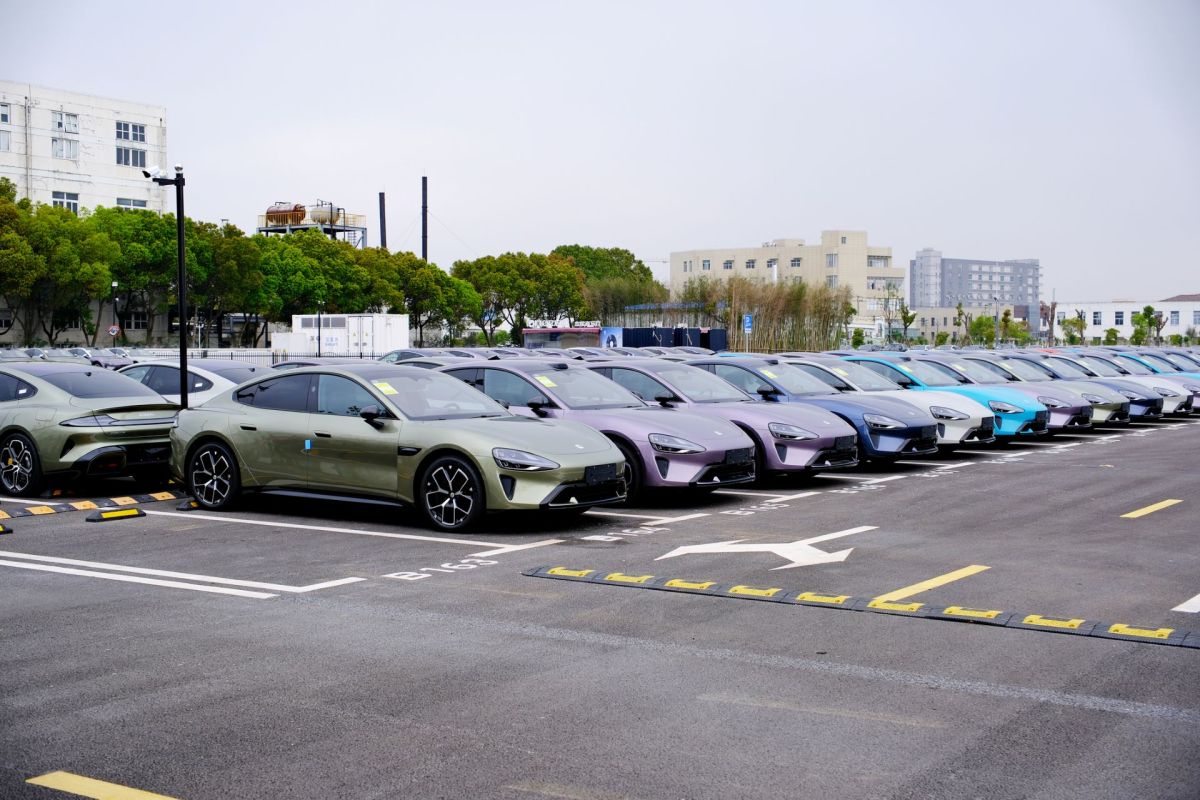
China's electric vehicle boom may eventually start to sustain itself.
New research indicates that, in China, worn-out EVs could one day provide a large share of the material needed for future vehicle production, even as battery and motor technology keeps shifting.
What's happening?
Researchers led by Xin Xiong, a researcher at Nanjing University, projected how much reusable material China could recover from vehicles at the end of their lives, then measured that against the country's EV manufacturing demand from 2010 through 2050.
As Ars Technica reported, the study tracked battery-related materials used in hybrids, battery-electric vehicles, and fuel-cell vehicles, including lithium, cobalt, nickel, manganese, phosphorus, sodium, sulfur, and graphite.
It also counted key motor ingredients: copper, neodymium, dysprosium, samarium, and cerium.
Because EV technology is evolving so fast, the researchers didn't assume a single future. Instead, they modeled four development paths, including scenarios in which the market gradually moves toward solid-state lithium batteries, sodium batteries, or motors that use fewer rare-earth elements.
TCD Picks » Quince Spotlight
💡These best-sellers from Quince deliver affordable, sustainable luxury for all




Why does it matter?
Turning old products back into raw material makes sense when the resources involved are finite, but recycling has often struggled to beat newly mined supplies on cost.
EV production adds another hurdle. By the time a car is retired, its battery chemistry may no longer match the designs manufacturers currently want, which can reduce the usefulness of recovered material.
China's large future stream of end-of-life EVs may eventually be enough to overcome that mismatch. If recovered material becomes the main supply for many of these inputs, automakers could be less exposed to price swings, supply-chain disruptions, and the environmental damage tied to mining.
More stable access to critical minerals can help support lower production costs, keep EV prices more manageable over time, and reduce pollution linked to extracting new raw materials.
What's being done?
One key step is already underway: Researchers are giving automakers, recyclers, and policymakers a clearer picture of what the future supply stream may look like.
Rather than treating battery and motor design as fixed, the study maps several possible technology shifts. That gives planners a better basis for building recycling systems that would still be useful if the industry leans more heavily on sodium-ion batteries, solid-state designs, or motors with reduced rare-earth content.
Recycling reaches its full potential only when collection, sorting, and processing systems are designed to match the materials coming in. If industry leaders know which materials are likely to become abundant in older vehicles, they can make smarter investments in recovery technology and manufacturing.
End-of-life EVs and batteries are increasingly being viewed not as waste, but as valuable inventories of reusable material. The better those products are captured through formal recycling channels, the more likely it is that tomorrow's cleaner cars can be built with fewer newly extracted resources.
If the trend holds, yesterday's EVs could become a crucial raw-material bank for tomorrow's transportation. In a sector often defined by rapid change, that could offer a rare form of stability — one that may help make cleaner driving both more affordable and more sustainable.

Get TCD's free newsletters for easy tips, smart advice, and a chance to earn $5,000 toward home upgrades. To see more stories like this one, change your Google preferences here.






