


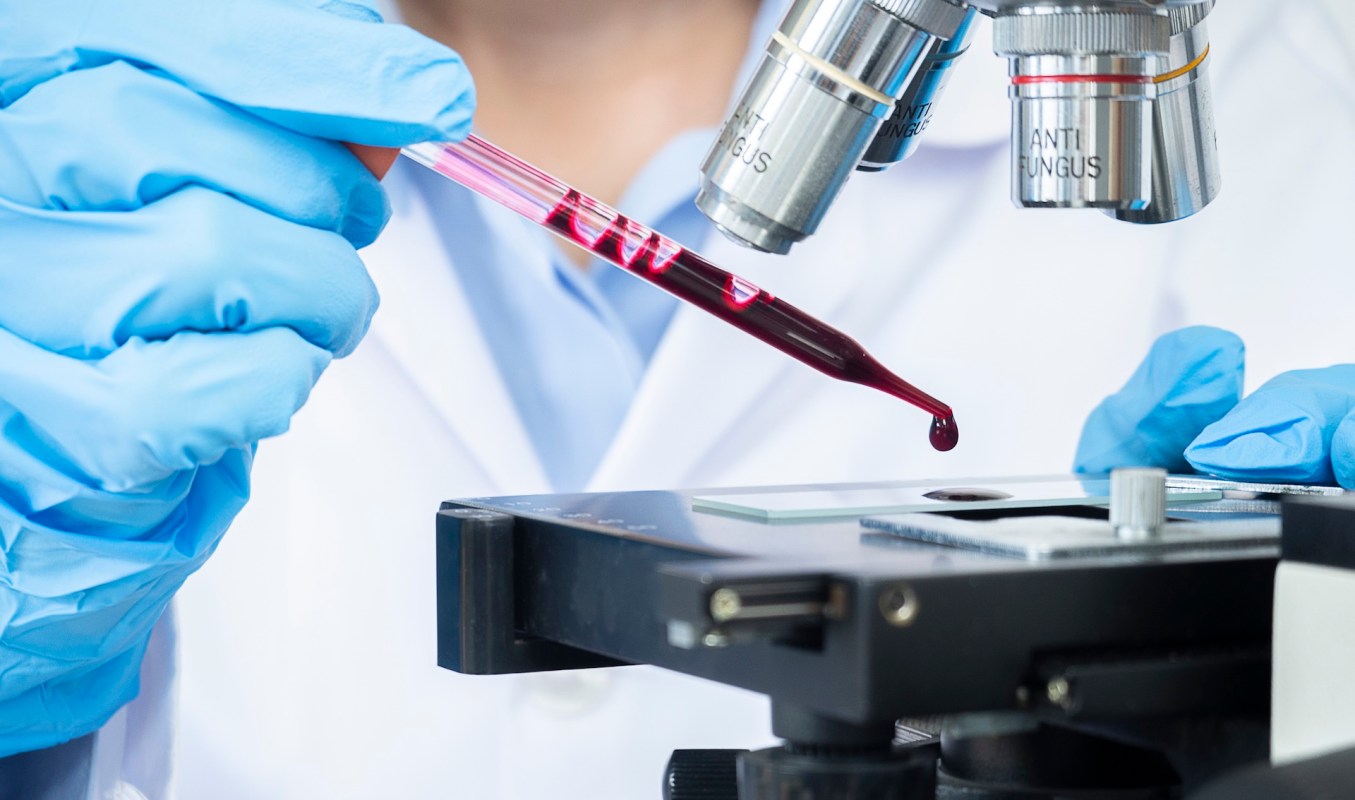
An AI-based blood test developed at Johns Hopkins' Kimmel Cancer Center showed promise for finding liver cancer sooner in high-risk groups that differed sharply in geography and underlying risk, a Johns Hopkins University School of Medicine article shared by Medical Xpress reported.
Liver cancer is far more difficult to manage once it is discovered at a later stage, and the screening tools used today can miss the disease early on.
What's happening?
The test, known as DELFI — short for DNA Evaluation of Fragments for Early Interception — uses AI to study millions of fragments of cell-free DNA in the blood, and researchers at the Johns Hopkins Kimmel Cancer Center say they have now validated it.
Per Johns Hopkins, the results were published July 31 and indicated that the assay accurately identified liver cancer in two separate groups of people already considered high risk.
Researchers evaluated blood from 377 participants in Romania and Guatemala, some with hepatocellular carcinoma and some without; Johns Hopkins described hepatocellular carcinoma as the most common form of liver cancer.
Their risk patterns were very different: Romanian participants often had liver disease tied to viral hepatitis or alcohol use, while many Guatemalan participants had metabolic liver disease, obesity, diabetes, and exposure to aflatoxin, a toxin linked to liver cancer.
TCD Picks » Quince Spotlight
💡These best-sellers from Quince deliver affordable, sustainable luxury for all




Researchers said DELFI still worked well in both settings. They reported that sensitivity for detecting both early- and late-stage disease improved when the test was paired with alpha-fetoprotein, or AFP, plus basic information such as age and sex, compared with blood testing alone.
Victor Velculescu, M.D., Ph.D., the Cancer Genetics and Epigenetics Professor and co-director of the cancer genetics and epigenetics program at the Johns Hopkins Kimmel Cancer Center, said, "This study demonstrates that the approach works with high performance across different patient populations while revealing the biological signals in the bloodstream that make this type of detection possible."
Why does it matter?
Researchers say liver cancer already ranks among the world's major causes of cancer death, and the burden is growing as metabolic liver disease becomes more common.
Finding the disease sooner can expand treatment choices, yet routine screening — mainly ultrasound along with AFP — still misses some cancers at an early stage.
A more accurate blood test could eventually make screening easier to access and less dependent on imaging, especially for people already known to be at higher risk because of hepatitis, cirrhosis, heavy alcohol use, obesity, or diabetes.
The work also offers a reason for the test's performance. With a newer technique called MethID, the researchers showed that the fragment patterns in blood reflect not just tumor DNA but also changes involving liver cells, blood vessels, and immune cells responding to the disease.
Seeing signals from multiple parts of that process could help the approach hold up better in practice, since liver cancers can vary across patients and regions.
What's being done?
Beyond this study, the Johns Hopkins group is pushing fragmentome screening toward broader use in disease detection rather than limiting the approach to liver cancer alone.
In earlier research, the same general technology had also shown an ability to detect liver fibrosis and cirrhosis, which commonly precede liver cancer.
The researchers also said a related blood test for lung cancer screening, FirstLook Lung, is already being used in some health systems around the country through DELFI Diagnostics. That suggests the platform could eventually support multiple noninvasive screening tools built on the same basic approach.
Next, the team says it needs prospective clinical validation and further work on tests that blend fragment analysis with protein biomarkers and standard risk factors.
Existing screening recommendations remain in place, especially for those with known liver disease or other risk factors.
"As a result, these DNA fragments contain much more information than whether cancer is present," said Zachariah Foda, M.D., Ph.D., a medicine faculty member at the Johns Hopkins University School of Medicine and a co-senior author of the study. "It tells us where these fragments originate and how they change during cancer development, allowing us to better understand the biology of the disease and improve our ability to detect it."

Get TCD's free newsletters for easy tips, smart advice, and a chance to earn $5,000 toward home upgrades. To see more stories like this one, change your Google preferences here.






