


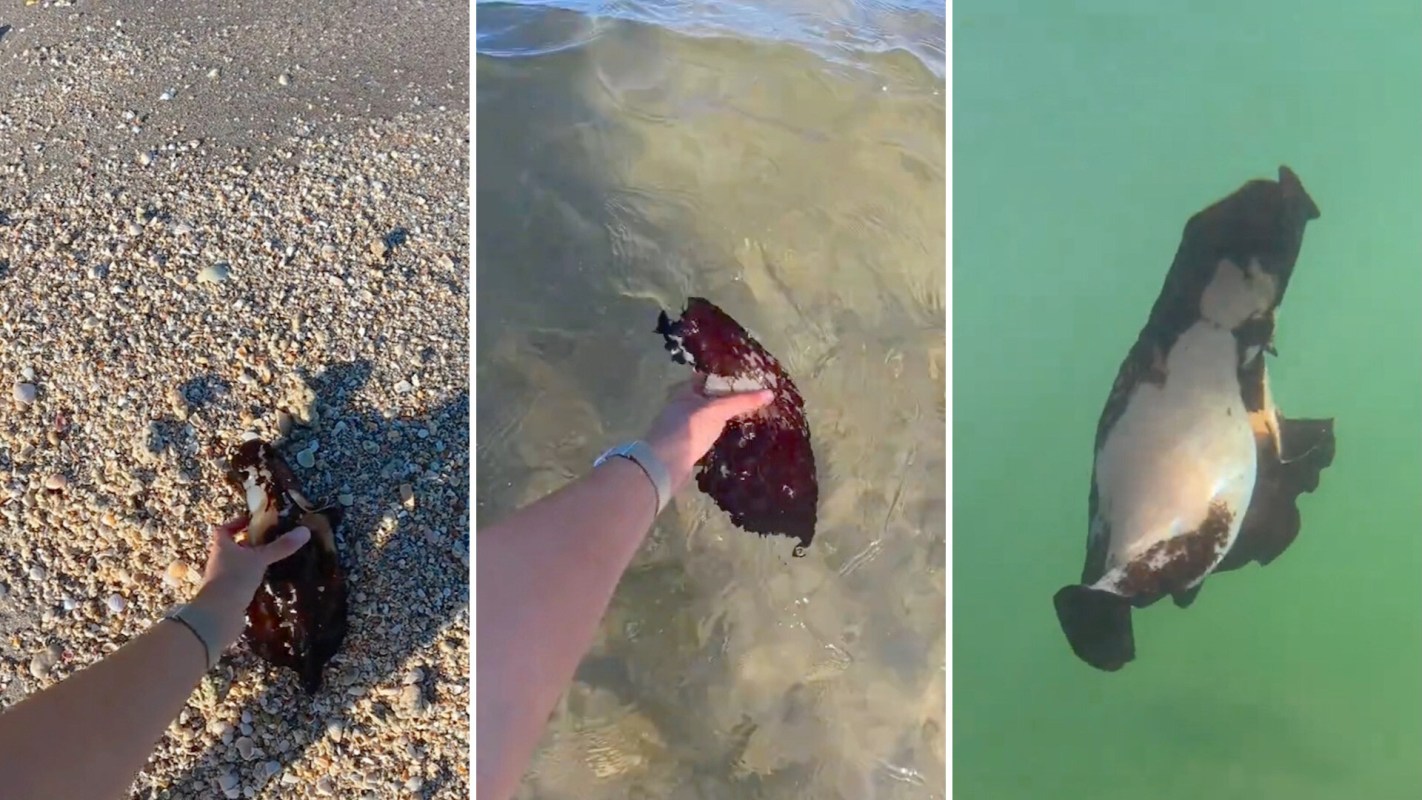
A Florida beachgoer is gaining attention on TikTok after sharing a wildlife rescue caught on camera. In the short video, the creator spots a stranded sea hare on the beach and gently returns the marine animal to deep waters.
What happened?
The creator, Alyssa Blake (@itsalyssablake), shows a sea hare on a Florida shoreline after it ended up stranded near the water's edge.
@itsalyssablake Another sea hare rescue!! I get to be out here helping animals all thanks to YOU guys and your support 🥹🫶🩵🛟🌊 In a way, EVERY one of you helped in this rescue for allowing me to be out here spreading awareness & saving animals, even if they're just sea slugs 🥹🩵 #seahare #animalrescue #wildlife #ocean #florida ♬ original sound - itsalyssablake
Sea hares are large marine mollusks, often described as sea slugs, and they can look unusual enough that some beachgoers may not even realize they are seeing a living animal.
Luckily, Blake spotted the animal and knew it needed help. In this clip, Blake gently picks up the sea hare and puts it back into the water.
Blake saw the animal was weak and not swimming, so she continued to push it to deeper waters so it wouldn't beach again. Eventually, the animal regained its strength and swam to safety.
Why does it matter?
Coastal ecosystems depend on a huge range of species, including lesser-known marine life that rarely receives much public attention.
TCD Picks » Quince Spotlight
💡These best-sellers from Quince deliver affordable, sustainable luxury for all




In Florida, busy beaches and fragile marine habitats often overlap.
A stranded animal on the sand might be easy to miss, dismiss, or misunderstand, but noticing it — and responding thoughtfully — can make a real difference.
One rescue will not solve the larger environmental pressures facing oceans and coastlines, but it can encourage more people to see even the smallest creatures as part of a shared ecosystem.
What can I do?
When visiting beaches, tide zones, and coastal parks, stay alert. If you spot marine wildlife that appears stranded, injured, or distressed, it is often best to contact a local wildlife rescue group, lifeguard, park ranger, or marine authority for guidance rather than trying to improvise.
Learning a bit more about local ecosystems can help, too. Animals that seem odd or unfamiliar — like sea hares — still play a role in coastal environments, and recognizing them is a first step toward protecting them.
Supporting people and organizations doing this work is another way to contribute to healthier ecosystems.

Get TCD's free newsletters for easy tips, smart advice, and a chance to earn $5,000 toward home upgrades. To see more stories like this one, change your Google preferences here.







