


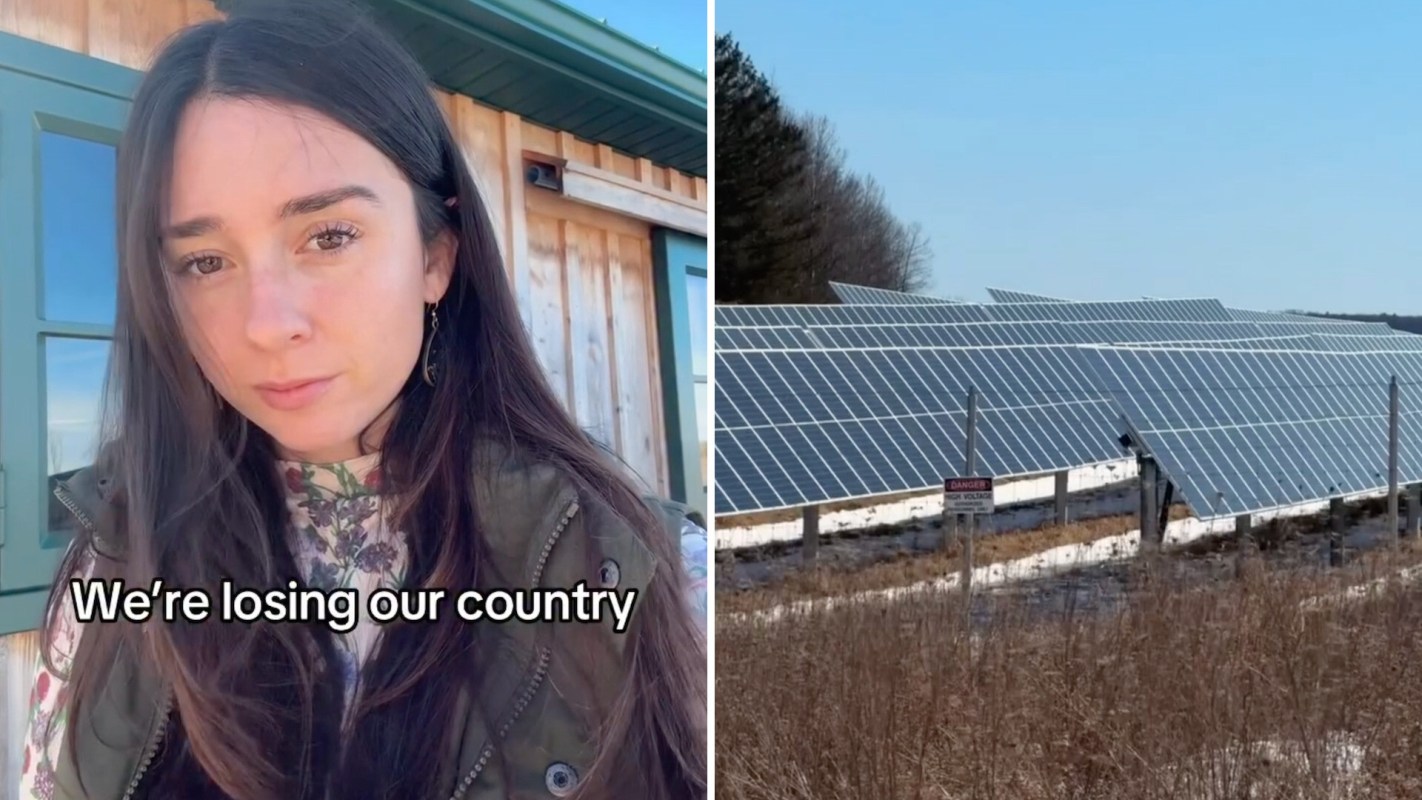
A debate over where solar farms should be built in New York has grown into a national talking point.
At the center of it is Alexandra Fasulo, a 33-year-old upstate New York influencer whose opposition to one proposed project has helped feed a much broader anti-solar movement online and on the political right.
What's happening?
Solar power is a major tool for cutting fossil fuel pollution driving climate change. And the technology offers significant bill savings for homeowners, more reliable grids, and potential benefits for local wildlife.
Despite the benefits, some online, including Fasulo, have launched targeted campaigns denouncing the technology. As Heated reported, Fasulo has made more than 500 solar-related posts this year for an audience of over 2 million across platforms, presenting utility-scale renewable development as a danger to American land.
The outlet reported that her campaign has centered on Fort Edward Solar, a proposed 100-megawatt project in New York that conservation groups criticized because of its location near important grassland bird habitat. Fasulo later founded the American Land Rescue Fund and backed challenges to the state siting process.
At the same time, her messaging has increasingly overlapped with Trump administration attacks on wind and solar subsidies.
TCD Picks » Quince Spotlight
💡These best-sellers from Quince deliver affordable, sustainable luxury for all




Some of the environmental concerns are legitimate, Heated reported. Audubon leaders Michael Burger and Matt Roos wrote, "The project area is not simply good habitat; it is priority habitat repeatedly identified in conservation plans."
Heated noted that while some conservationists shared concerns over the wildlife area with Fasulo, they are still strong supporters of solar energy as a whole.
Why does it matter?
Some of Fasulo's biggest claims do not match the available evidence. According to Heated, Fasulo often claims that $24 trillion worth of U.S. farmland could be changed into solar and wind farms as farmers retire.
The outlet noted that while U.S. land is changing, the $24 trillion figure is inaccurate. Heated explained that the figure actually came from the Farmer's Almanac and is referring to all U.S. real estate, not just farmland.
Heated also debunks Fasulo's claims that solar will replace a vast majority of U.S. farmland.
The outlet, citing data from the Solar Energy Industries Association, said solar now covers about 0.07% of U.S. farmland. The outlet also reported that, even in an aggressive Department of Energy expansion scenario, solar would take up about 1.15% by 2050, still well below the share already devoted to corn for ethanol.
Heated also noted that claims that broken panels routinely poison fields are also misleading.
Most panels are made largely of silicon, aluminum, and glass, and they typically offset their manufacturing emissions within four to eight months of operation, the outlet explained.
What's being done?
Heated reported that regardless of Fasulo's false claims, efforts are being made to protect the wildlife at the Fort Edward Solar complex.
The outlet explained that Boralex, the Canadian company behind Fort Edward Solar, later reduced its initial proposal from around 750 acres to about 527 acres. In a legal settlement, the company also agreed to permanently protect similar nearby bird habitat.
Meanwhile, environmental groups are pushing for stronger rules to make sure renewable energy projects avoid high-value ecosystems from the start.

Get TCD's free newsletters for easy tips, smart advice, and a chance to earn $5,000 toward home upgrades. To see more stories like this one, change your Google preferences here.






