


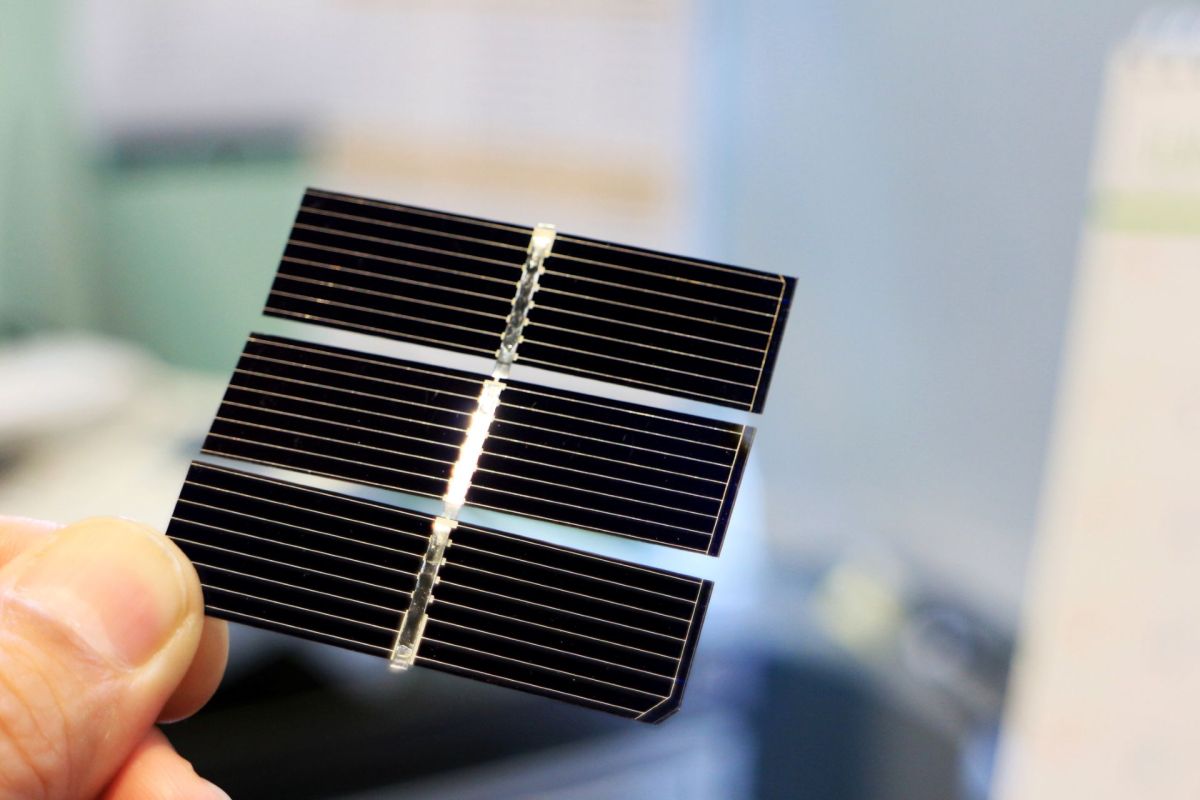
Researchers in China say they have developed a tandem solar cell that converts 29.71% of sunlight into electricity while addressing one of the biggest challenges facing perovskite technology by improving its long-term stability.
If the approach proves durable at scale, it could help clear a path for solar panels that generate more electricity in the same amount of space and keep performing longer.
What happened?
According to PV Magazine, the Chinese Academy of Sciences achieved a significant milestone by combining a perovskite solar cell with a CIGS bottom cell. Essentially, the researchers combined two different types of solar cell technology to improve the overall performance of one panel.
PV Magazine noted that the researchers used careful strategies and compounds to ensure long-term stability of the new solar technology.
The outlet reported that the standalone perovskite top cell reached 22.21% efficiency in testing. The CIGS bottom cell posted 19.65% under full-spectrum light, then dropped to 7.5% when operating beneath the semi-transparent top cell. In total, PV Magazine said, the tandem device achieved 29.71% overall efficiency.
The outlet also reported that the devices retained more than 91% of their starting efficiency after 2,000 hours of continuous operation.
TCD Picks » Quince Spotlight
💡These best-sellers from Quince deliver affordable, sustainable luxury for all




Why does it matter?
Higher-efficiency solar technology can allow more electricity to be generated from the same roof, parking canopy, or solar field. That can lower power bills, strengthen the financial case for clean energy projects, and get more value out of limited space.
Stability is just as important. Solar equipment must keep working for years in bright light and high heat to be useful in everyday settings. If researchers can reduce the degradation problems that have long challenged perovskites, the technology becomes far more practical for real-world deployment.
What's being done?
As PV Magazine described, the new techniques employed by researchers appear to leave fewer defects and make the final solar material less prone to degradation.
Work like this is part of a broader global push to make next-generation solar more commercially viable. Tandem designs are particularly appealing because they stack materials that capture different parts of sunlight, allowing them to potentially outperform conventional single-junction panels.

Get TCD's free newsletters for easy tips, smart advice, and a chance to earn $5,000 toward home upgrades. To see more stories like this one, change your Google preferences here.






