


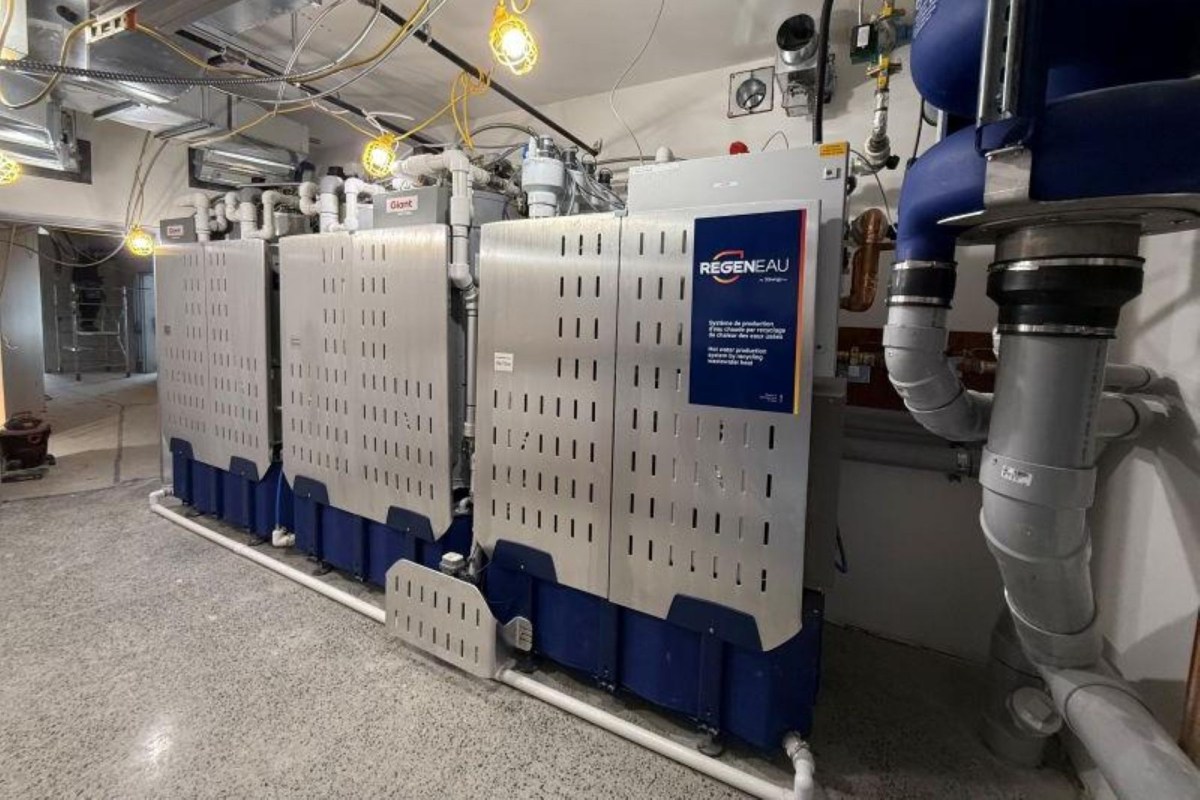
Warm wastewater from showers, sinks, and laundry units is essentially lost energy that could help power technology, reducing carbon emissions and lowering heating bills.
One company in Quebec, Canada, is looking to funnel this wastewater from multi-unit residential buildings, clean it, and cycle it back as usable hot water for those residents.
What's happening?
RegenEAU's system will pull heat from greywater (general domestic used water) and blackwater (containing human waste) in its recovery system, which will be stored in building basements. In the system, the water is separated, used in tanks, and sent through a heat exchanger before it goes to the sewer, Sustainable Biz Canada reported.
These systems "heat domestic hot water in a way which cuts back on both emissions as well as the cost of heating water," RegenEAU co-founder and CGO Michael Pelletier told the outlet. Should there not be a lot of demand for hot water on certain days, the system will "optimize the amount of hot water being produced so that it's available on an at-need basis," Pelletier said.
RegenEAU should supply up to 75% of a multi-family building's hot water needs, he added.
In one 145-unit building in Quebec, RegenEAU cut energy use down by 43% and cut the building's carbon emissions by 68%.
TCD Picks » Quince Spotlight
💡These best-sellers from Quince deliver affordable, sustainable luxury for all




Why does it matter?
Hot water is the second-largest energy expense in residential buildings (after heating and cooling systems), so improving that system can make daily life more affordable and more efficient without requiring residents to change their habits.
Lower operating costs can help property owners manage expenses, while lower fuel use means fewer heat-trapping emissions and less reliance on gas-powered water heaters.
In dense cities, where apartment towers use enormous amounts of hot water every day, recovering heat from wastewater could add up quickly.
RegenEAU's approach is also designed to make installation and upkeep easier. Pelletier said the company's patented separator helps it avoid one of the common pain points in wastewater heat recovery. This can reduce maintenance needs and space requirements, making the technology more practical for both new construction and retrofits.
What's being done?
After several years focused on research and development, RegenEAU began commercial sales in 2023 and now has more than 40 installations in Quebec, Sustainable Biz Canada reported.
Ontario is also a target market, with a proof-of-concept project in the works, Sustainable Biz Canada reported.
Its growth plans are now extending beyond Canada. The company has also run pilot projects with major utilities, including Hydro-Québec and France's ENGIE.

Get TCD's free newsletters for easy tips, smart advice, and a chance to earn $5,000 toward home upgrades. To see more stories like this one, change your Google preferences here.






