


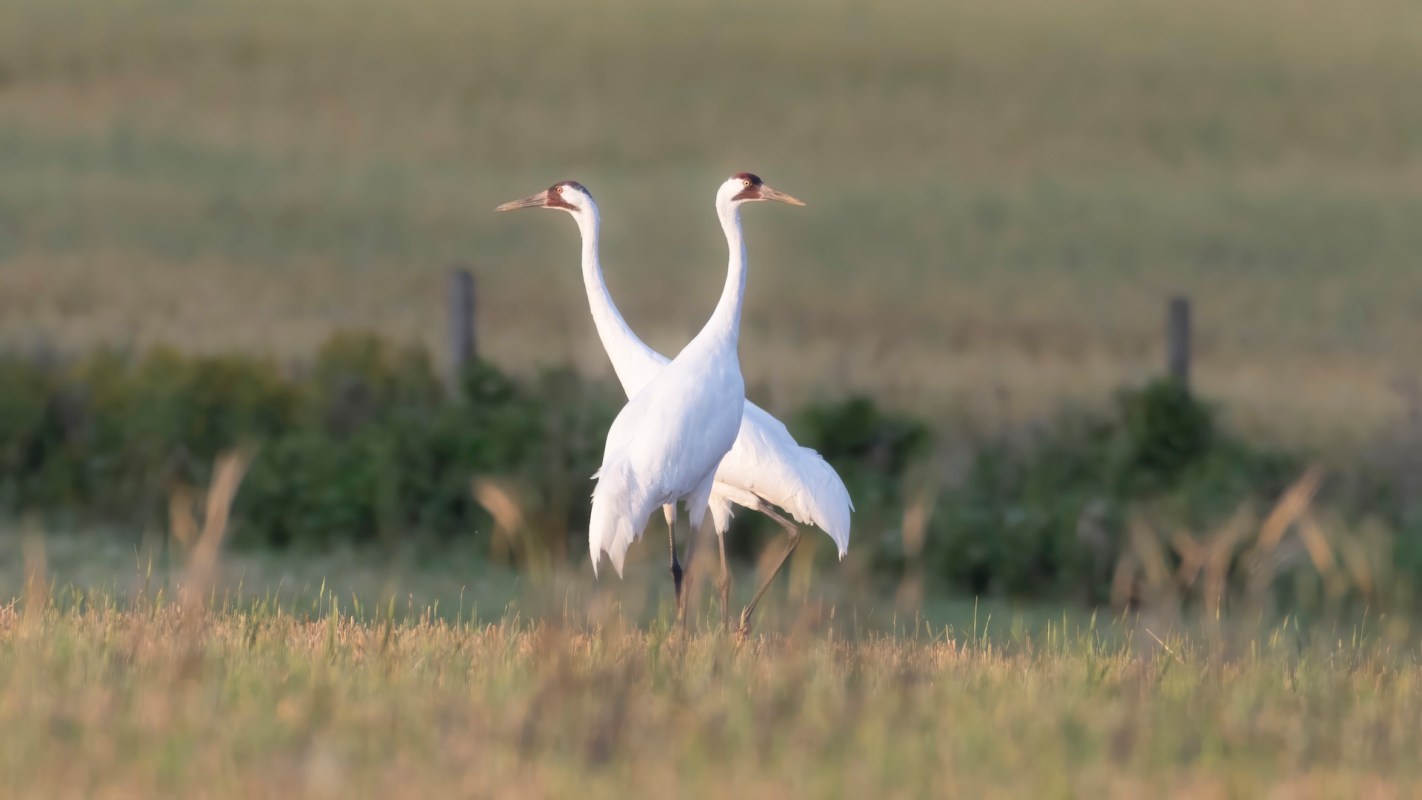
An awe-inspiring bird that was on the brink of extinction is making a comeback, and a new milestone was just passed.
Louisiana's whooping crane recovery project reached a new milestone this spring, when a record 10 chicks were successfully fledged at White Lake Wetlands Conservation Area in Vermilion Parish.
For a species that once had a population of only 15 in North America, the achievement is another sign that long-term conservation efforts can help restore ecosystems while reconnecting communities with the natural landscapes around them.
What happened?
As the Shreveport Times reported, those fledglings push the state's resident whooping crane population to 82 birds, including 32 that were hatched in the wild in Louisiana. The state's reintroduction campaign started in 2011 and has become the biggest effort of its kind in the U.S.
Sara Zimorski, the Louisiana Department of Wildlife and Fisheries biologist who leads the whooping crane project, said breeding success appears to improve as the birds age and gain experience. "As the population gets older, we see some of the breeding pairs have more success, probably because of experience," she said.
This season also delivered the program's best nesting outcome yet: 18 of the 20 pairs that nested produced hatchlings. Improvement showed up among newer pairs as well, including one that did not hatch a chick in 2025 but managed to fledge one this year.
TCD Picks » Quince Spotlight
💡These best-sellers from Quince deliver affordable, sustainable luxury for all




Whooping cranes are strikingly large, standing roughly 5 feet tall with wingspans of 7 to 8 feet. They have white plumage, red heads, dark facial markings, and black wingtips visible in flight.
Why does it matter?
Among North American conservation stories, the whooping crane is one of the most prominent. The U.S. Fish and Wildlife Service says the species once numbered around 10,000 on the continent, before dropping to just 15 birds by 1941.
Protections under the Endangered Species Act, together with reintroduction work, have helped lift those numbers, although fewer than 1,000 whooping cranes still exist across North America.
Healthy wetlands support biodiversity, help manage water, and strengthen the natural systems nearby communities rely on. The return of a flagship species such as the whooping crane can signal that the habitat as a whole is also being protected and restored.
What's being done?
The Louisiana project began with the release of 10 young whooping cranes at White Lake Wetlands Conservation Area. In 2016, the program reached another turning point when the first chick hatched in the wild in Louisiana, ending a stretch of more than 75 years without one in the state.
Wildlife staff have kept up nest monitoring, pair tracking, and habitat protection in the years since to improve the birds' odds of survival. The recent breeding results suggest the population is becoming steadier as more pairs build experience.
The Louisiana Department of Wildlife and Fisheries asks anyone who encounters a whooping crane to keep a respectful distance and submit the sighting through the agency's whooping crane reporting webpage.
Supporters can also contribute financially through the Louisiana Wildlife and Fisheries Foundation's whooping crane reintroduction page, helping fund the patient work needed to make recovery possible.
Zimorski said some pairs are now breeding successfully with regularity. "We have some pairs that are rock solid. They're consistently successful; it's like they have figured it out," Zimorski said. And even when nests do not fully succeed, "It was still good experience for them and a step in the right direction."

Get TCD's free newsletters for easy tips, smart advice, and a chance to earn $5,000 toward home upgrades. To see more stories like this one, change your Google preferences here.







