


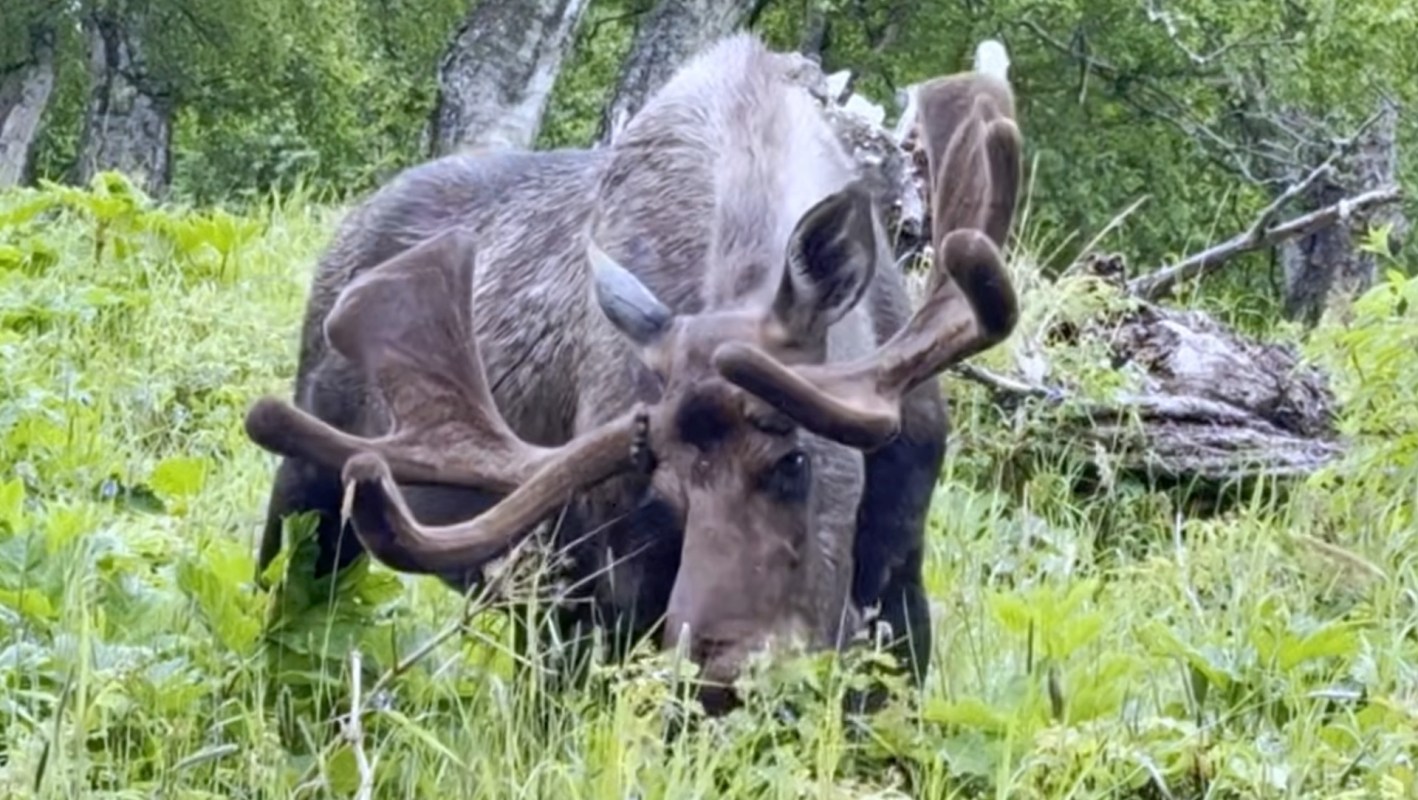
Two bull moose are giving Alaska wildlife enthusiasts an early-season surprise.
In new footage from this summer, returning bull moose Fondue and Royal are back on camera, and their antlers already show that, even from one year to the next, the same animal can look noticeably different.
What's happening?
Alaska-based wildlife photographers Rick and Libby Libbey, the content creators behind Team MooseMan, turned their attention to two recognizable bulls for a 2026 season update.
In the short YouTube video, the Alaska-based wildlife photographers compare this year's antler growth with what Fondue and Royal looked like last year.
Fondue's newest appearance comes from June 8, and the narrator says he now looks like "any other young bull" until you notice the feature that gives his identity away. Libbey explains that viewers might notice that his "left eye is blue, [although] it's not really blue, it's scarred…His right antler is growing a little bit differently this year."
To show how he has changed, the video also cuts back to footage of Fondue in velvet and during last year's rut, before the creators found him "with a broken paddle" at the end of the season.
TCD Picks » Quince Spotlight
💡These best-sellers from Quince deliver affordable, sustainable luxury for all




Royal's return is also framed in a year-to-year comparison, with 2025 velvet footage paired with a clip in which Libbey can be heard saying, "Our friend Ray got this video of Royal in June. There's no mistaking that's Royal ... He has very well developed royal tines for this stage. This is June. Early June."
Why does it matter?
Following the same bulls across multiple seasons offers a glimpse of how wild animals change over time, especially after demanding periods such as the rut.
Because antlers are regrown each year, small differences in shape, timing, or symmetry may reflect age, past injuries, or natural variation. For example, Fondue's scarred eye and altered antler growth show how an animal can return looking both familiar and new.
Royal's early tine development also shows how quickly antlers can progress in summer and how repeat observation can reveal details a single snapshot would miss.
This kind of documentation can help people better understand wild animals as individuals navigating seasonal cycles, recovery, and growth.

Get TCD's free newsletters for easy tips, smart advice, and a chance to earn $5,000 toward home upgrades. To see more stories like this one, change your Google preferences here.







