


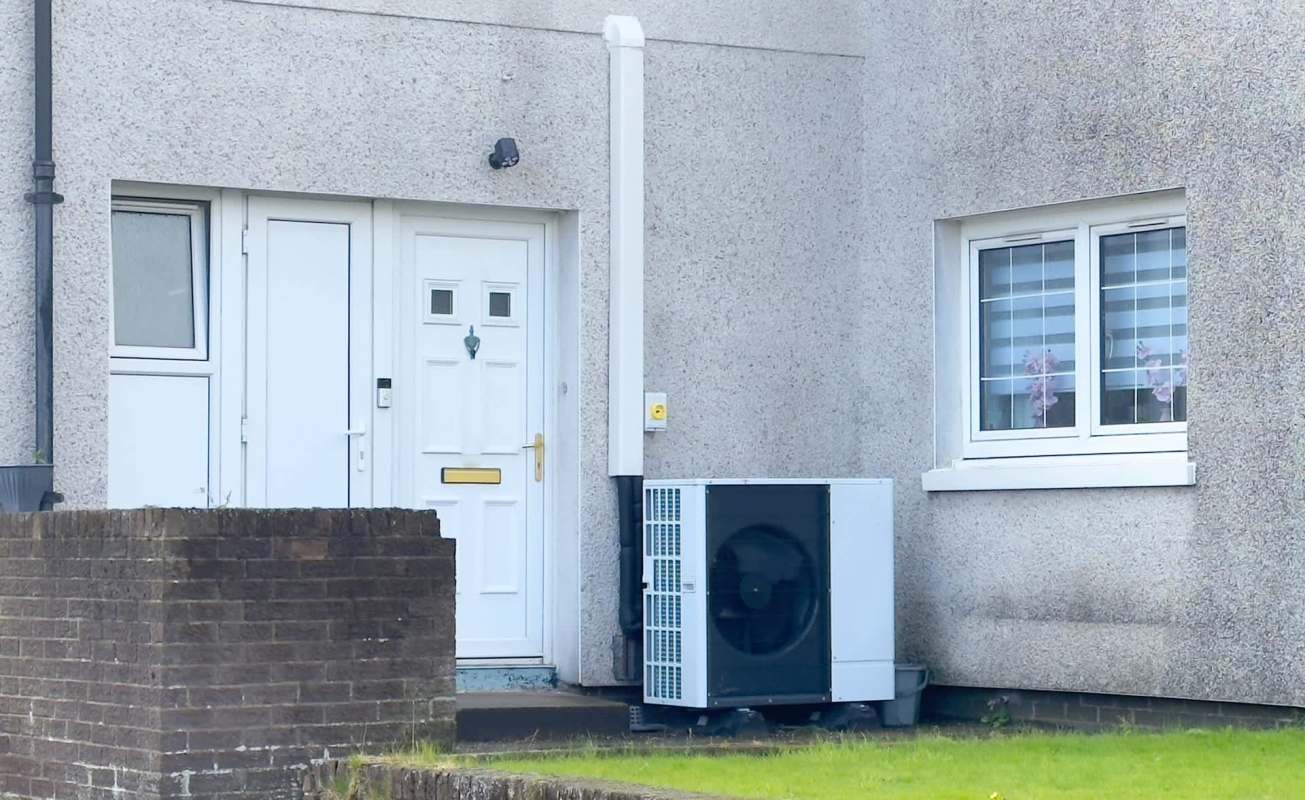
A little-noticed change in Britain's heat-pump support now helps some households pay for home cooling, but take-up has been tiny even as heat waves make many dwellings unsafe for older people, renters, and those with chronic illnesses.
For families already struggling through increasingly hot summers, that disconnect is becoming more than a policy issue. It is also a matter of public health and equity.
What's happening?
Eligible households in England and Wales have been able to seek a £2,500 (~$3,373 USD) Boiler Upgrade Scheme grant for a reversible air-air heat pump since April, which heats in winter and cools in summer.
Even so, the grant has attracted very little early interest. As the BBC reported, only around 45 households claimed it in the program's first month.
That slow start is unfolding as overheating becomes a growing hazard in parts of the U.K.
Mandy Bourne, who shares a top-floor social housing flat in the West Midlands with her 80-year-old mother, said the heat is worsening her chronic obstructive pulmonary disease.
TCD Picks » Quince Spotlight
💡These best-sellers from Quince deliver affordable, sustainable luxury for all




"I've got COPD, and sometimes I can't breathe," she said, according to the BBC. "It's red hot in the flat. The sun is just beaming in."
Researchers have found that urban heat can be especially dangerous at night, when brick and concrete buildings continue to release stored heat indoors.
Baroness Brown, engineer Julia King and chair of the adaptation committee of the government's Climate Change Committee, said modeling suggests that targeted cooling support for the most vulnerable homes, combined with cooling in hospitals and preventive care, "would reduce 40% of the increase in heat-related deaths that are predicted for 2050."
Why does it matter?
One of the biggest concerns may be who the subsidy leaves out.
People in social housing and those in newly built homes are not eligible under the England and Wales program, which means many households facing the highest overheating risks are shut out.
The Climate Change Committee has found that the most deprived neighborhoods are far more likely to face dangerous heat exposure.
It also highlights a wider imbalance. Rich countries have long invested much more in cutting emissions than in preparing homes and public buildings for higher temperatures.
Vulnerable communities are often left improvising "cool rooms," while wealthier households can buy portable air-conditioning units on their own.
What's being done?
Some housing providers are trying to respond in the short term.
Jo Shields, head of sustainability for Walsall Housing Group, said residents at one over-55s housing scheme struggled so much last summer that the landlord turned a community room into a cooling space.
"We took the community room, closed all the windows and doors, and we put a mobile air-conditioning unit in there," Shields said.
Specialists say the first line of defense should be keeping heat out, through measures such as shade, improved airflow, reflective roofs, and building layouts that stay cooler naturally.
Professor Mat Santamouris of the University of New South Wales warned, "We cannot air-condition our way out of climate change."
Still, cooling may be necessary in some settings, especially hospitals, care homes, and homes occupied by medically vulnerable people.
For Bourne, though, immediate relief remains the priority.
"We sit there all day with it on," she said of the shared cooled room. "It helps so much I want one in my flat."

Get TCD's free newsletters for easy tips, smart advice, and a chance to earn $5,000 toward home upgrades. To see more stories like this one, change your Google preferences here.






