


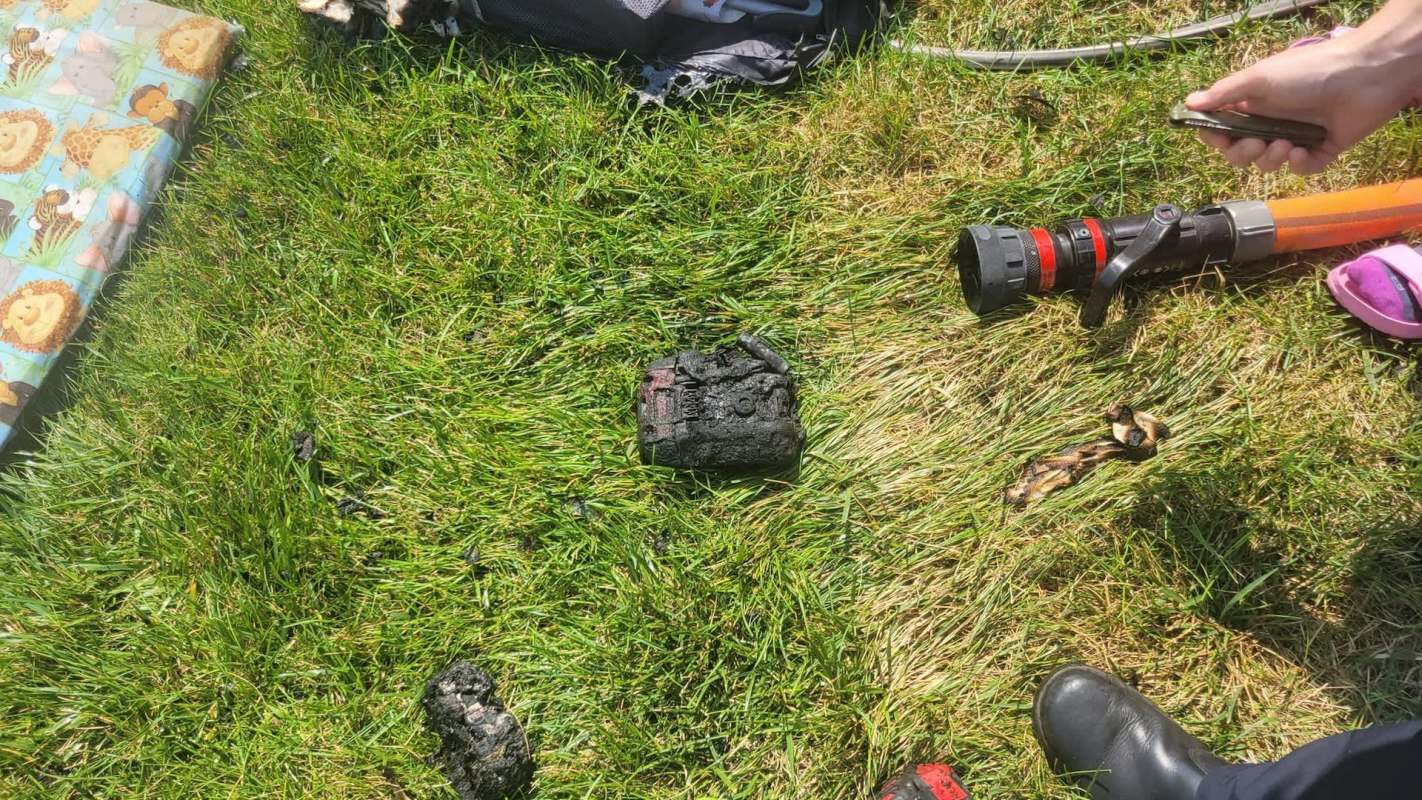
A Tennessee family came dangerously close to a much larger tragedy after a lithium-ion battery exploded in their garage in Spring Hill. They didn't realize anything was wrong until a neighbor heard the blast and alerted them.
The battery was not in use or on a charger when it failed. It was an older lawnmower battery that had been sitting in a box in the garage for months, still holding a charge, before it went into thermal runaway and ignited.
What happened?
In Spring Hill on Monday, July 27, an electric lawnmower battery burst inside a family's garage, News 2 reported.
Fire Chief Graig Temple said the family's first indication that something was wrong came from a neighbor who heard the loud pop and told the family, News 2 reported.
Before firefighters got there, the homeowner had already begun trying to knock down the flames with a fire extinguisher and a garden hose. Crews from Station 4 reached the Wades Grove neighborhood in under three minutes.
Despite the quick response of the fire department, the garage still became fully engulfed by flames, Temple said. The homeowner suffered minor burns while attempting to fight the fire, News 2 reported.
TCD Picks » Quince Spotlight
💡These best-sellers from Quince deliver affordable, sustainable luxury for all




Officials later identified the source as an older lithium-ion lawnmower battery. Temple said it had not been used for several months but still retained a charge.
"They had three specific batteries for their lawnmower. The battery that's in question, that actually failed, had not been used in several months. It still maintained a charge," he explained.
Why does it matter?
Temple said this was not an isolated case. According to News 2, crews have responded to several similar fires this year, including an incident in June involving an RC airplane battery and another in which vehicle fires may have stemmed from thermal runaway.
When damaged or aging batteries are stored in garages, homes, or near vehicles, the danger can spread quickly and put people and property at risk.
Safety concerns are raised when improperly stored or discarded batteries can pose a serious fire risk, and intense fires like this one can contribute to material loss.
What can I do?
Temple's clearest advice is not to keep batteries that are obviously starting to fail.
"These batteries, you need to treat them as they're volatile," he said.
He also said people should watch for signs of "battery abuse," such as swelling, overheating, cracking, moisture exposure, or a battery that no longer holds a charge properly.
UL Research Institutes' Fire Safety Research Institute recommends that consumers "Take C.H.A.R.G.E. of Battery Safety" and buy certified products, use approved charging gear, and keep batteries away from heat, sunlight, exits, and combustible items.
UL Research Institutes says warning signs can include odd hissing or popping noises, unusual smells, punctures, or thin white or gray smoke.
If a battery appears damaged or unstable, stop using it right away and safely discard it — but don't throw it in the trash can. Bring it to a battery recycling center instead of putting it in the trash, UL Research Institutes advises. If a fire starts, get out as quickly as you can and call 911 immediately.
"When you deal with lithium ion batteries, you have to look at battery abuse," Temple said. "You need to be cognizant and aware of how that battery is performing."
He added: "When you identify a nonfunctional battery, you should get rid of it."

Get TCD's free newsletters for easy tips, smart advice, and a chance to earn $5,000 toward home upgrades. To see more stories like this one, change your Google preferences here.






