


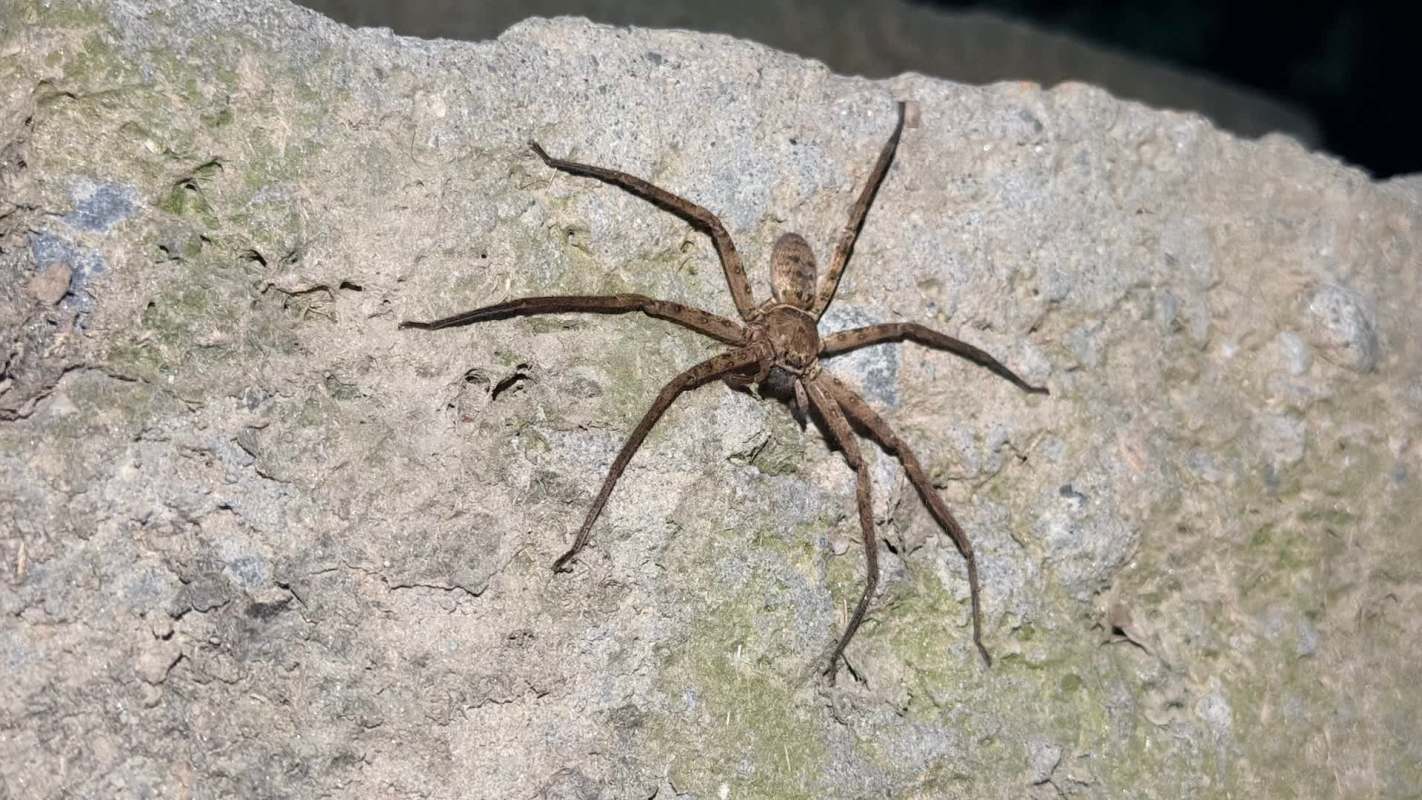
New research may have identified the world's fastest spider. In a study that has not yet been peer-reviewed, researchers tested the speed of various spider species and found that Australia's brown huntsman topped the list, reaching speeds of up to 11.8 feet per second.
What happened?
According to ABC News, researchers reviewed the speed of 258 spider species, and results point to Australia's brown huntsman being the quickest.
To compile the dataset, researchers from the United Kingdom and Germany directly measured the speeds of 162 spider species, then combined those results with previously published data on 96 additional species from North America, Europe, and Australia.
ABC News reported that researchers measured the spiders by placing them in a box lined with grid paper and recording their movements with an overhead high-speed camera. To encourage the spiders to move, the team gently prompted them with a paintbrush or other blunt object.
Researchers noted that one reason the brown huntsman may come out ahead, ABC News reported, is its build: at about 0.1 ounces, it sits in the middle size-wise and has relatively long legs. In the study, it proved faster than both the much smaller money spider Maso sundevalli and the far heavier salmon pink bird eater, Lasiodora parahybana.
ABC News quoted biomechanics researcher Christofer Clemente from the University of the Sunshine Coast, who said the study "answers a really interesting question" about how spiders move.
TCD Picks » Quince Spotlight
💡These best-sellers from Quince deliver affordable, sustainable luxury for all




Why does it matter?
Beyond the record itself, the findings help researchers examine how an animal's size relates to its maximum speed. Clemente said scientists had long noticed "that the fastest animals weren't the smallest or the biggest, but something intermediately sized," and the new results supported that pattern.
"If you get too big, you slow down and if you get too small, you're also a bit slower," he said, as reported by ABC News.
For scientists, speed matters because it connects to biomechanics, evolution, and the physical limits of how animals work. Spiders are a particularly unusual case because, as ABC News described, they extend their legs through hydraulic force while muscles draw them back in, offering a very different model of movement from mammals or reptiles.
Although its appearance can unsettle people, the brown huntsman is considered harmless to humans, as ABC News noted.
What's being done?
Researchers are now using the findings to ask broader questions about motion — not just which spider is fastest, but why. Clemente's earlier 2021 study, as reported by ABC News, focused specifically on huntsman movement, while the new paper expands that comparison across a much wider range of species.
Exactly which brown huntsman set the mark remains unclear. As ABC News reported, in south-east Queensland, Heteropoda jugulans and Heteropoda cervina can be difficult to distinguish. Clemente said future research could use DNA testing or other methods to determine that more precisely.
He also noted that an even faster spider could still be out there, because many species have not yet been tested.

Get TCD's free newsletters for easy tips, smart advice, and a chance to earn $5,000 toward home upgrades. To see more stories like this one, change your Google preferences here.







