


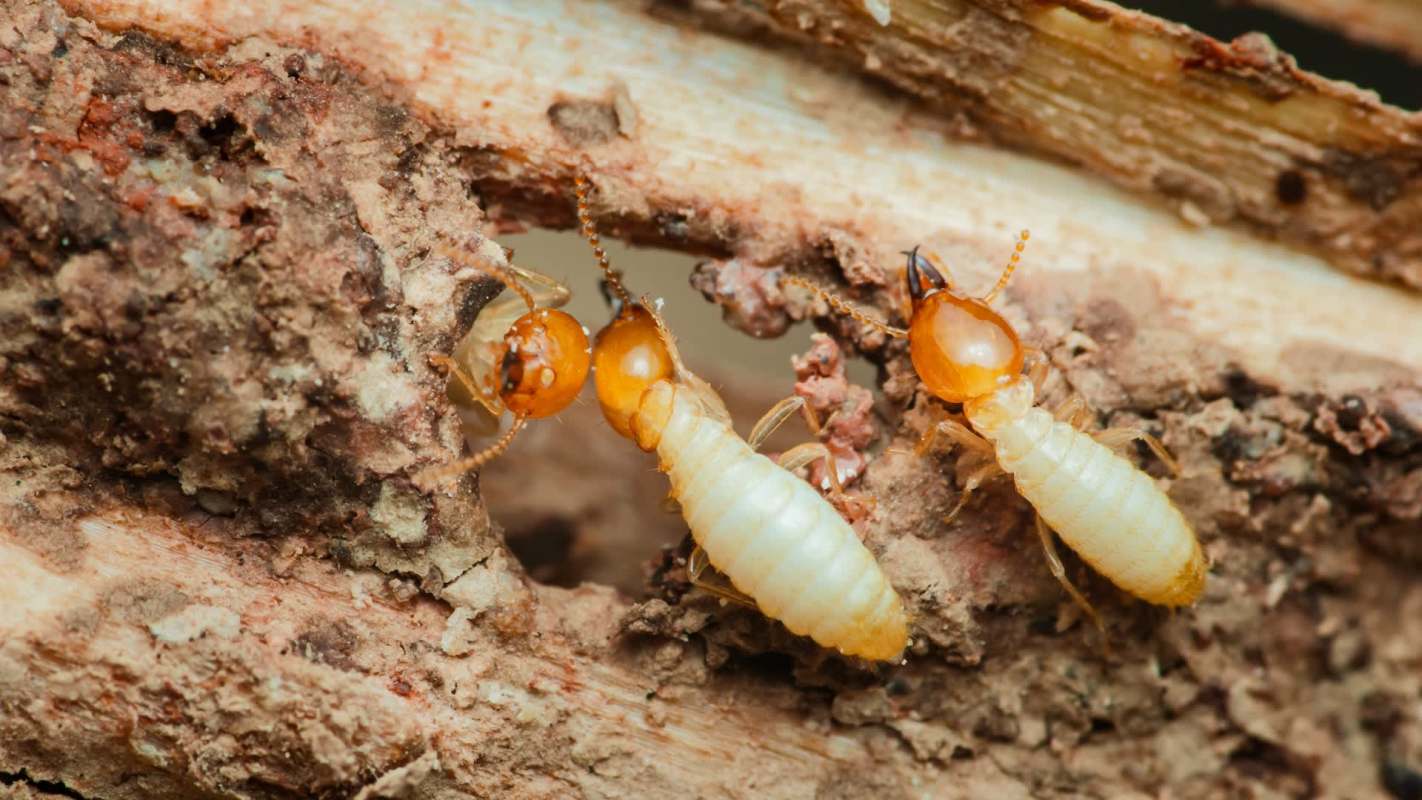
Drywood termites are a frustrating pest that can cause significant damage to homes and properties long before people realize something is wrong.
Now, researchers say they have found a new chemical that could kill as much as 95% of termites that poses no risk to humans. They have identified a treatment that can move through a termite colony and kill the insects during molting, a critical part of their life cycle.
What happened?
As reported by ScienceDaily, scientists at the University of California, Riverside, tested a chemical called bistrifluron on drywood termites and found that it can wipe out most of a colony by disrupting the insect's ability to grow. The results were published in the Journal of Economic Entomology and show the chemical stops termites from making the chitin needed to build a new exoskeleton.
In initial tests, entire colonies were dead within 90 days even when only 5% of the termites had been exposed to the chemical at the beginning of the trial. Separate lab experiments showed about 95% colony mortality, with some groups reaching 99% within 60 days.
Nicholas Poulos, the paper's corresponding author and a doctoral student in UC Riverside's Department of Entomology, said, as reported by ScienceDaily, the compound may be a safer option than conventional treatments: "This chemical is more environmentally friendly than ones traditionally used for drywood termite infestations. It's specific to insects and can't harm humans."
Termites do not have internal skeletons like humans do. Their bodies are protected by an outer covering made largely of chitin, so growth depends on shedding that shell and forming another one. Bistrifluron interrupts that replacement process, which leaves them unable to survive the molt.
TCD Picks » Quince Spotlight
💡These best-sellers from Quince deliver affordable, sustainable luxury for all




Why does it matter?
Infestations by drywood termites are hard to control partly because the insects spend almost all of their time inside wood, which makes early discovery difficult and treatment more challenging before major damage sets in.
That means a colony may already be deeply established before a homeowner sees any obvious warning signs.
Conventional mitigation methods like fumigation can be disruptive as well. Residents often have to leave the house, secure their food, and wait before returning, and the treatment still may not keep termites from returning later.
Dong-Hwan Choe, a UC Riverside entomology professor and senior author of the paper, said the approach, as reported by ScienceDaily, appears so effective because termites cannot bypass molting: "Once the termites reach a certain stage, they have to molt. They cannot avoid that. With a lethal dose of this chemical, they'll try to shed their old exoskeleton but won't have a new one ready to protect them."
After feeding on treated wood, exposed termites passed material to their nestmates, which let the compound travel farther into the colony through normal social interactions.
If that pattern can be used in homes, it could make spot treatments more effective without requiring an entire house to be tented. Choe said, as reported by ScienceDaily, "We believe this method of spot treatment can kill a larger colony and spread more easily than current termite control methods. You don't have to apply too much to get a very good result."
The researchers are now looking at how to make the method more usable outside laboratory conditions. In the study, they dissolved bistrifluron in acetone before applying it to wood, but acetone is not ideal for home use because it is flammable and has a strong odor.
Choe's lab has also separately investigated pinene, a tree-derived scent that can attract western drywood termites, as a way to make treated wood more enticing. Earlier work found that adding pinene raised mortality from about 70% to more than 95%.
"As we move lumber around the world, the termites are constantly transported to new locations. If they find the climate there acceptable, the problem will spread," Choe said. "In areas where these termites are common, it's just a matter of time before homes are infested, so this study is a good initial step toward alternative strategies for controlling them."

Get TCD's free newsletters for easy tips, smart advice, and a chance to earn $5,000 toward home upgrades. To see more stories like this one, change your Google preferences here.






