


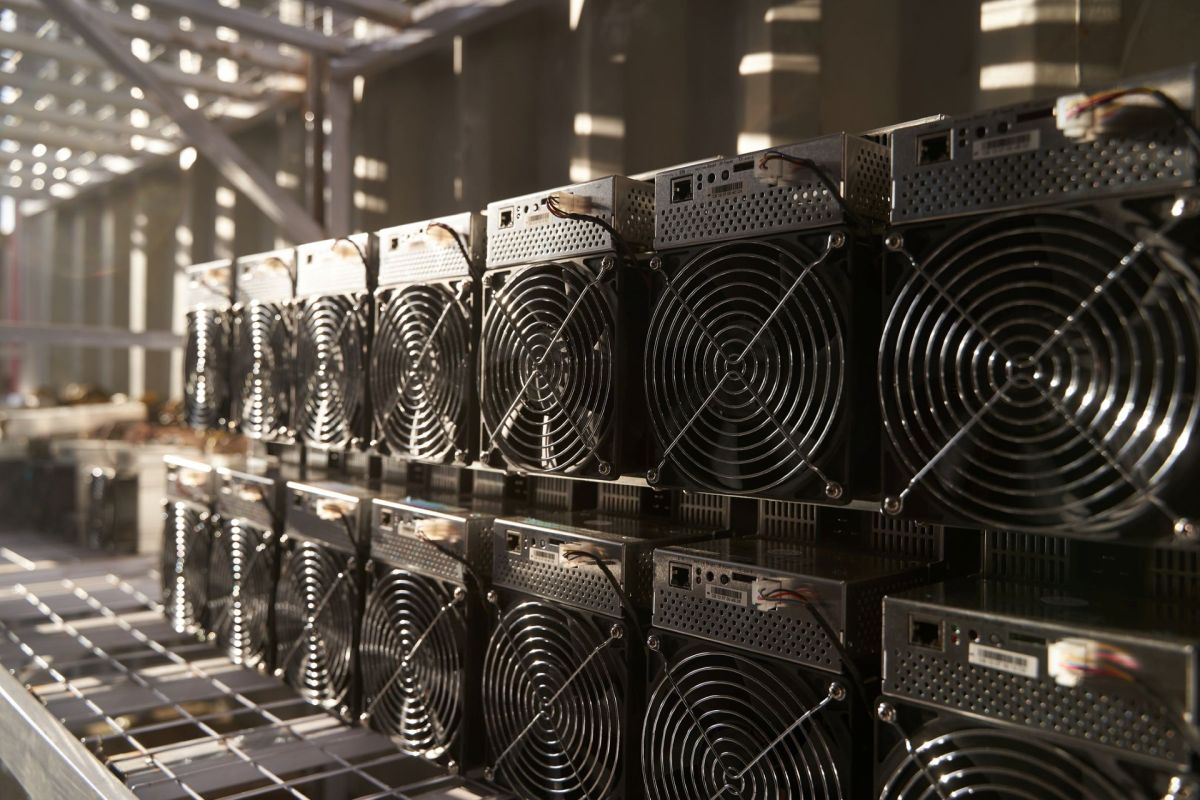
For about three years, a bitcoin-mining setup has run quietly inside Hopkinsville Electric System's Holland Substation.
That low-profile operation is now under closer watch as Hopkinsville debates its first data center rules, and while the company behind the site pitches a much larger second project.
What happened?
Residents' discovery of a 15-megawatt crypto mining facility at HES's Holland Substation has pushed Hopkinsville officials toward new zoning rules, according to Hoptown Chronicle. Owned by North Campbell Land Co., the operation consists of 22 modular units housing the specialized machines used to mine bitcoin.
At a Monday evening hearing at Hopkinsville Community College, Community and Development Services asked for public input on how the city should regulate data centers. Hopkinsville's zoning code doesn't currently list data centers as a separate land use, though a July 17 working draft would treat cryptocurrency mining as one.
NCLC representative Thomas Masiero said the existing site could eventually shift to computing work other than bitcoin mining. NCLC has also proposed a 50-megawatt data center elsewhere in Hopkinsville, along with a new 65-megawatt substation the company says it would fund itself at an estimated cost of $8 million to $10 million.
"To the best of my knowledge, there has not been a noise or water complaint against our facility during the three years of operation," Masiero said.
TCD Picks » Quince Spotlight
💡These best-sellers from Quince deliver affordable, sustainable luxury for all




Why does it matter?
Data centers and crypto mines have become flashpoints in communities nationwide, since they draw enormous amounts of electricity, create noise, need extensive cooling, and sometimes rely on backup generators that add to air pollution. Those effects can reach nearby neighborhoods, local water supplies, and the electric grid.
Utilities, meanwhile, often view large flexible-load customers as a financial plus. Hopkinsville Electric System general manager Jeff Hurd said NCLC's business helps HES avoid shifting more costs onto its roughly 13,000 customers, about 80% of whom are residential.
"To avoid future rate increases on the backs of our customers, HES is constantly looking for additional revenue to offset these costs," Hurd said.
Masiero added that the mining operation can sharply cut its power draw when TVA demand spikes.
Still, residents at the hearing made clear that any financial upside has to be weighed against local environmental and quality-of-life concerns.
What's being done?
Community and Development Services is drafting Hopkinsville's first data-center zoning amendment before sending it to City Council, which holds final approval. The current draft sorts projects by both electrical load and physical footprint, capping large-scale facilities below 75 megawatts and 50,000 square feet. Hyper-scale data centers at or above those marks would be barred outright.
The proposal also sets buffer distances: 300 feet for small sites, 500 feet for mid-size ones, and 1,000 feet for large facilities near homes or public properties. Operations already running when the rules take effect would keep legal nonconforming, or grandfathered, status.
Attorneys for HES and NCLC argued the draft is too restrictive, especially around setbacks. NCLC attorney Robert Ison said, "Make no mistake, if you adopt the more restrictive ordinance, you will effectively ban data centers in the city of Hopkinsville."
Residents pushed back with calls for stronger protections. Pembroke resident Sherry Byerline warned, "Once they get in and get a foothold, they pretty much do what they want to do, and this creates continuous pollution." Hopkinsville resident Becca Hostilo said the city should require closed-loop water systems and consider capping how many centers can move in.
"For too long in Hopkinsville, the first response to a new idea or innovation has been to say, 'No,'" Ison said.
Hostilo, though, urged officials to "make sure that Little River and Lake Barkley are kept safe."

Get TCD's free newsletters for easy tips, smart advice, and a chance to earn $5,000 toward home upgrades. To see more stories like this one, change your Google preferences here.






